
April 24, 2026
By Nehal Malik
Tesla is traditionally known for building everything from scratch, but its latest move suggests it is looking for a shortcut to dominance in the robotics and AI space. According to the company’s latest 10-Q filing, the automaker has entered into an agreement to acquire a mysterious AI hardware company for up to $2 billion.
The deal is structured primarily in Tesla common stock and equity awards. Interestingly, about $1.8 billion of that total is “subject to certain service conditions and/or performance milestones dependent on the successful deployment of the company’s technology.” While the filing confirms the massive price tag, neither Tesla nor the SEC documents mention the name of the company being acquired.
A Rare Strategic Pivot
Acquisitions are a rare move for Tesla. The company typically values vertical integration and prefers to do all of its development in-house, even going so far as to launch its own AI chip manufacturing plans via the TERAFAB project. To date, Tesla has acquired only roughly 10 companies in its entire history, usually focusing on battery tech or manufacturing automation.
This mystery company must possess unique intellectual property that Tesla and its current partners cannot provide. This is particularly notable given that Tesla already has a deep working relationship with Elon Musk’s xAI — which was recently acquired by SpaceX — through the TERAFAB project. Tesla even invested $2 billion into SpaceX to secure its stake in that ecosystem. If Tesla is spending another $2 billion on a new player, it likely involves specialized sensors or low-power processors that are essential for mobile AI.
The Optimus Connection
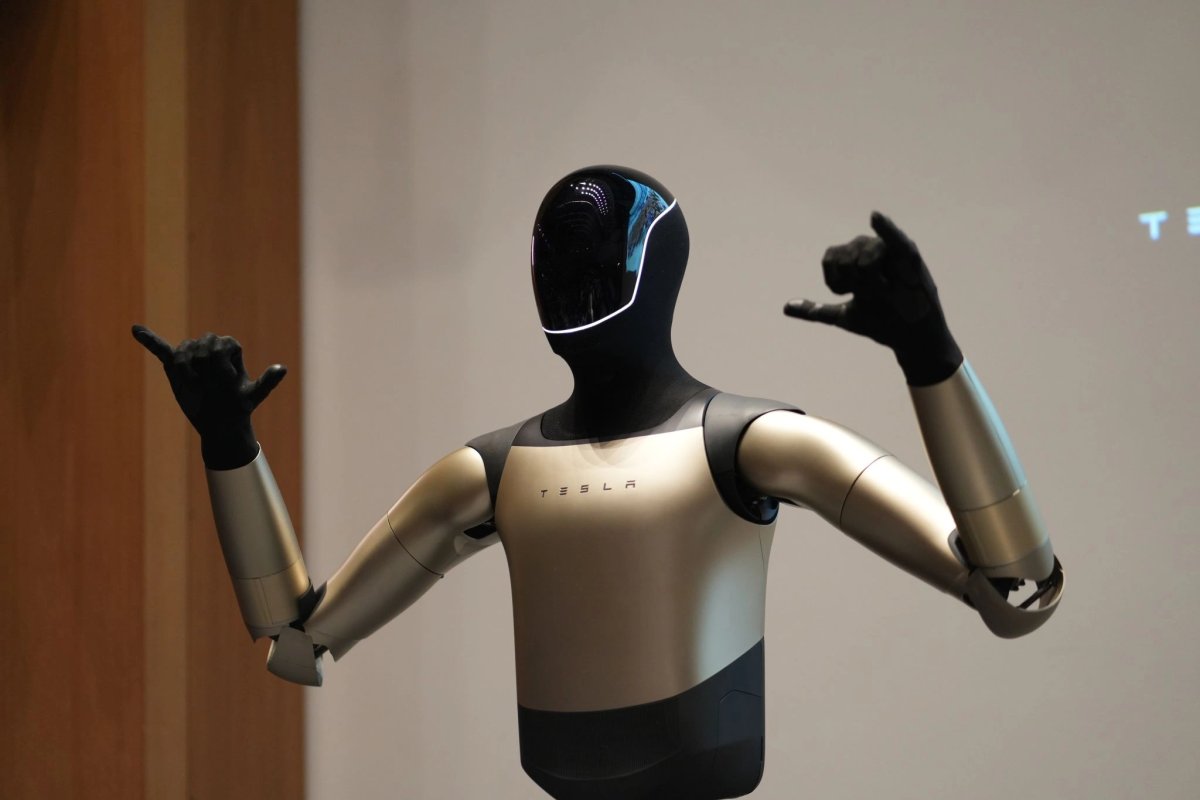
Speculation is already pointing toward the Optimus humanoid robot. Tesla intends to unveil a production-ready version of Optimus later this year, and the hardware required to make a robot walk, balance, and interact with the world is vastly different from what is needed for a car.
During the Q1 2026 Earnings Call earlier this week, Musk announced that the company is increasing its capital expenditure outlook for the year from $20 billion to $25 billion. It is highly probable that this acquisition is a major piece of that spending. Tesla likely needs a specific type of AI silicon that can handle real-time spatial reasoning at the “edge,” which would be the holy grail for a robot intended to work in factories and homes.
Vertical Integration at Scale
By bringing this hardware team in-house, Tesla is ensuring that its future robots and vehicles aren’t dependent on outside suppliers like Nvidia or Intel for specialized tasks. This fits perfectly into the broader Musk ecosystem, where Tesla, SpaceX, and xAI share data and engineering talent to move faster than traditional competitors.
As the deal moves toward closing, the industry will be watching closely to see which name finally appears on the dotted line. Whether it’s a specialist in computer vision or a pioneer in neural processing units, this acquisition is a clear signal that Tesla is no longer just a car company — it’s an AI powerhouse.
Ordering a New Tesla?
Use our referral code and get 3 months free of FSD or $1,000 off your new Tesla.
April 24, 2026
By Nehal Malik
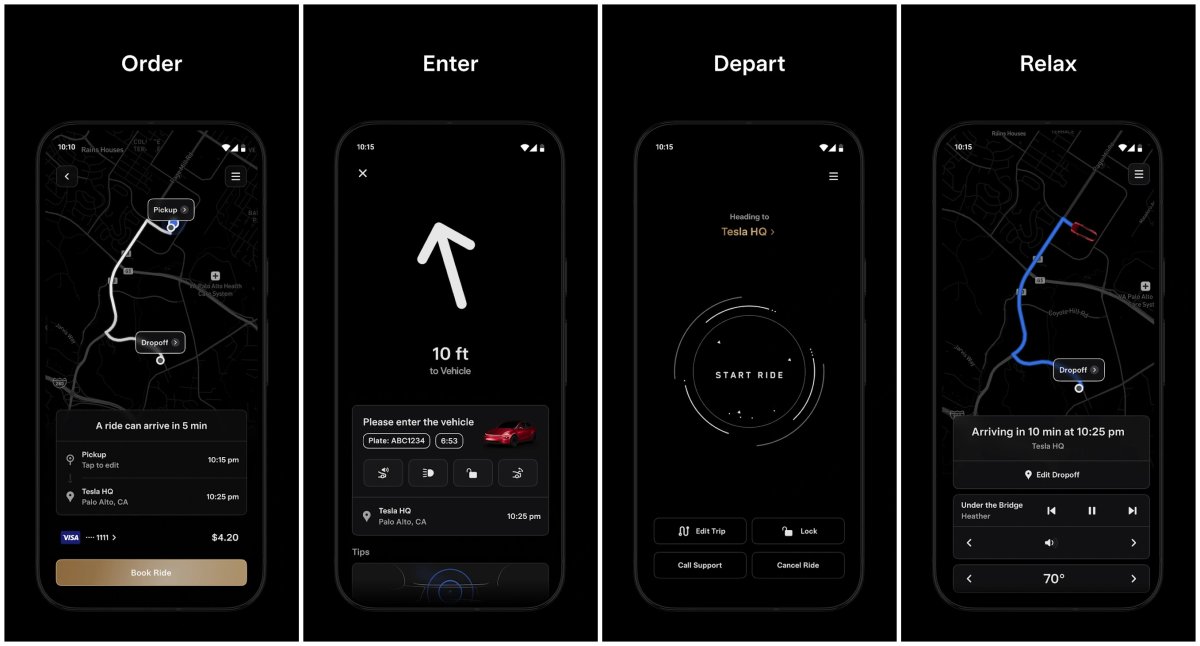
Tesla is finally opening the doors of its autonomous future to the other half of the smartphone market. After nearly a year of being an iPhone-exclusive service, the official Tesla Robotaxi app has landed on the Google Play Store.
The launch comes at a pivotal time for the network. Just days ago, Tesla expanded its Robotaxi service to Houston and Dallas, offering fully unsupervised rides in both cities. Unlike the initial iPhone launch, which forced users onto a restrictive waitlist, Android users can simply download the app and sign in with their Tesla Account to start hailing driverless Model Ys immediately — provided they are within a supported service area.
The Android Experience
The Robotaxi app on Android offers the same high-tech “concierge” experience that has made the service a hit in its very first market of Austin. According to the app description, “Robotaxi combines our automated driving technology and vehicle hardware to create a safe and convenient driverless experience.”
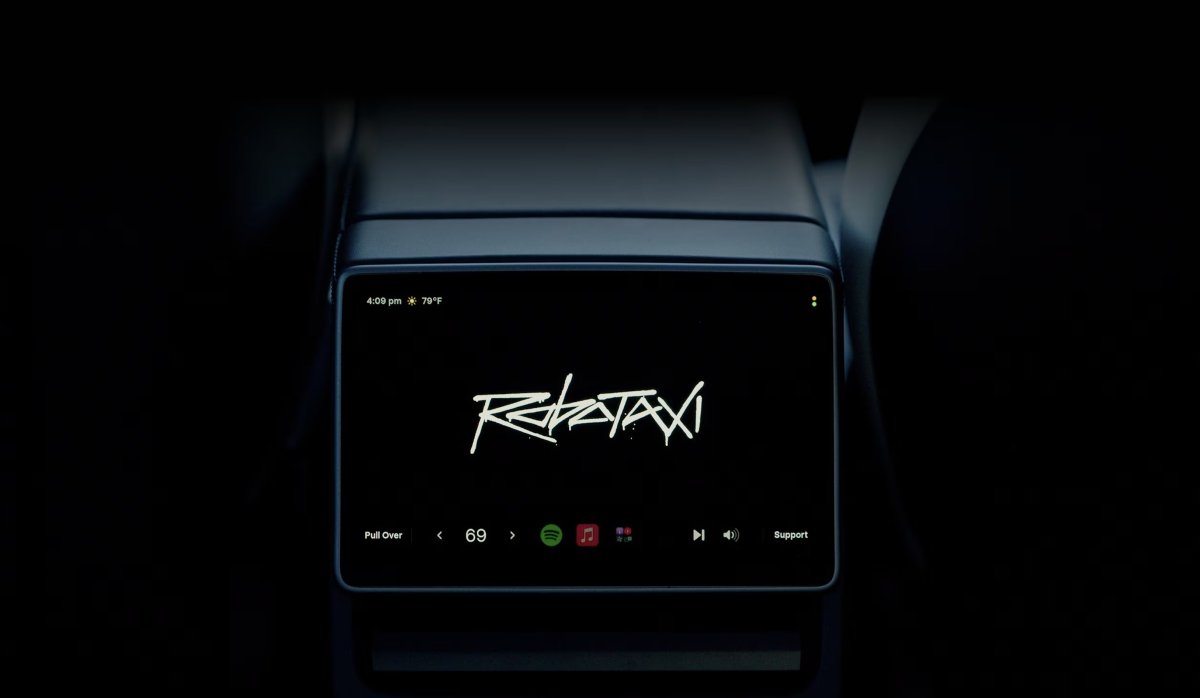
Once a ride is confirmed, the app provides a license plate number for the approaching Model Y. After entering the vehicle, passengers have full control over the cabin experience. You can use the app to adjust climate settings and seat positioning, play music, and more. This level of control is a major selling point for Tesla, turning a standard ride-hail into a personalized mobile lounge. The app also serves as the primary safety interface, allowing riders to monitor progress, edit their drop-off, or request the car to pull over if needed.
Expanding the Autonomous Footprint
Unlocking the Android market is a massive step toward the volume goals Elon Musk discussed during Tesla’s Q1 2026 Earnings Call earlier this week. While the service is currently limited to Austin, the San Francisco Bay Area, Dallas, and Houston, the infrastructure is already being laid for a much larger rollout.
Tesla has been spotted staging for a launch in Phoenix, and there are active plans to bring the service to Miami, Orlando, Tampa, and Las Vegas, potentially before the end of this year. While Musk said during the recent call that massive geofence expansions will have to wait for the 10-billion-parameter model upgrade coming in FSD v15, the goal is to make the Robotaxi service accessible to as many people as possible. Adding Android support effectively doubles the potential user base overnight.
The Cost of Progress
While Android users are finally invited to the party, they unfortunately missed the era of the “promotional” fare. When the service first launched in Austin last summer, Tesla famously offered flat $4.20 ride fares to drive adoption. However, as the service has matured and expanded, the company has steadily increased prices to a more realistic yet still affordable rate that reflects the actual cost of operating a high-tech autonomous fleet.
Even with the higher prices, the Robotaxi remains a compelling alternative to traditional rideshare services, especially for those who prefer the privacy of a truly driverless cabin. With the Cybercab expected to join the fleet soon, the Android app launch ensures that everyone, regardless of their phone choice, can participate in Tesla’s transition from a car company to a global robotics powerhouse.
April 24, 2026
By Nehal Malik
Tesla has officially dropped FSD v14.3.2, and for those who have been waiting for the “Actually” in Actually Smart Summon (ASS) to really mean something, this is the one. This latest point release isn’t just a minor bug fix; it is a fundamental architectural shift that unifies Tesla’s AI models across its Robotaxi, consumer FSD, and Summon platforms for the first time.
Update 2026.2.9.8
FSD Supervised 14.3.2
Installed on 0.6% of fleet
Last updated: Apr 24, 7:00 pm UTC
According to Zack (@BLKMDL3), who has already spent over seven hours testing the new build, the results are “mind-blowing.” By moving to a unified stack, the car’s behavior in parking lots now mirrors the confidence and smoothness of the unsupervised Robotaxis that have been operating in Austin and recently launched in Dallas and Houston.
Actually Smart Summon: The Robotaxi Treatment
The biggest winner in this update is undoubtedly Actually Smart Summon. Historically, Summon felt like a separate, slower “brain” was trying to navigate the car through a parking lot. With v14.3.2, that silo has been knocked down. “Actually Smart Summon response time on FSD v14.3.2 is instant,” Zack noted, sharing footage of the car reacting the moment the button is pressed on the phone.
Actually Smart Summon response time on FSD v14.3.2 is instant. pic.twitter.com/AMRnMHBAUG
— Zack (@BLKMDL3) April 24, 2026
Actually Smart Summon on FSD v14.3.2 pulls over to the curb when it’s done like a Robotaxi does. pic.twitter.com/Fd8BstHEkY
— Zack (@BLKMDL3) April 24, 2026
Because the system is now using the same underlying AI as Tesla’s commercial autonomous fleet, it has inherited some high-end behaviors. Zack observed that the car now pulls over to the curb near the spot you instructed it to come to, just like a Robotaxi would, rather than just stopping awkwardly in the middle of a lane. The system also showed “superhuman” confidence when handling heavy pedestrian and shopping cart traffic, navigating tough scenarios with a level of courtesy that previous versions lacked.
Superhuman Driving and Curvy Roads
FSD v14.3.2 handles curvy roads really well, here it takes me through Mulholland Drive at the top of LA with zero interventions. pic.twitter.com/JXYZhF5XvW
— Zack (@BLKMDL3) April 24, 2026
Beyond the parking lot, FSD v14.3.2 brings a massive amount of polish to street driving. While FSD v14.3 was already a major step forward, this latest iteration feels even more “sentient.” During a night drive on the windy roads of Mulholland Drive, the car handled the curves with zero interventions, even spotting and avoiding road debris in the dark before the driver could see it.
FSD v14.3.2 spots road debris and avoids it, mid corner, in the dark and on a windy road. pic.twitter.com/KYYtVfbBTu
— Zack (@BLKMDL3) April 23, 2026
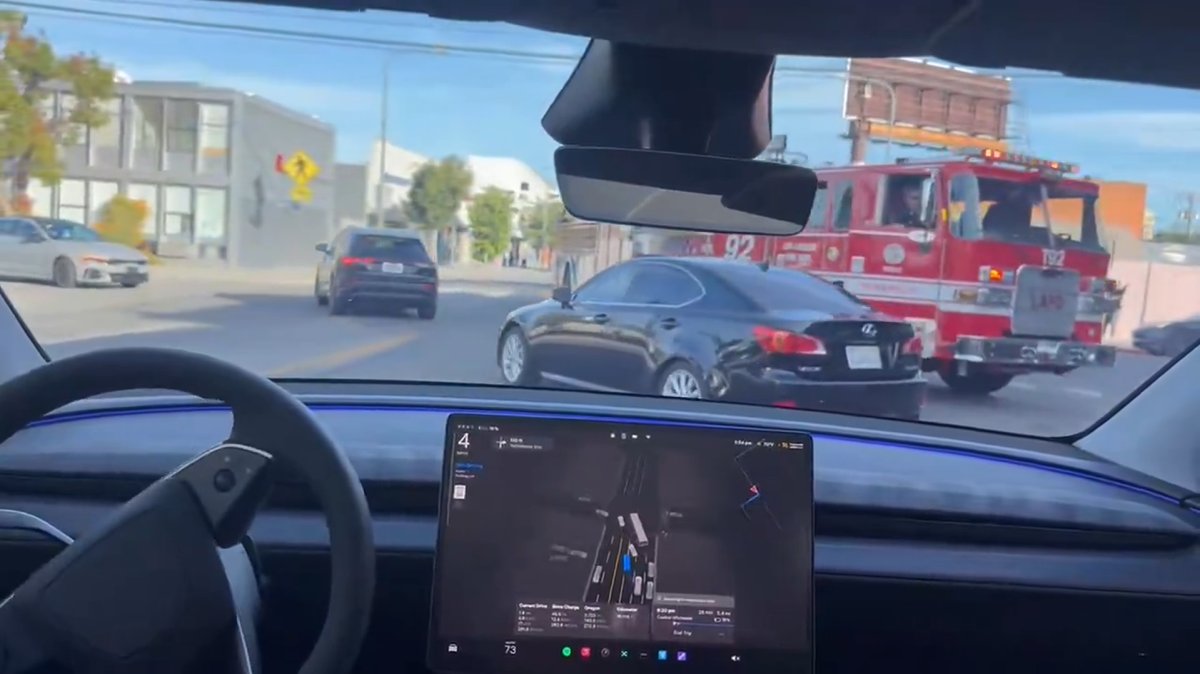
Elon Musk mentioned during the Q1 2026 Earnings Call that Tesla has already achieved “safer than human” driving with the v14 branch. The focus now is on making the system orders of magnitude safer. Version 14.3.2 demonstrates this through its reaction speed — now 20% faster thanks to an AI compiler rewrite introduced in 14.3 — and its ability to handle complex emergencies, like automatically rerouting when a fire truck pulls up to block an accident scene.
The Road to v15 and 10 Billion Parameters
This update serves as a high-performance bridge to the next major milestone: FSD v15. While v14.3.2 is incredibly polished, it still operates on a smaller model compared to what is coming. Musk recently confirmed that FSD v15 will run on current AI4 hardware, ending rumors that the 16GB of memory in current cars wouldn’t be enough for the upcoming 10-billion-parameter model.
With v15 expected to debut by the end of this year or early 2027 at the latest, version 14.3.2 represents the “peak” of the current architecture. It also includes a new intervention-reasoning UI that allows drivers to give more personalized feedback after a takeover, helping the Tesla AI team refine the system even faster. As Tesla continues its rapid-fire release cadence, the line between “driver assist” and “fully autonomous” is becoming thinner with every mile.