
George Rose/Getty Images
Gather ’round the fire, children, and let us tell you about 1989, when power ballads were rock bands’ answer to getting No. 1 hits. You see, by the end of the 1980s, rock stars felt it was time to show their sensitivity, at least at the beginning of the songs.
The singers began tenderly, making the aqua-netted fan-girls lean in before building and gaining momentum, with the emotional vocals becoming big and powerful as the song evolved. Finally, guitar solos and passionate drumming lifted to a crescendo involving a key change, and then, there was a good chance the song got quiet and introspective again in the last few measures. We’d wipe away a single tear, for we’d been through something. It was the best of times, it was the worst of times; it was power ballads, and in the year 1989, they were so popular that many reached the top spot on the U.S. charts.
While there was no shortage of sweeping love ballads that went to No. 1 that year, we are shining a light on power ballads more specifically, so Bette Midler’s No. 1 hit, “Wind Beneath My Wings,” has to sit this one out. We want electric guitar solos and heavy drums, which really help put the “power” in “power ballad.” Plenty of noteworthy bangers came out in 1989 that didn’t make it to No. 1, including “Close My Eyes Forever,” by Lita Ford and Ozzy Osbourne, and “18 and Life” by Skid Row, but for our purposes, we’re focusing only on chart-topping power ballads, and those include Bon Jovi, Poison, Sheriff, Bad English, and Roxette. Let’s revisit those emotional jams.
When I’m With You — Sheriff
You may not know of the band Sheriff, but you probably know their song, “When I’m With You,” at least if you were listening to the radio in 1989. The Canadian outfit only put out one album in 1982, and “When I’m With You” was on that record; the single was a minor hit in the U.S. in 1983, going to No. 61. But apparently, we weren’t done with the song yet, even though by the time it became a No. 1 hit in 1989, Sheriff had broken up.
A couple of DJs in the U.S. had started playing the song a few years after its initial release, and people were digging it, so the record company decided a re-release was in order. How right they were: Six years after its first visit to the Billboard Charts, “When I’m With You” climbed all the way to No. 1 in February of 1989. The incredible vocal stylings of Freddy Curci, combined with the song’s building momentum and the all-important key change to kick off the song’s big finish, really nailed what power ballads were all about.
That said, the saccharine lyrics about being “lost in love” and lines like “Maybe it’s the way you touch me / With the warmth of a sun / Maybe it’s the way you smile / I come all undone” are almost too much. In hindsight, the syrupy sweetness of songs like this makes it obvious why Gen Xers so quickly ran toward the cleansing distortion and sludge of grunge music just a couple of years later.
I’ll Be There For You — Bon Jovi
One of the ways you can tell 1989 was the decade’s best year for power ballads was how Bon Jovi’s “I’ll Be There For You” was their fourth and final No. 1 hit, but all their other No. 1 hits were from ’86 and ’88 and were decidedly not power ballads; they were just regular ol’ rock songs. But something was in the air in ’89. Maybe it was the end of the decade lending itself to emotional introspection, reminiscent of the day after a night out when you drank too much. Just a little low-key in your feelings, and in the case of “I’ll Be There For You,” dealing with some pretty strong regret.
The lyrics profess deep love, but only because the singer is trying to get back in his lady’s good graces: “I wasn’t there when you were happy (I wasn’t there to make you happy) / And I wasn’t there when you were down, child / Didn’t mean to miss your birthday, baby / I wish I’d seen you blow those candles out.” Pro tip: Don’t call your woman a child on top of never being there for her. He goes on to say he wants to be the air she breathes, the water she drinks; he’ll even steal the sun for her. Okay, player. It’s probably easier just to show up when you’re supposed to.
Meanwhile, the song does come across as heartfelt, and as power ballads go, this one meets all the criteria: sweeping vocals, a building of momentum, a key change, a lot of woah-woah-woahs, and Richie Sambora gently playing us out as we wipe that tear away.
When I See You Smile — Bad English
Bad English, a supergroup formed by members of Journey and the Babys, was comprised of power ballad aficionados who came together in the late 1980s to pool their talents as purveyors of bombastic ’80s rock. “When I See You Smile,” from Bad English’s 1989 self-titled debut album, was a bit of an outlier because it was the only song on the record written by Diane Warren. With lyrics like, “Sometimes, I wonder how I’d ever make it through / Through this world without havin’ you / I just wouldn’t have a clue,” we dare say this song was written by a woman for women, but sold and packaged by men who happened to be wizards of power balladry.
The song is about how life is hard, but just seeing the person you love makes it all better. That is certainly often true, but somehow the overly polished delivery by Bad English makes us swoon less and roll our eyes more. When the ’80s asks the ’90s why they lost the youth to grunge music, just point to this song. It’s formulaic, and each note, each drum beat, and each hair is perfectly in place. Not to take anything away from Journey guitarist Neal Schon’s brief and controlled solo, but this song just smacks of corporate rock at its peak.
Still, it managed to keep the top spot on the Billboard 100 for two weeks in November of 1989, and was the band’s only No. 1 hit; a fitting end to the decade of decadence.
Every Rose Has Its Thorn — Poison
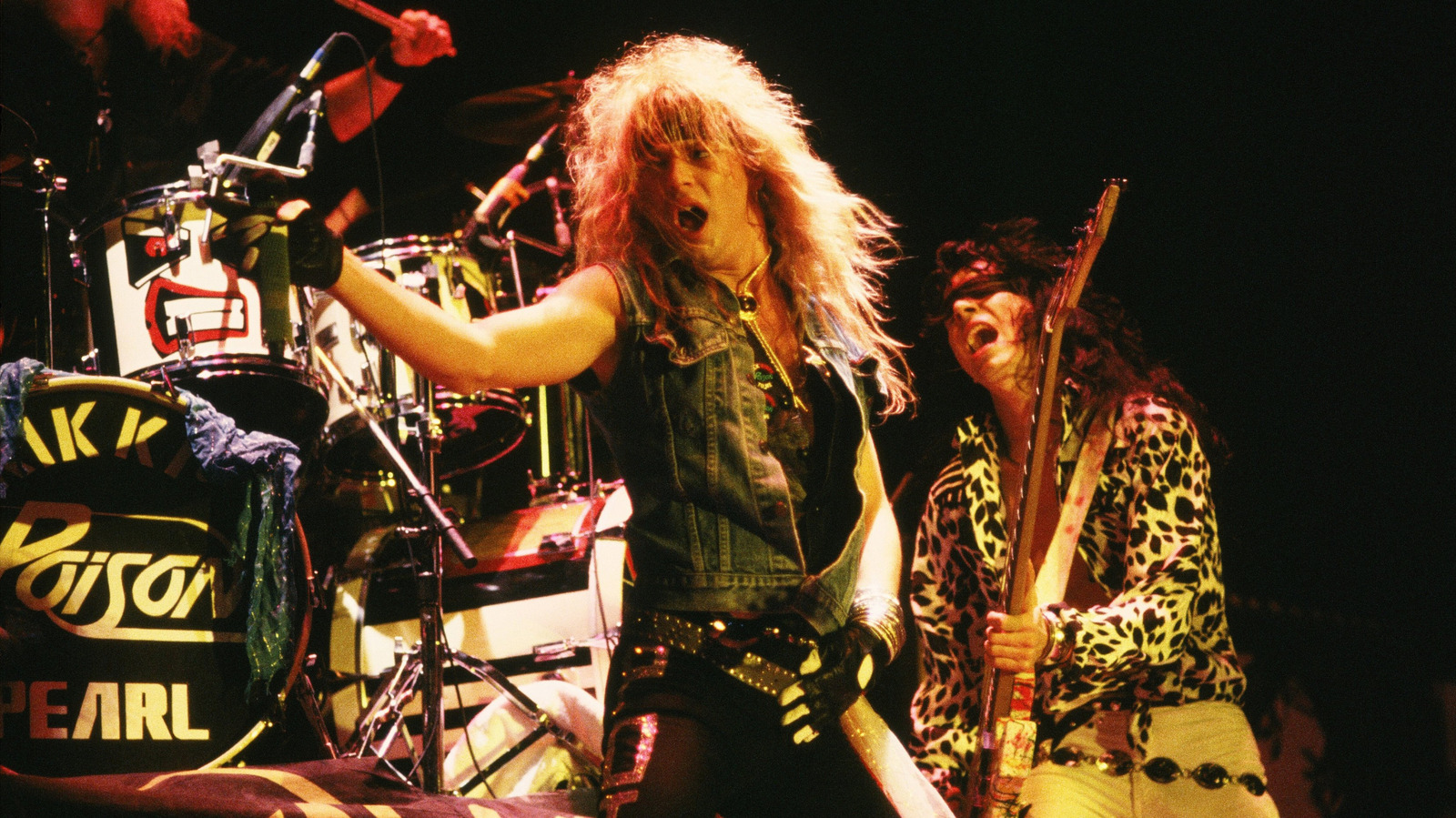
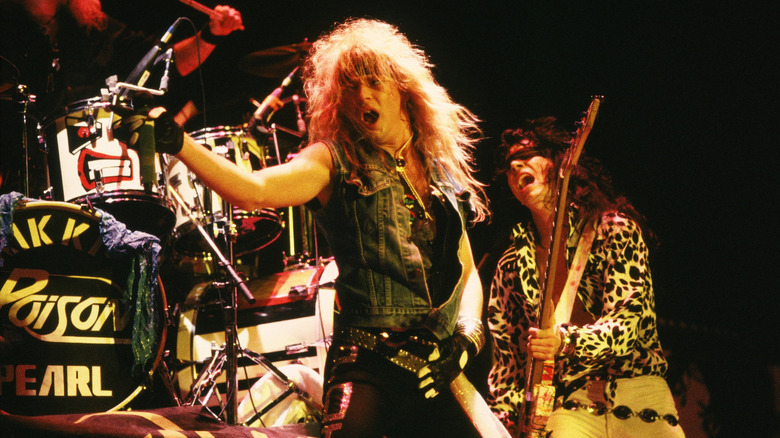
The theme of Poison’s “Every Rose Has Its Thorn” is the pain of a breakup, and part of its charm is the song’s stripped-down intro. It’s just an acoustic guitar and Bret Michaels singing for the first verse and chorus, then the song kicks in with a nice drum fill and some early-in-the-song solo guitar work by the infamous C.C Deville.
As the song continues with background singing harmonies, it leads up to that all important key change that accompanies the bridge and the lyrics: “Though it’s been a while now / I can still feel so much pain / Like a knife that cuts you, the wound heals / But the scar, that scar remains,” and by now you are surely hearing the full solo in your head, because to be alive these days is to have that song tattooed on your brain due to its oversaturation. Maybe the thorn to this rose is that we will never escape this song, which many of us loved when we were in middle school, but we weren’t trying to marry it.
“Every Rose Has Its Thorn” was on Poison’s second album, “Open Up and Say … Ahh!” and actually hit the No. 1 spot at the end of 1988, owning that property for three weeks rolling into 1989. Its staying power to date may have to do with its authenticity. Michaels wrote the lyrics about his own personal heartbreak, just a cowboy singing his sad, sad song.
Listen To Your Heart — Roxette
Somewhat ironically, Swedish pop outfit Roxette set out to create corporate rock with “Listen To Your Heart.” Co-founder Per Gessle confessed that the song purposely used the power ballad formula to see how it would shake out, writing in the liner notes of the duo’s “Don’t Bore Us, Get To The Chorus,” “This is us trying to recreate that overblown American FM-rock sound to the point where it almost becomes absurd. We really wanted to see how far we could take it” (via Stereogum). Joke’s on them, we ate it up! Or is the joke on us, because we were so predictable? Well, it was 1989, after all, and we couldn’t get enough of power ballads.
Roxette’s take on the power ballad, “Listen To Your Heart,” checked all the boxes, even though the pair weren’t really a rock band, but the real standout in the song is the late Marie Fredriksson’s voice. The song does all the power ballad things; it builds momentum, has a proper guitar solo, and hits that key change, though it does fade out in the end rather than get all melancholy. Nonetheless, Fredriksson’s satiny-smooth vocal performance is so strong and capable that we really did listen to our hearts just because she told us to.
“Listen To Your Heart” went to No. 1 in November of 1989, where it stayed for one week before getting knocked out of the top spot by another power ballad by Bad English, “When I See You Smile.” As we said, the force was strong with power ballads in 1989, but with these two back-to-back corporate rock No. 1’s dominating the charts by the decade’s end, the ’90s couldn’t get here soon enough.