
This was a unique NFL Draft for Green Bay Packers general manager Brian Gutekunst, his ninth in charge, since he didn’t have a first-round pick for the first time and made only six selections, his fewest by two picks since he became becoming Green Bay’s GM in 2018.
Even with limited resources, Gutekunst addressed the Packers’ most pressing areas of need with his first four picks by adding a cornerback, nose tackle, edge rusher and versatile interior offensive lineman. His selections may not have been flashy, but they made sense and will add a couple of players who might be able to contribute right away on a team hoping to be a legitimate Super Bowl contender.
Let’s dive into the Packers’ best value pick, biggest surprise selection and most pressing question regarding this year’s class and more.
Best value pick
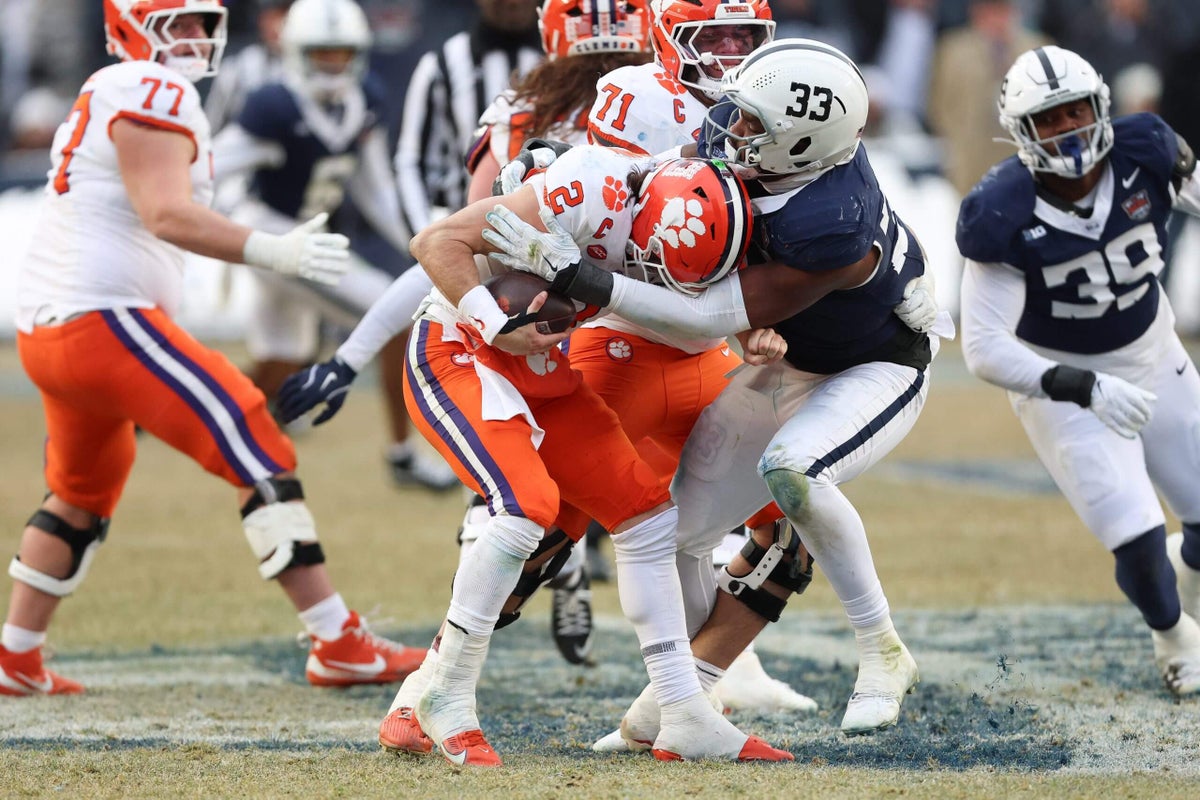
The Packers got Penn State edge rusher Dani Dennis-Sutton at No. 120 in the fourth round, and director of player personnel John Wojciechowski said the team was “absolutely surprised” he was still on the board. Thirty-one other teams will say that about guys they take, but the Packers might actually believe it, given Dennis-Sutton was No. 60 on Dane Brugler’s big board.
Wojciechowski said Dennis-Sutton’s best attribute is his pass rush because of his speed to chase down quarterbacks combined with his length (33 1/2-inch arms) and height (6-5 1/2) to disrupt passing lanes. And that may come in handy since fellow Penn State alumnus edge rusher Micah Parsons is expected to miss the first couple of games of next season while finishing ACL rehab. Dennis-Sutton, 22, led the Big Ten with 3.8 pressures per game last season and posted 8 1/2 sacks in each of the last two years to go along with five forced fumbles and seven passes defensed in 2024 and 2025. He also blocked three punts in 2025, which Wojciechowski said was a bonus while watching his Penn State tape.
“I love and I need football,” Dennis-Sutton said on a Zoom call. “Football to me has always been an outlet. It’s been something for me to express who I am. Anybody who knows me, I’m (a) very emotional and exciting guy, so football’s a way for me to express that and have fun. My favorite time of the day is when I’m going out to football practice and playing on Saturdays, which will now be Sundays, and going out there and making plays. Yeah, I live and breathe football. It’s something I’ve done since I was a little boy. I’m just excited now to do it for the Green Bay Packers.”
Most surprising pick
The Packers were having a ho-hum, unsurprising draft until late Saturday afternoon when they traded up for a kicker. Gutekunst gave both of his seventh-round picks to his good friend and Seattle Seahawks general manager John Schneider for the final pick of the sixth round, and Gutekunst used it to draft Florida kicker Trey Smack. Smack was the first kicker off the board and will compete with veteran incumbent Brandon McManus.
“I got the shakes a little bit, like, ‘Wow, is this really happening right now?’” Smack said on a Zoom call shortly after being drafted.
McManus struggled while battling a right quad injury last season. He found consistency from manageable distances once healthy but crumbled in the playoffs against the Chicago Bears, missing two field goals and an extra point in the Packers’ collapse. Gutekunst said his desire for a kicking competition had nothing to do with McManus’ performance last season, and head coach Matt LaFleur emphasized Saturday afternoon that it will be just that, a competition, even though the Packers traded up for Smack.
Smack made 82.8 percent of his field goal tries over three years for the Gators (53 of 64). He also hit 10 of 13 from 50-plus yards in his career, and last season he went 18 of 22 with a 5-for-6 clip each from 40-49 yards and 50-plus yards (he missed two from 30-39). Lucas Havrisik, who filled in for McManus midseason and made a franchise-record 61-yarder against the Arizona Cardinals, is also still on the roster.
Biggest question mark
This isn’t a question mark with a negative connotation, but it’ll be interesting to see whether second-round cornerback Brandon Cisse pushes incumbent starter and No. 2 outside corner Carrington Valentine for immediate playing time. Gutekunst was in no rush to overhaul his cornerback room this offseason, even though most fans were, but Cisse was a second-round pick for a reason. He could develop for a season before starting in 2027 after Keisean Nixon and/or Valentine leave in free agency. The ball skills, speed and willingness to stick his nose in offensive players while playing inside intrigued the Packers and could make training camp interesting in the secondary.
Packers national scout Mike Owen said Cisse’s toughness, smarts and short-area quickness allow him to be able to play the nickel in addition to outside, though he played primarily outside at South Carolina — and Javon Bullard is a sturdy nickel for the Packers, anyway. One line from Brugler’s scouting report might be a concern, however, especially since Valentine also has tackling deficiencies: “Wild tackling habits will be more noticeable vs. NFL ball carriers.”
Remaining needs
The Packers believe in drafting a quarterback at least every other year to keep the cabinet full at the most important position in sports. They have a proven track record of developing young quarterbacks, too, with Jordan Love and Malik Willis being recent examples. The Packers have now, however, gone two consecutive drafts without taking a quarterback after doing so in the 2024 seventh round (Tulane’s Michael Pratt, who didn’t make the initial 53-man roster out of training camp).
Last month at the owners’ meetings, Gutekunst sounded like a GM who was actively seeking an upgrade behind Love. Right now, Desmond Ridder and Kyle McCord are the only other two quarterbacks on the roster. Ridder, a former starter in Atlanta, joined the Packers late last season, and McCord, a 2025 sixth-round pick, was a reserve/future signing after spending last season on the Philadelphia Eagles’ practice squad.
Gutekunst left open the possibility of Ridder and McCord battling for the backup job because the team is “very high” on both, but when asked about a potential Kirk Cousins signing before Cousins signed with the Las Vegas Raiders, Gutekunst said, “We’ve discussed a lot of those options. Obviously, that’s a guy who’s got a lot of pelts on the wall in this league, so we’ve certainly discussed all those kind of things and we’ll see where it goes.”
Love has dealt with multiple injuries over the last two seasons that have caused him to miss action, which is part of the reason Willis earned a massive contract from the Miami Dolphins. Willis was arguably the league’s best backup last season, so nobody expects the Packers’ No. 2 quarterback in 2026 to be on his level, but it’s still fair to wonder at this time whether Ridder or McCord will be able to keep the Packers afloat if Love goes down.
“I think it’s a work in progress,” LaFleur said. “I don’t wanna speak too early. We’ve only done classroom work with these guys. We had a limited exposure to Desmond last year, but what I can say is those guys are doing a great job in the meetings and we’re looking forward to getting our hands on ’em as we progress into Phase 2.”
The available veteran quarterbacks are headlined by Russell Wilson, Tyrod Taylor, Joshua Dobbs and Cooper Rush, so there’s not exactly anyone worth writing home about on the open market.
Post-draft outlook
The Packers didn’t have any glaring holes in the starting lineup entering this draft, and that’s exactly how Gutekunst wanted it. His goal is to assemble the team before each draft so the Packers could win a game if they had to play on draft day. The Packers didn’t take any guys who are clear-cut Day 1 starters, especially without a first-round pick, but they orchestrated what appears to be a sound draft by addressing their most significant holes, perhaps slightly lower on the depth chart, with a couple of guys who have starting-caliber potential in the not-too-distant future.
“I think we feel strong about our guys that we have within our program already, but certainly you can never add enough competition to try to bring out the best in everybody,” LaFleur said. “What did we go into it with, eight picks and ended up with six? There were a couple opportunities there where we felt like we could go up and get players that could impact our team and our roster … it’s just kinda the way it worked out.”