
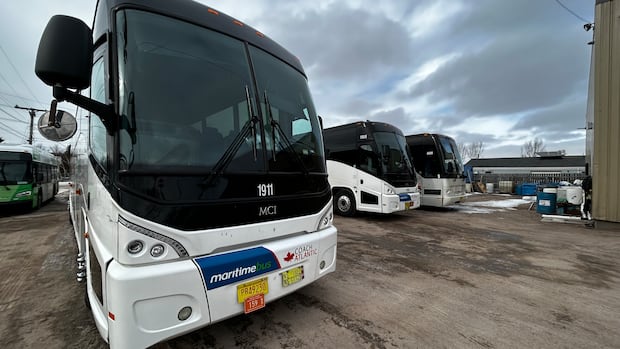
Maritime Bus has submitted an application to regulators asking to make some changes to its rates and service.
The company, which has been operating inter-city bus services in the Maritimes for the past 14 years, runs 20 routes that link communities across New Brunswick, Nova Scotia and P.E.I.
Recently, the company applied to the New Brunswick Energy and Utilities Board and to the Nova Scotia Regulatory and Appeals Board to modify pricing for its bus fares.
Mike Cassidy, who owns Coach Atlantic/Maritime Bus, told CBC Radio’s Information Morning Fredericton, said the company doesn’t want to change “base fares” but is asking to introduce dynamic pricing, something it hasn’t done before.
According to a notice published by the New Brunswick Energy and Utilities board, Maritime Bus is requesting to maintain the existing base rates for tickets purchased at least 48 hours before departure.
But it want to be able to increase fares by up to 35 per cent for tickets bought closer to departure.
LISTEN | Maritime Bus is looking to make some changes to its bus services:
Information Morning – Moncton11:08Maritime Bus service looking to make some changes
Mike Cassidy is the owner of Coach Atlantic/Maritime Bus.
Cassidy said this change would allow the company to better manage how many buses are needed for particular routes, based on demand, and to ensure that every traveller gets a seat on that route.
“With dynamic pricing, all we’re asking, for example, is if you’re travelling this Sunday, would you let us know by Friday,” he said.
“But if you do wait within that window, let’s say it’s a 48-hour window, we would just like to be able to charge a little bit of a premium for the late booking.”
The application also includes requests to introduce different prices for refundable and non-refundable tickets. According to the board, refundable rates would be subject to a minimum charge of $5 up to 20 per cent of the ticket price.
 Mike Cassidy, the owner of Maritime Bus, says dynamic pricing will allow the company to better manage how many buses are needed for particular routes and to ensure all passengers get a seat. (Steve Bruce/CBC)
Cassidy said Maritime Bus now provides customers with a credit toward future travel if they can’t make their trip, but riders say they want more options.
“Customers are saying we’d rather get a cash refund, just like the airlines … all we’re asking is a little bit of a premium if you wish to buy a refundable ticket.”
Cassidy said the company is asking for permission to introduce dynamic pricing, but exactly what this structure will look like or how it will be applied have not been set in stone.
“You have to get board approval before you can even try it,” he said.
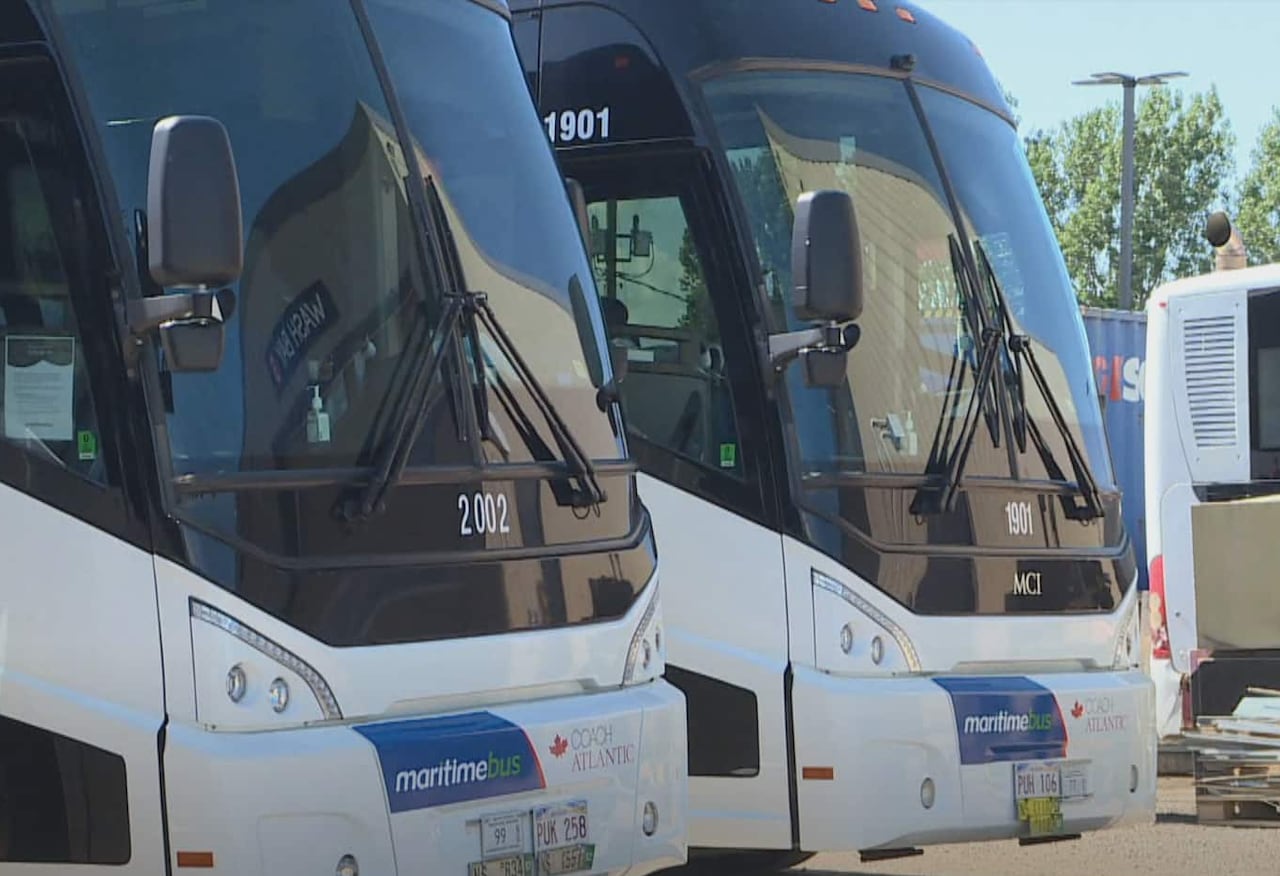 Maritime Bus recently received approval to increase its fuel surcharge from 8:5 per cent to 13.5 per cent for all passenger fares. That increase came into effect on April 15. (CBC)
Another request in the application is to reduce the number of trips between Moncton and Halifax from three daily trips to two, a move Cassidy said would not affect customers because it matches the schedule buses have been running for the past four years.
“This is how we’ve been operating since 2022 coming out of COVID,” he said. “This frequency that we’re asking to be dropped is not going to affect any of our customers today, it does not affect any routes, it does not affect any stops along the routes.”
He said the trip the company is requesting to drop was part of a route that connected the Maritimes to Quebec and locations farther west, which the company hasn’t been able to restore since the pandemic.
Pressures in transportation
University of New Brunswick engineering professor Trevor Hanson, the co-ordinator of the Community, Transportation Research Lab and the UNB transportation group, says the type of dynamic pricing Maritime Bus can be an effective way to manage rising costs.
it is typical in airline travel, he said. With inter-city bus travel, where the industry has been economically regulated, it’s often a challenge when it comes to changing prices, he said.
“There are impacts, change of price affects ridership, it’s going to impact demand to some degree that presumably the company would have investigated. But it’s probably being done because of all the pressures that we’re seeing in transportation, such as increased costs,” he said.
Hanson pointed to fuel prices as one of the big pressures facing the industry right now.
He also said the inter-city bus industry is not typically subsidized, so companies need to find ways to cover their costs to operate, which can be quite high. And consumers are facing those same pressures, he said.
“As costs go up they’re going to look for ways to ensure their own sustainability and at the same time, passengers are looking to lower their costs because of all the other pressures that we see.”
It’s a tricky balance that often requires trying innovative ways to cover costs and keep consumers happy, he said.
“In this case it’s doing something that we see in other modes of transportation, but it is going to result in some changes,and it’s going to result in more expenses for people.”
Fuel surcharge increase already in effect
Maritime Bus recently received approval to increase its fuel surcharge from 8.5 per cent to 13.5 per cent for all passenger fares. That increase came into effect on April 15. Cassidy said the increase comes in response to rising fuel prices.
“Any increase that you see on the base price of a Maritime Bus ticket would be the surcharge on fuel,” he said.
“Our value statement is you keep the base price the same, but if fuel prices fluctuate, if they go up, we have a higher fuel surcharge and if they go down then naturally that percentage is lowered,.”
The company’s motor coaches have 900-litre diesel tanks that can cost $2,000 to $3,000 to fill at current prices, which is a huge operating expense, he said.
Cassidy said he hopes fuel prices will come down and he can adjust the surcharge accordingly.
The New Brunswick Energy and Utilities Board will hold a public hearing via videoconference on June 18. The Nova Scotia Regulatory and Appeals Board will also conduct a virtual hearing at the same time from its offices in Halifax.