
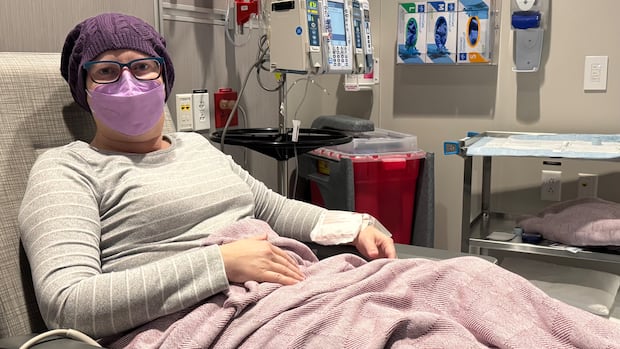
When Natalie Kwadrans was diagnosed with Stage 4 breast cancer, she was too young to qualify for a screening mammogram in Alberta.
She had tried, unsuccessfully, to get the test in her early 40s.
Then she found a lump.
That’s when a doctor finally sent her for a mammogram.
“It was terminal from the get-go,” said Kwadrans, a mother of two living in Calgary.
By the time the cancer was diagnosed, shortly after her 46th birthday, it had spread to her sternum, a rib and her spine.
Since then, Kwadrans has been in and out of hospital, through several treatment courses, and has thrown herself into advocating for improved cancer care, including lower screening ages.
“That is such a relief, knowing that future women won’t have to go through, potentially, what I went through,” said Kwadrans.
Cancer doesn’t care what province you live in. It also doesn’t care how old you are or when a policy comes into place.- Natalie Kwadrans
The Alberta government announced last week it plans to drop the age at which women can get a free screening mammogram, without a referral from a doctor, from 45 to 40.
“It means that we’re saving hundreds of women’s lives. We’re saving them from harsher, more difficult treatment,” said Kwadrans.
According to the province, the change will make more than 193,000 additional women eligible for breast cancer screening.
“We’re absolutely thrilled to hear it,” said Jennie Dale, the founder of Dense Breasts Canada, which has been calling for the expansion and has met with Alberta government officials a number of times.
Screening age lowers next year
But the change doesn’t take effect until April 1, 2027.
And that has advocates, including Dale, worried.
“So much suffering can be avoided. … People don’t realize how awful breast cancer is in later stages. It is a horrible death,” she said.
“I’m hoping perhaps they’ll change their mind, not wait.”
According to the Alberta government, the delay is deliberate.
“The April 2027 timeline ensures the system is ready to accommodate increased demand and support a smooth transition as awareness of the change increases ahead of implementation,” the Ministry of Primary and Preventative Health Services said in an emailed statement.
In the meantime, women between the ages of 40 and 44 can access screening with a one-time referral from a doctor or nurse practitioner, according to the province.
The patient can then book followup mammograms directly.
In addition, people of any age can be referred based on clinical assessments and risk factors.
According to Statistics Canada data from 2024, 84 per cent of Alberta women between the ages of 50 and 74 reported having a mammogram within the past three years. That represents the highest uptake in the country that year. The national average was 79 per cent.
How does Alberta compare?
Alberta lowered the screening age for average-risk women from 50 to 45 in 2022. At the time, it said it was the first province in the country to do so.
When it lowers the age again next year, it will be one of the last.
“It will leave Alberta right at the end of all the provinces and territories that have made the change, and that doesn’t sound like Alberta because it’s been a leader,” said Dale.
The breast cancer programs in most other provinces already have the lower screening age in place, except Manitoba, Saskatchewan and Quebec.
Manitoba, where the self-referral age is 45, plans to lower it to 40 by the end of the year. Saskatchewan dropped the age to 43 this year and plans to lower it to 40 in the coming months. And in Quebec, screening starts at age 50.
Yukon is the only territory that has guidelines allowing women 40 and older to self-refer for mammograms.
“We are seeing breast cancer at a younger and younger age. And we all know that the earlier we catch it, the better the outcomes for the patient, the less intrusive [it is], the easier it is for treatment, and the better the recovery,” said Kimberly Carson, CEO of Breast Cancer Canada.
“We don’t want to see women slipping through the cracks. When our health care system responds to say 40 should be the age, then we really should make it available as quickly as possible.”
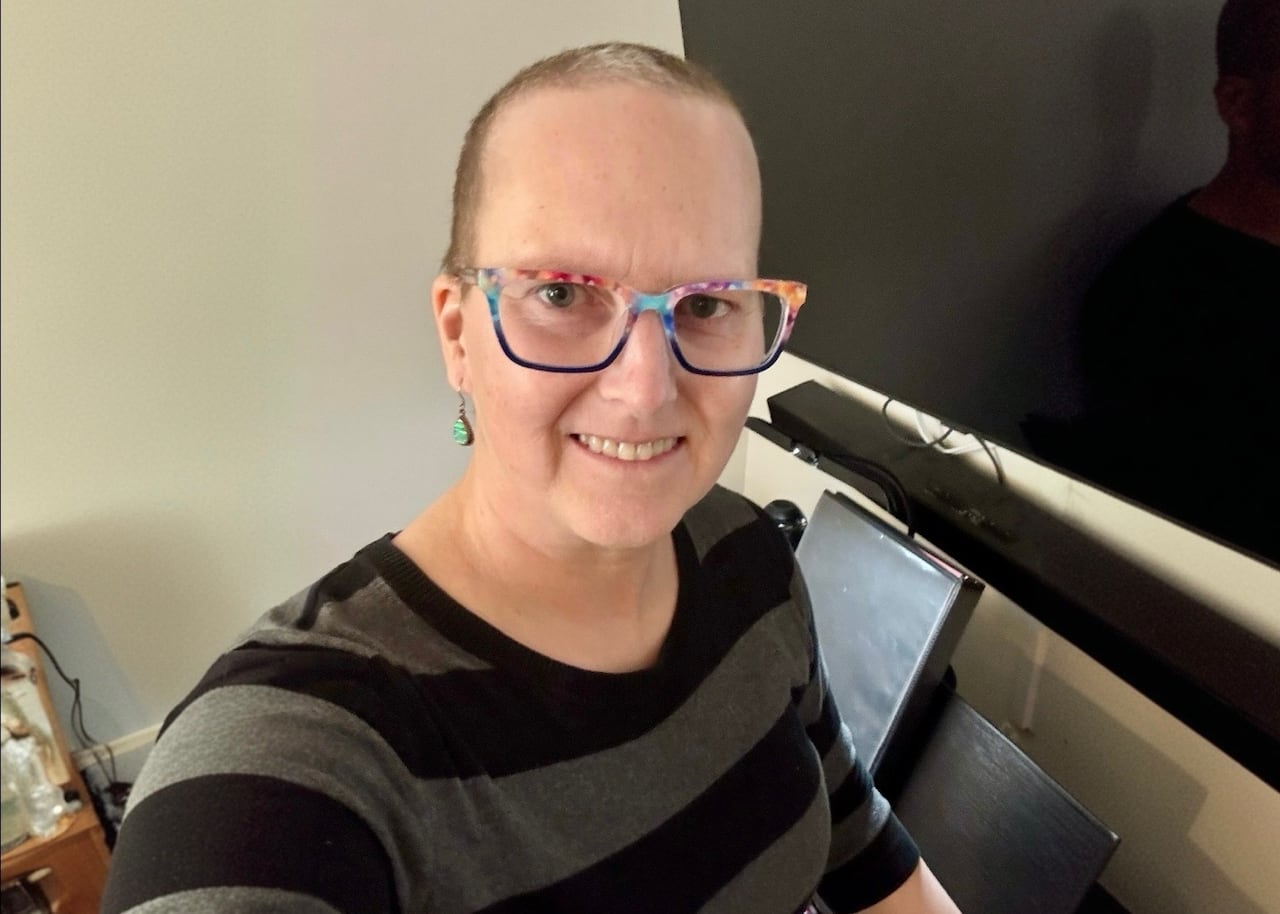 Natalie Kwadrans is on chemotherapy for life after earlier treatments failed and the cancer progressed. (Natalie Kwadrans)
Beyond the personal impact, finding breast cancer early can save the government money by reducing hospital visits and ongoing treatment costs, and it frees up specialists like oncologists, who have long waitlists in Alberta, cancer care advocates said.
“Finding it early is just a win for everybody,” said Dale.
Data published by Statistics Canada in 2023 shows the five-year survival rate for breast cancer diagnosed in Stage 1 (the earliest stage) was 99.8 per cent. By Stage 4, it drops to 23 per cent.
Meanwhile, Kwadrans has gone through multiple rounds of chemotherapy, immunotherapy infusions and radiation over the past seven years.
She’s endured a number of serious complications, ER visits and even emergency surgery.
Now the cancer has progressed again, and Kwadrans will be on chemotherapy for the rest of her life.
She’s hoping the Alberta government will move up its implementation date so others don’t end up being diagnosed too late.
“Cancer doesn’t care what province you live in. It also doesn’t care how old you are or when a policy comes into place,” said Kwadrans.
“Cancer decided I was not too young.”