
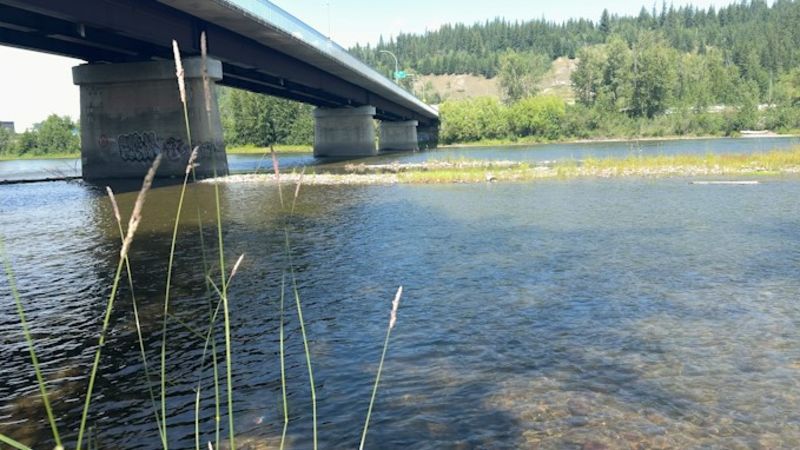
The BC River Forecast Centre and the Province are still cautioning that rain may help, but a lot of rain would have to fall to avert a drought.

“If we look at some of those longer-term deficits in rainfall, we’re looking at kind of like that 50, 150 millimetre range of what we’re below. So, when we think about areas like Fort St John, for example, that might be a couple of months’ worth of rain,” says Campbell.
He says the challenge this year came out of the mountains.
“Some of the challenges with the snowpack, particularly for rivers through the Upper Fraser East, so it comes from a lot of the mountains in the Rockies and the Cariboo mountains. And so that’s really where that snow is quite important, and we know that that’s gone,” he says. “It was a low snowpack, and that water has really moved through. So unless it was captured in a lake or a reservoir, you know, we’re going to see that continued pressure as we go through the season.”
Dr. Stephen Dery says the tables could turn quickly, depending on conditions. “If we get a dry spell as sometimes we do, of course, in the month of July if not August, when we get temperatures of 25 to 30 degrees and a lack of precipitation that can accompany those warm temperatures.”