
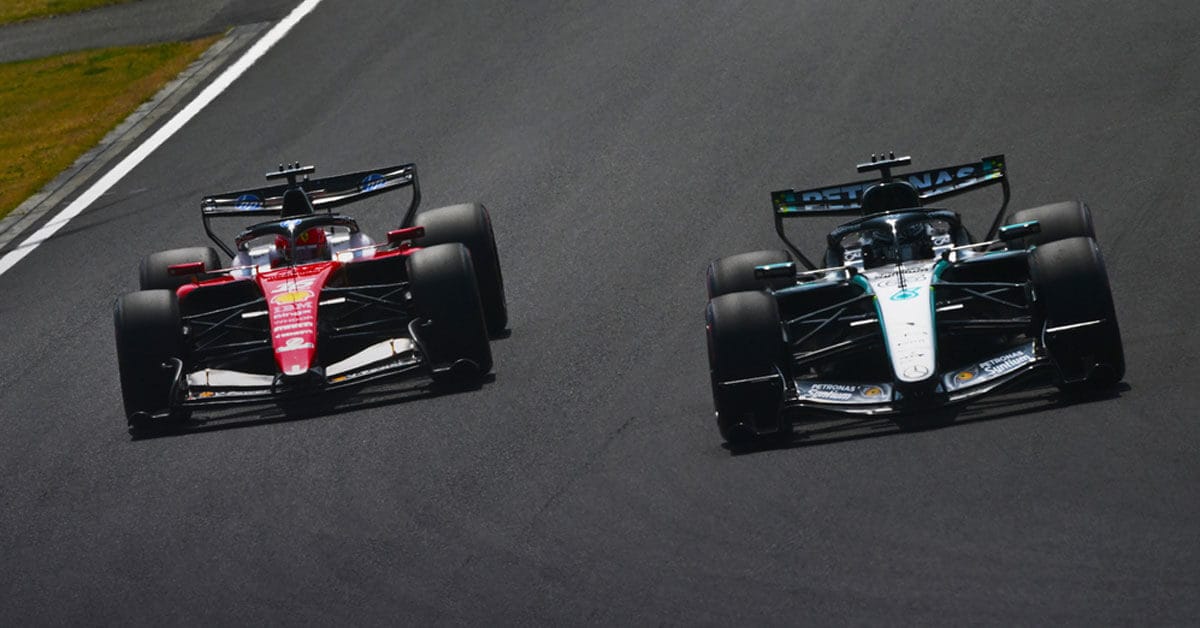
Ferrari could be heading into a more challenging competitive landscape in Formula 1, as recent adjustments to the 2026 power unit regulations appear increasingly likely to benefit Mercedes. Ahead of the Miami Grand Prix, former Formula 1 driver Juan Pablo Montoya highlighted concerns that the latest rule clarifications introduced by the FIA may shift the balance of performance, particularly during critical race phases like starts.
Following a series of extensive technical meetings held throughout April, Formula 1’s governing body has already implemented targeted changes aimed at refining the upcoming generation of hybrid power units. While these updates are officially designed to improve safety and enhance the quality of racing, there is growing discussion within the paddock that certain manufacturers could gain a competitive edge as a result.
One of the most significant areas of focus has been race starts. For the Miami weekend, the FIA has introduced a mechanism that automatically deploys the MGU-K system if a “low power start detection” scenario is triggered. This system ensures that all cars achieve a minimum level of acceleration off the line, reducing the likelihood of poor launches caused by energy deployment limitations.
Although this intervention is primarily intended to improve consistency and safety, it could also reduce the advantage that teams like Ferrari have traditionally enjoyed in launch performance. Both Charles Leclerc and Lewis Hamilton, who now drives for Ferrari in the 2025 Formula 1 season, have often relied on strong starts to gain track position early in races—an advantage that may now be partially neutralized.
The broader context of these changes lies within the evolving 2026 regulations, which aim to rebalance the relationship between internal combustion power and electrical energy. During the opening rounds of the current season, teams have already encountered challenges related to battery management, particularly during qualifying laps. Drivers have been forced to carefully manage electrical deployment rather than extracting maximum performance from the car, shifting the emphasis away from pure driving ability.
In response, the FIA has taken steps to address issues like excessive “super-clipping” during races and the growing disparity in straight-line speeds between competitors. The intention is to create a more level playing field while placing greater emphasis on driver skill, especially during qualifying sessions. However, as is often the case in Formula 1, even minor regulatory adjustments can have unintended consequences.

Juan Pablo Montoya, speaking on his MontoyAS podcast, suggested that the revised rules surrounding energy deployment—particularly at race starts—could play directly into the hands of Mercedes-powered teams. According to the former Colombian driver, these changes effectively eliminate a previous weakness associated with Mercedes power units, rather than providing a universal benefit across the grid.
Montoya explained that, in his view, the adjustments would not specifically advantage the Mercedes team alone, but rather any constructor running a Mercedes engine. By standardizing the minimum level of acceleration through automated MGU-K intervention, the FIA may have inadvertently reduced performance variability at the start, an area where Ferrari had previously excelled.
He further observed that many Mercedes-powered cars have struggled to consistently deliver strong launches in recent races, while even Red Bull has shown occasional inconsistency in this phase. As a result, the regulatory changes could diminish one of Ferrari’s key strengths, potentially impacting race strategies for drivers Charles Leclerc and Lewis Hamilton.
From a strategic standpoint, this shift could force Ferrari to rethink its approach to race starts and early-lap positioning. With less opportunity to gain immediate advantages off the line, both Charles Leclerc and Lewis Hamilton may need to rely more heavily on race pace, tire management, and in-race strategy calls to secure strong results.
While the FIA’s objective is to enhance fairness and improve the spectacle of Formula 1, the early indications suggest that the competitive order could be subtly reshaped. As teams continue to interpret and adapt to the evolving 2026 regulations, Ferrari will be watching closely to ensure that it does not lose ground to rivals benefiting from these technical adjustments.
Apr 27, 2026Elena Rossi
Let other Scuderia Fans know about us


