
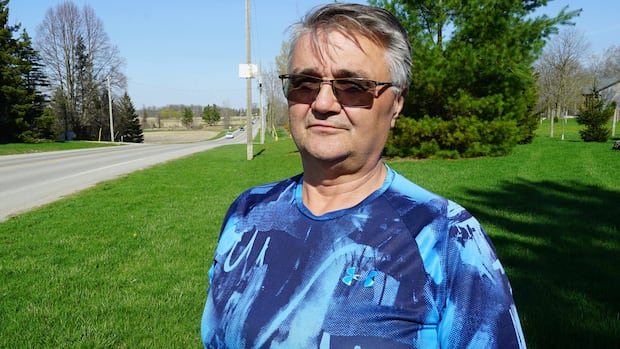
Arva., Ont., businessman Don Vanhevel has all but lost hope he’ll ever recover the almost $450,000 he invested in a B.C.-based biotech company through share purchases that started back in 2013.
Vanhevel now considers it an ill-advised investment, one that began after he attended a meeting of potential investors at the home of Thorndale, Ont., businessman Robert Freeman.
The same Robert Freeman now faces charges for allegedly breaching Ontario Securities Commission (OSC) rules.
“I think it’s gone,” said Vanhevel, 63, of his investment. “We’ve lost all this money, and that’s going to really affect our retirement.”
Vanhevel contacted CBC News after reading an exclusive story published on April 7 about the OSC charges against Freeman, who’d become wealthy when he sold his company, London Telecom, back in 1999.
In a non-criminal case heading toward an administrative tribunal, the OSC alleges Freeman breached securities rules when he sold $4.8 million worth of shares in Qu Biologics Inc. between 2009 and 2024 to 190 investors.
Back in 2013 Vanhevel was invited to a meeting at Freeman’s mansion near Thorndale and told of an investment opportunity in Qu Biologics.
At the meeting, Freeman told about a dozen potential investors that the biotech company had developed medicines in clinical trials that had saved his life after his own cancer diagnosis. Freeman said he had invested heavily in the company himself and the investment had the potential to be incredibly lucrative, Vanhevel said.
“He said we wouldn’t know what to do with all the money we were going to make,” said Vanhevel. “It was going to go up that much. We were all going to be rich.”
Vanhevel said the group was told the minimum investment was $150,000. They were also told not to tell anyone what was said at the meeting.
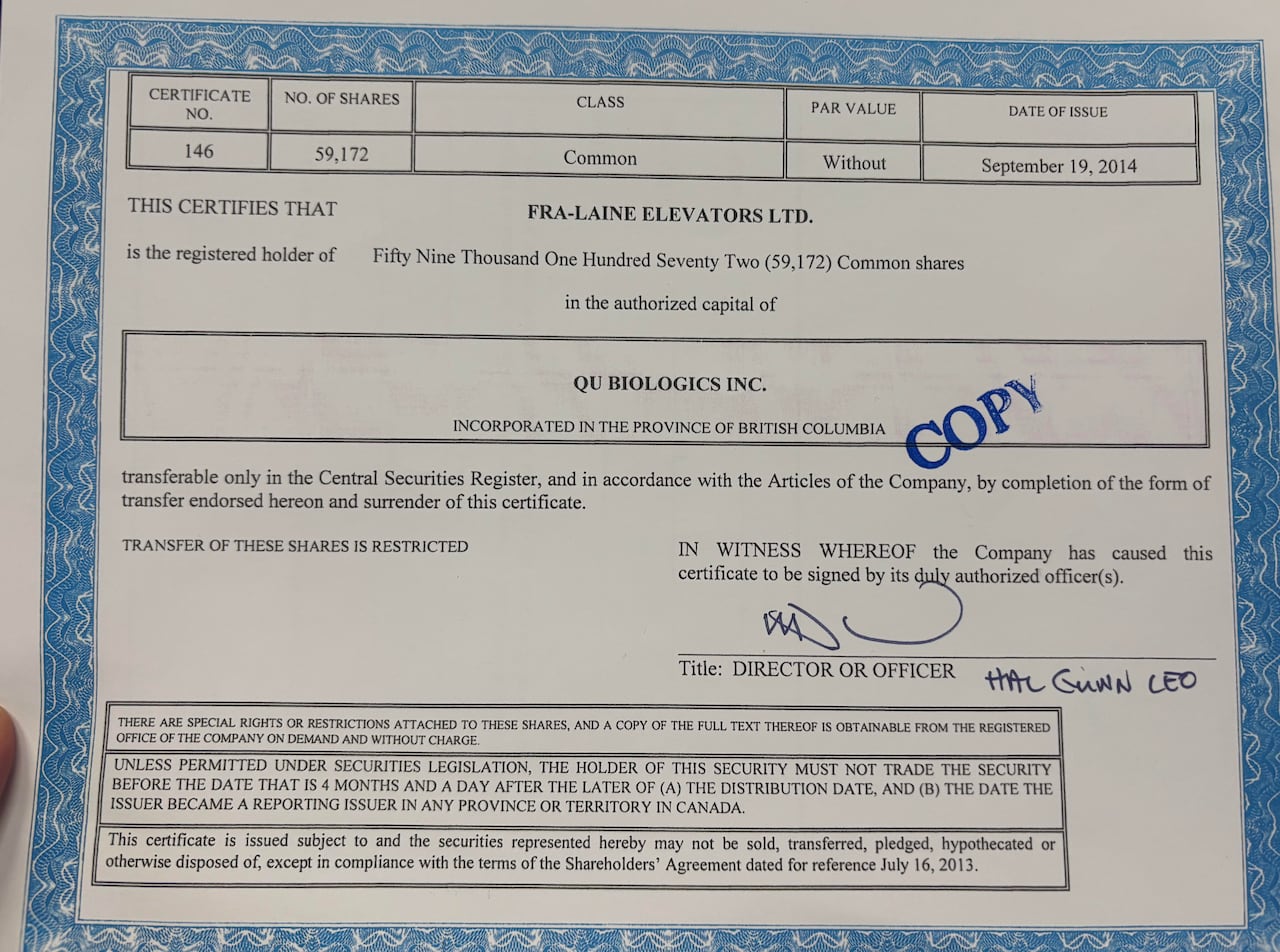 A copy of the certificate issued by Qu Biologics Inc. to Don Vanhevel for his original investment in the company. He bought 59,172 shares at $3.38 each. (Andrew Lupton/CBC News)
Vanhevel, who shared his documents with CBC News, made an initial investment of more than $200,000 in June of 2014 with a purchases of 59,172 shares in Qu Biologics at a price of $3.38 a share. Vanhevel, a real estate agent who formerly owned two grain elevators, made the initial investment with Qu Biologics directly though his company Fra-Laine Elevators.
In the years that followed, Vanhevel would buy more shares, each time receiving a certificate issued by the company along with regular updates sent to investors about Qu’s progress in various clinical trials.
There were also regular updates from Freeman who said the company, which has never been traded publicly, was on the path to success.
“He kept saying ‘It’s just a matter of time, you’ve got to hang in there a bit longer. It’s going to be payday,'” said Vanhevel.
Late share purchases made through Freeman
In 2023, Vanhevel bought more shares, though this time the purchases were different. Instead of buying through Qu directly, he bought the shares through Freeman. His share purchases came in three separate transactions totaling $20,000, according to documents shared with CBC News.
How Freeman sold those shares is at the heart of the OSC case against him. The OSC alleges Freeman wasn’t authorized to sell shares — his own or those belonging to others — without permission from the Qu Biologics board. The OSC alleges Freeman also didn’t make it clear to purchasers that some of those transactions involved the sale of his own shares. The OSC alleges money from the sale of those shares ended up in the accounts of Freeman’s companies. The OSC also alleges Freeman let some of the purchasers believe he was simply acting as a go-between, brokering the sale of others’ shares which he offered to hold in trust.
“[Freeman] never once told us he was selling his own shares,” said Vanhevel.
Vanhevel’s faith in Qu Biologics took a big hit last August when company founder Dr. Hal Gunn delivered what Gunn called “challenging news” to investors in a group email.
Gunn told investors that a clinical study showed Qu’s treatments had failed to improve the immune response in a test group of patients. As a result, Qu’s board of directors decided to “lay off the entire team” to avoid taking on debt, which would make any future investment difficult.
The letter, which was shared with CBC News, also said Gunn would personally loan the company up to $640,000 to keep it going. A separate clinical trial of patients with colon cancer would also be put on hold, the email said.
Charges against Freeman
CBC’s reporting earlier this month about OSC’s charges against Freeman further shook any remaining confidence that Vanhevel’s investment was secure.
In particular, Vanhevel was unsettled by the revelation that Freeman sold his own shares.
“That would have raised red flags, and I wouldn’t have put another dollar in to it,” said Vanhevel.
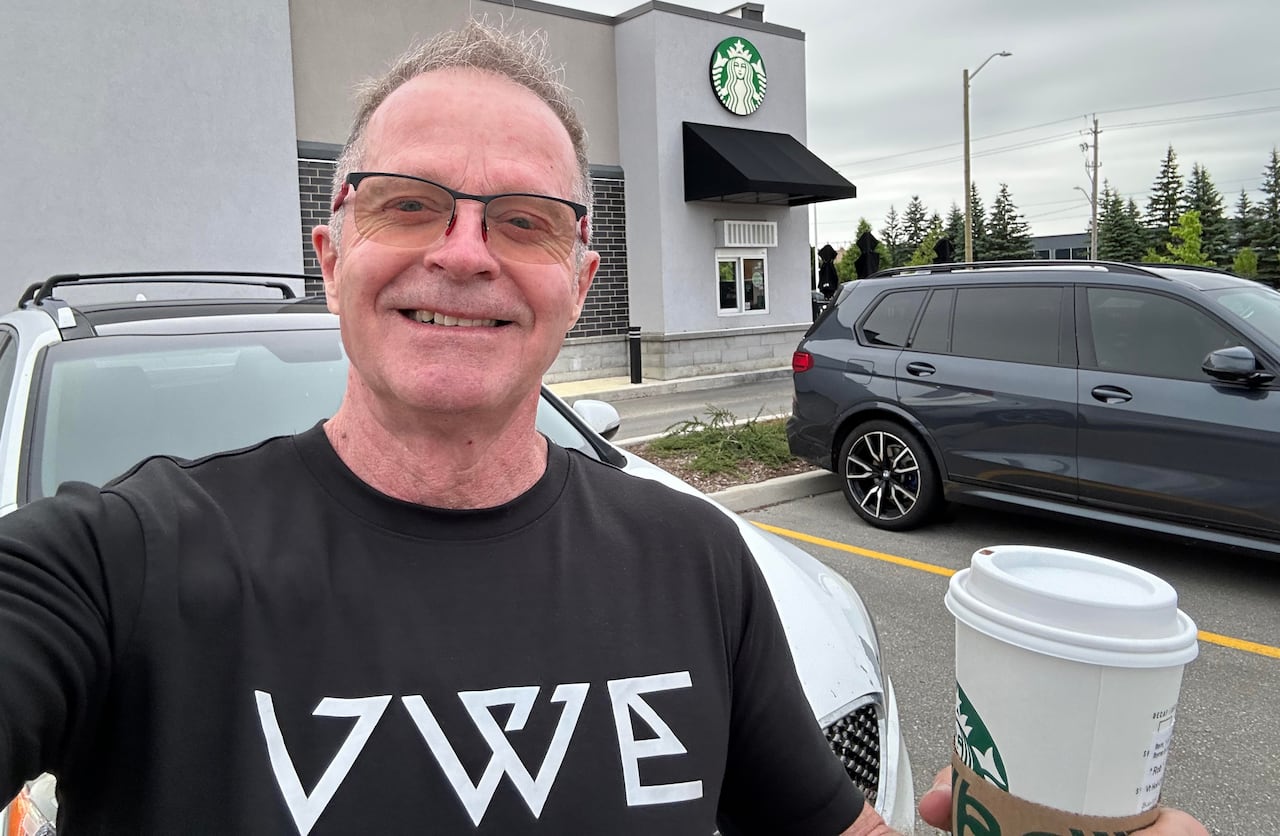 Robert Freeman is the founder of London Telecom, a company he sold for $76 million in 1999. He now faces an Ontario Securities Commission investigation for how he sold shares in a B.C. company called Qu Biologics Inc. (Submitted by Robert Freeman)Lack of progress in trials
Freeman told CBC News he continues to believe in Qu’s technology and treatments but is also concerned at the lack of progress in the clinical trials. Freeman said he’s personally invested more than $5 million in the company, including $2 million in borrowed money.
“I’m concerned about everybody’s investment,” said Freeman. “I want to see everybody do well here. I still believe in this treatment 100 per cent.”
Freeman said when he sold shares he did not feel obligated to disclose whether he was selling his own shares, or acting as intermediary between purchasers and existing shareholders.
“I didn’t lie,” he said. “I just said it was another big investor who wanted to sell their shares.”
Asked why he would sell his own shares when he believed so much in the company, Freeman said he’d purchased more shares than he needed during his early involvement in the company as a way to help keep it afloat during the long clinical trial process. Freeman said in recent years he needed to sell shares to cover a loan he took out to fund his initial share purchases. The loan was registered against property he owned under the name of his business Plover Farms.
The OSC has the power to order the return of money to harmed investors if the Capital Markets Tribunal finds any wrongdoing.
Vanhevel, however, told CBC News he’s not confident he’ll recover his investment either through the OSC actions, or by selling his own shares.
“I’m not holding my breath,” he said. “We’ll be lucky if we get pennies on every dollar.”
Freeman’s case is scheduled to come before the tribunal in June for a case management conference, a preliminary stage of the hearing process.
LISTEN | Listen to Andrew Lupton on London Morning reporting about this story:
London Morning6:16Local entrepreneur is in hot water with the Ontario Securities Commission
Entrepreneur Rob Freeman made a fortune 27 years ago when he sold his company London Telecom. Now he’s facing fraud allegations into the sale of shares in a BC biotech company. CBC’s Andrew Lupton is following the story and joined London Morning with more details into the allegations against Freeman.