
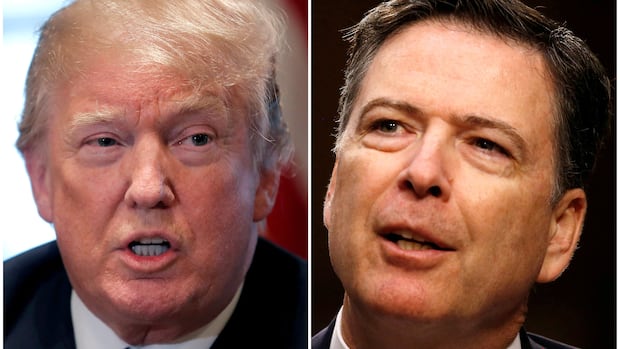
Former FBI director James Comey was indicted again on Tuesday, this time in an investigation over a social media photo of seashells arranged on a beach that officials said constituted a threat against U.S. President Donald Trump.
The criminal case is the second in a matter of months against Comey and is part of the Trump administration Justice Department’s relentless effort to prosecute political opponents of the Republican president.
The seashells photo was posted nearly a year ago, but the indictment was secured as acting U.S. attorney general Todd Blanche, a Trump loyalist who previously served as his personal lawyer, aims to prove to the president that he’s the right person to hold the job permanently.
The two-count indictment charges Comey with “knowingly and willfully” making a threat to “take the life of, and to inflict bodily harm upon” Trump and with transmitting a threat in interstate commerce.
It offers no evidence to support the claim that Comey knowingly made a threat against the president, especially since he has said the opposite, but suggested a “reasonable recipient who is familiar with the circumstances would interpret” the message as a threat to do harm.
At a news conference announcing the indictment, Blanche refused to elaborate on any evidence of intent the government has but said: “How do you prove intent in any case? You prove intent with witnesses, with documents, with the defendant himself to the extent it’s appropriate. And that’s how we’ll prove intent in this case.”
And in an effort to rebut claims that Comey was being selectively prosecuted, Blanche contended that the case against the former FBI director was similar in kind to other threats cases the department routinely brings against the lesser known.
“While this case is unique and this indictment stands out because of the name of the defendant, his alleged conduct is the same kind of conduct that we will never tolerate and that we will always investigate and regularly prosecute,” Blanche said.
‘I’m still innocent,’ Comey says
The case was filed in the Eastern District of North Carolina, the state where Comey found the seashells.
In a video message posted to his substack page, Comey responded to the indictment by saying, “Well, they’re back,” but adding that nothing has changed.
“I’m still innocent. I’m still not afraid and I still believe in the independent federal judiciary,” he said. “So let’s go.”
He added that it is important to remember “this is not the way the Department of Justice is supposed to be” and he urged people to “keep the faith.”
The former FBI director had overseen the early months of an investigation into whether the Republican president’s 2016 campaign had co-ordinated with Russia to sway the outcome of that year’s election.
Comey was fired by Trump months into the president’s first term, and they have openly feuded ever since.
WATCH | What’s behind the Trump-Comey feud: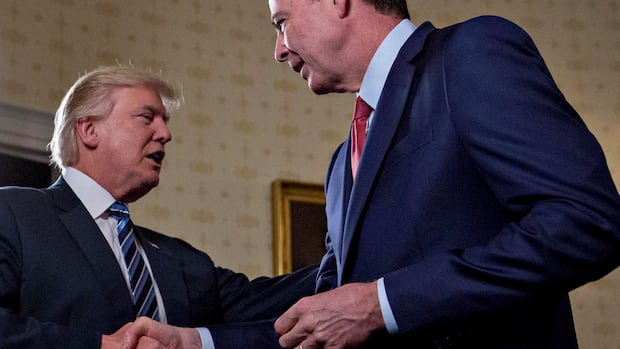
How a former FBI director ended up on Trump’s enemy list
In an apparent escalation of U.S. President Donald Trump’s attacks on his political enemies, former FBI director James Comey has now been indicted on criminal charges. For The National, CBC’s Lyndsay Duncombe lays out a timeline of how it got to this point.
The prosecution arises from a May post on Instagram, in which Comey shared a photo of seashells he saw on a walk in the arrangement of “86 47.”
He has said he assumed that the numbers reflected a political message, not a call to violence. Comey deleted the post shortly after it was made, writing: “I didn’t realize some folks associate those numbers with violence” and “I oppose violence of any kind so I took the post down.”
Nonetheless, Comey was swiftly interviewed by the Secret Service after Trump administration officials asserted that he was advocating the assassination of Trump, the 47th president.
The alleged meaning
Merriam-Webster, the dictionary used by the AP, says 86 is slang meaning “to throw out,” “to get rid of” or “to refuse service to.” It notes: “Among the most recent senses adopted is a logical extension of the previous ones, with the meaning of ‘to kill.’ We do not enter this sense, due to its relative recency and sparseness of use.”
Trump, in a Fox News Channel interview in May, accused Comey of knowing “exactly what that meant.”
“A child knows what that meant,” Trump said. “If you’re the FBI director and you don’t know what that meant, that meant assassination. And it says it loud and clear.”
WATCH | Trump wants more indictments: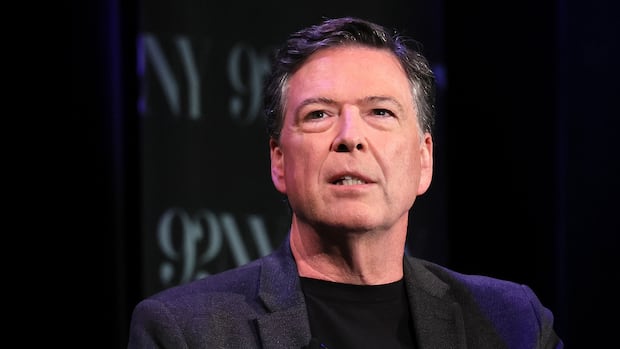
Trump says he wants more indictments after Comey
A day after the indictment of former FBI director James Comey, U.S. President Donald Trump suggested his other perceived foes could be next. Democrats were quick to sound the alarm in response, calling it a ‘dark day for America.’
The former FBI director was indicted in September on charges that he lied to and obstructed Congress related to testimony he gave in 2020 about whether he had authorized inside information about an investigation to be provided to a journalist.
He denied any wrongdoing, and the case was subsequently dismissed after a judge concluded that the prosecutor who brought the indictment was illegally appointed.
Comey was the FBI director when Trump took office in 2017, having been appointed by then-U.S. president Barack Obama, a Democrat. Before that, he served as a senior Justice Department official in George W. Bush’s Republican administration.
But the relationship with Trump was strained from the start, including after Comey resisted a request by Trump at a private dinner to pledge his personal loyalty to the president — an overture that so unnerved the FBI director that he documented it in a contemporaneous memorandum.
Trump fired Comey in May 2017 amid an FBI investigation into potential ties between Russia and Trump’s presidential campaign. That inquiry, later taken over by special counsel Robert Mueller, would ultimately find that while Russia interfered in the 2016 election and the Trump team welcomed the help, there was insufficient evidence to prove a criminal collaboration.
WATCH | Historian: Trump’s DOJ enables him to go after perceived enemies: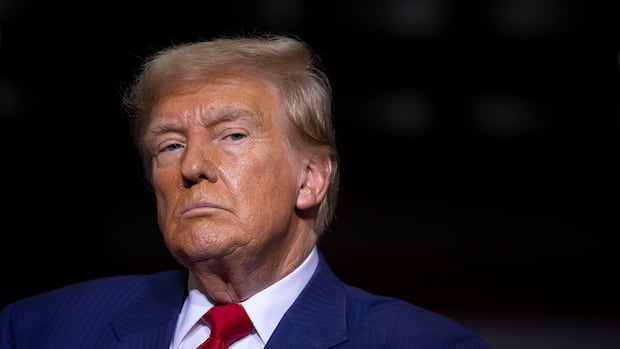
‘They’re all guilty’: Trump’s enemy list playbook
U.S. President Donald Trump’s revenge campaign against his political enemies has some worried about the integrity of the justice system as he blows past checks and balances that contained similar attempts by former president Richard Nixon.Politically charged prosecutions
Blanche was elevated earlier this month from deputy attorney general to acting attorney general, replacing Pam Bondi, who had frustrated Trump with the department’s struggles to build successful criminal cases against his adversaries.
Blanche has since moved quickly to announce politically charged prosecutions, including a case last week against the nonprofit Southern Poverty Law Center, which is accused by the Justice Department of defrauding donors by paying confidential informants to infiltrate hate groups. The group has denied any wrongdoing.
Comey is among many Trump foes to face scrutiny over the last year.
The Justice Department, for instance, is also pursuing a criminal investigation into former CIA director John Brennan, another key figure in the Russia investigation — one of Trump’s chief grievances and a saga that he and his supporters have long sought retaliation for. Brennan has denied doing anything wrong.
CNN was the first to report the second indictment against Comey.