

Listen to this article
Estimated 4 minutes
The audio version of this article is generated by AI-based technology. Mispronunciations can occur. We are working with our partners to continually review and improve the results.
Many Toronto-area rental units are sitting empty, new data suggests, but at least one advocate says the cost of renting remains “sky high.”
The vacancy rate for new rental buildings in the Greater Toronto and Hamilton Area has hit a five-year high, according to data released by consulting firm Urbanation.
In rent-stabilized buildings completed in the GTHA since 2000, the vacancy rate was 5.4 percent in the first quarter of 2026. That’s compared to 3.6 per cent in the first quarter of 2025 and 2.6 per cent in the first quarter of 2024.
Shaun Hildebrand, president of Urbanation, said in an interview Tuesday that the higher vacancy rate is due to a decrease in demand and an increase in supply.
“This was the highest level of rental vacancy that Toronto has seen since the pandemic and it’s a pretty big departure from what the Toronto rental market is used to,” Hildebrand said.
Hildebrand said the drop in demand is the result of declining population growth and challenging economic conditions, while the supply increase is the result of tenant turnover and the completion of many condo projects in the last two years. Many of those projects have been put up for rent, he said.
The vacancy rate in the first quarter of 2021 was 6.3 per cent, according to Urbanation.
“If you look at the average over the last 20 years, rental vacancy rates in Toronto have been mainly below two per cent. So this is a pretty big shift in rental market conditions,” he added.
“It’s a renter’s market for sure.”
Meanwhile, the availability rate, which includes both vacant and occupied units where the tenant has given notice to vacate, reached a record high of eight per cent in the first quarter of 2026.
Landlords now offering incentives to renters, expert says
Hildebrand said softening market conditions have some landlords offering incentives to prospective tenants, such as two months of free rent and cash “move-in” bonuses.
In the first quarter of 2026, 66 per cent of projects offered incentives, up from 62 per cent a year ago, Urbanation says.
Factoring in incentives, net rents in the first quarter of 2026 averaged $3.52 per square foot, down 3.8 per cent annually to a 16-quarter low, Urbanation says.
That means the incentives reduced rents by average of 13 per cent or about $400 a month.
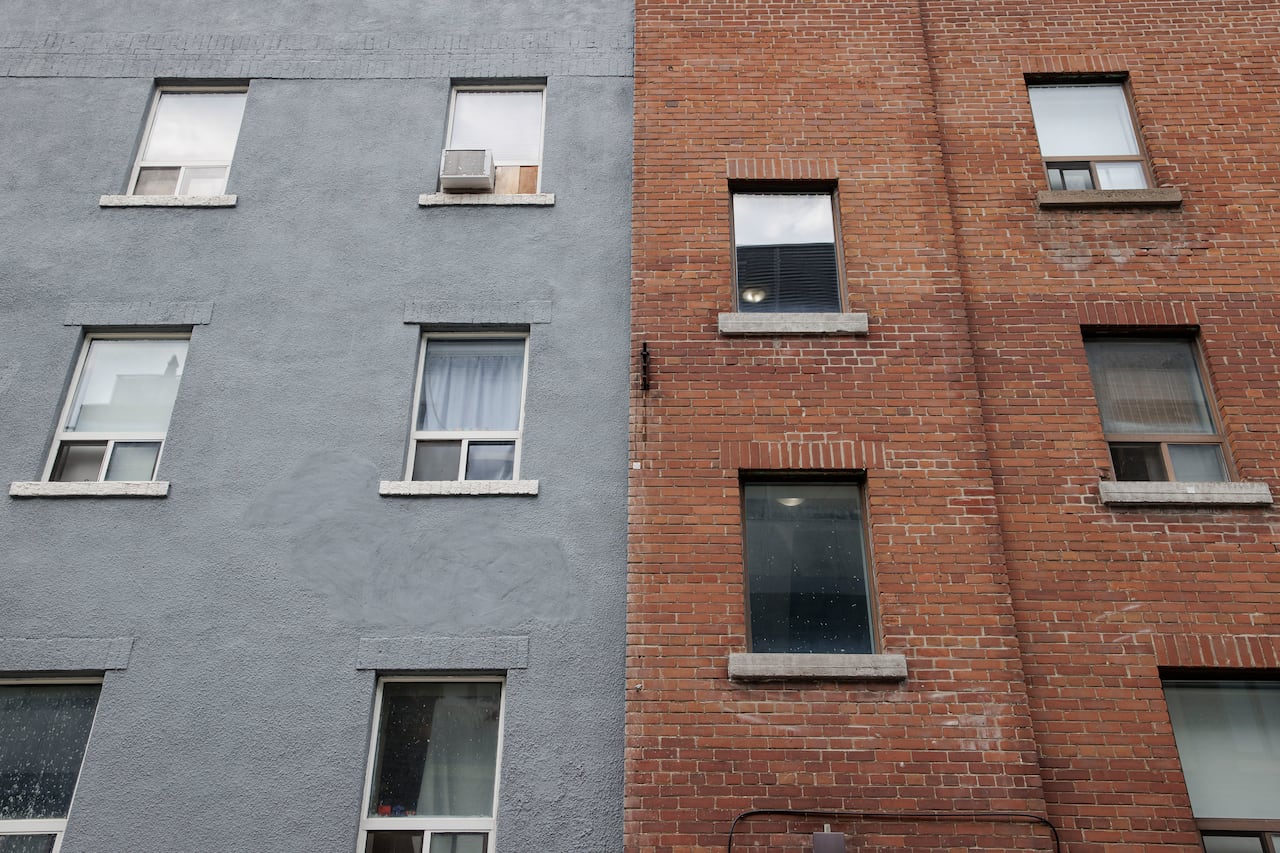 Low-rise apartment buildings in Toronto’s Beaches neighbourhood are pictured on May 22, 2024. (Evan Mitsui/CBC)
Marielle Hossack, director of policy and regulatory affairs for the Federation of Rental-housing Providers of Ontario, said the higher vacancy rate means more choice, flexibility and slightly more affordability for renters.
“There’s a bit more competition so things like incentives and price reductions are some of the things we’ve seen in the sector … It’s essentially a rebalancing of the market,” Hossack said.
Toronto rents still ‘incredibly expensive,’ advocate says
But one advocate said the drop in rents stemming from more vacancies isn’t enough and hopes the trend will lead to more relief for renters.
Yaroslava Montenegro, executive director of the Federation of Metro Tenants’ Association, said the vacancy rate is a good sign for renters, but that more affordable housing is needed.
“The market rents we are seeing across the city are sky high. $2,500 for a one bedroom is still incredibly expensive. And $2,000 can be incredibly expensive, especially if you’re earning the average income a Canadian makes, which is under $80,000 per year,” Montenegro said.
According to Urbanation, developers are forging ahead with new purpose-built projects. Construction began on 3,674 units in the first quarter of 2026, an increase of 12 per cent from last year, it said.
Construction on 4,069 units started in the last quarter of 2025, raising the latest 12-month total for starts to a multi-decade high of 10,388 units.