
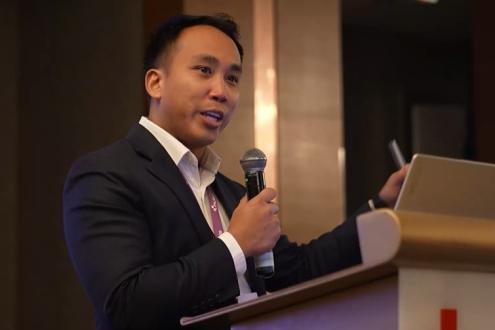
At the Hubbis Philippines Wealth Management Forum 2026, Alex Aguinaldo, Sales Director, Southeast Asia at Avaloq, examined how wealth managers can transition from growth to scalable, resilient operating models in an increasingly complex and technology-driven environment.
Framing his remarks around structural shifts in client expectations, operational inefficiencies, and the accelerating role of technology, Aguinaldo argued that sustainable scale is no longer a function of size alone. Instead, it depends on the ability to streamline operations, deliver differentiated client experiences, and leverage technology to enhance both advisory quality and efficiency.
Key Takeaways
Client Expectations Are Rising Rapidly: Speed of response, digital engagement, and personalised service are now central to trust and retention.
Operational Inefficiency Remains a Structural Drag: Relationship managers continue to spend nearly half their time on non-client-facing tasks.
Technology Fragmentation is a Critical Constraint: Navigating multiple systems reduces productivity and limits scalability.
Differentiation Requires True Client-Centricity: Segmentation, personalisation, and tailored propositions are becoming essential.
Platform Foundations Enable Scale: Integrated systems and workflows drive efficiency and faster time-to-market.
AI is Moving From Concept to Application: Practical use cases are already improving RM productivity, client servicing, and operations.
A More Demanding Client Environment
Aguinaldo began by outlining the macro and behavioural forces reshaping the wealth management landscape, highlighting geopolitical instability, market volatility, and generational change as key drivers.
He pointed to global survey data showing that responsiveness has become a defining factor in client trust, particularly among Ultra-High-Net-Worth Individuals.
“Volatility is increasing, and with that comes the demand for more timely responses and more active engagement,” he explained.
At the same time, the ongoing intergenerational wealth transfer is accelerating a shift in client expectations. Younger, more digitally native investors are reassessing existing advisory relationships, with a significant proportion of APAC clients indicating a willingness to change wealth managers.
“This next generation is more tech-savvy and can be more demanding,” Aguinaldo noted. “They will evaluate whether their current wealth manager is delivering the experience they expect.”
The Productivity Challenge: Rethinking The RM Role
A central theme of the presentation was the structural inefficiency within wealth management operating models, particularly at relationship manager level.
Aguinaldo highlighted that relationship managers currently spend approximately 48% of their time on non-client-facing activities, limiting their ability to focus on advisory and relationship-building.
“That is time taken away from prospecting, from goal planning, and from engaging meaningfully with clients,” he said.
Compounding this issue, many advisers report gaps in training and capability development, even as client expectations continue to rise. At the same time, fragmented technology environments create additional friction, with a majority of advisers citing difficulties in maximising existing systems and navigating multiple applications.
“Technology should be enabling productivity,” he observed. “But for many, it is still a source of complexity.”
Strengthening The Core: Building A Scalable Foundation
To address these challenges, Aguinaldo outlined a three-pillar framework, beginning with the need to strengthen core infrastructure.
This involves streamlining processes across front, middle, and back-office functions, supported by integrated platforms and open architecture that enable connectivity across systems and partners.
“In today’s environment, manual processes are no longer acceptable,” he said. “You need a platform foundation that can orchestrate across your entire ecosystem.”
Key enablers include workflow automation, API-driven integration, and the adoption of standardised templates to accelerate product launches and service delivery.
“Faster time to market comes from having the right foundations in place,” he added.
Differentiation Through Personalisation and Segmentation
Beyond operational efficiency, Aguinaldo emphasised the importance of differentiation in an increasingly competitive landscape.
Traditional product-led approaches are no longer sufficient, particularly as clients become more willing to switch providers.
“Product pushing is not going to cut it anymore,” he said. “You need to take a truly client-centric approach.”
This requires more granular segmentation and the development of detailed client personas, enabling firms to tailor offerings to specific needs and behaviours.
He highlighted emerging segments such as HINRY (High Income, Not Rich Yet) clients, as well as younger HNW individuals, both of whom demand more sophisticated products and enhanced digital experiences.
“You need to understand what each segment actually values,” Aguinaldo explained. “And then design your services accordingly.”
Enhancing Engagement: Empowering Clients and Advisers
Aguinaldo then turned to the role of technology in enhancing engagement, both from the client and adviser perspectives.
On the client side, digital capabilities such as goal-based planning, risk profiling, and portfolio recommendation engines are enabling more interactive and personalised experiences. Features such as gamification and real-time communication channels are also gaining traction, particularly among younger investors.
“In APAC, around 50% of clients are already engaging with their advisers through instant messaging,” he noted. “You need to provide a secure and compliant environment for that.”
On the adviser side, the focus is shifting towards delivering actionable insights and reducing system complexity.
“It is not enough to have dashboards,” he said. “The key is being able to act on the information.”
A unified interface that consolidates data and enables decision-making is critical to improving RM productivity and effectiveness.
AI as an Operational and Advisory Enabler
Aguinaldo concluded by examining the growing role of artificial intelligence across wealth management workflows.
From an RM perspective, AI-powered assistants are already capable of summarising client information, generating insights, and recommending next best actions.
“AI is no longer theoretical,” he said. “There are use cases today that can directly improve how RMs work.”
On the client servicing side, AI-driven tools can accelerate response times through automated query handling and intelligent search capabilities. In operations, automation of processes such as corporate actions is improving efficiency and reducing manual workload.
Even in technology development, AI is enabling faster deployment through coding assistants that translate functional requirements into executable code.
“This allows you to deliver enhancements and customisations much more quickly,” Aguinaldo noted.
Scaling With Discipline and Technology
Bringing his remarks together, Aguinaldo emphasised that achieving scale requires a combination of operational discipline, differentiated advisory, and effective use of technology.
“Operational efficiency provides the foundation,” he said. “It gives you the time to focus on higher-value activities.”
At the same time, firms must ensure that their advisory propositions are clearly differentiated, particularly in an environment where most clients are actively reassessing their relationships.
Finally, technology – and increasingly AI – must be embedded as a core enabler of both scale and client engagement.
“Technology should help you gain back time,” he concluded. “So you can spend it where it matters most – with your clients.”