
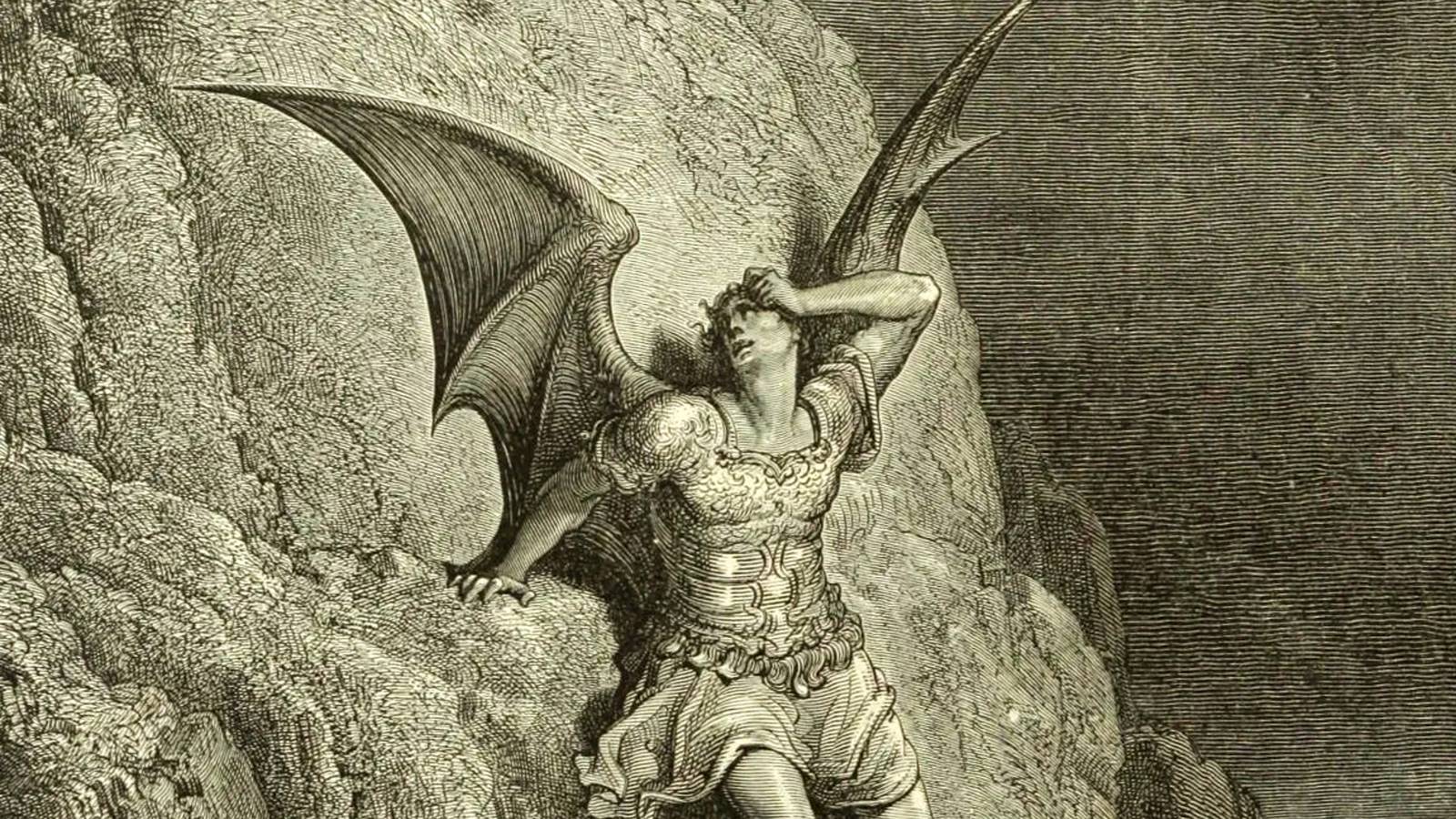
Paradise Lost has finally found a way to make it to the big screen, but there’s a major catch.
Penned by John Milton and published in the 17th century, the epic poem retells the biblical story of the temptation of Adam and Eve by Satan and their eviction from the Garden of Eden. Despite its cinematic potential, Paradise Lost has long dodged a big-screen treatment, largely because bringing its heaven-and-hell spectacle to life would require truly divine (and wildly expensive) visual effects.
Now, Ex Machina Studios has annouced a new Paradise Lost movie adaptation written and directed by Roger Avary, best known for co-writing Pulp Fiction (1994) with Quentin Tarantino and winning an Academy Award for Best Original Screenplay. Avary has also directed The Rules of Attraction (2002) and wrote the screenplay for Beowulf (2007).
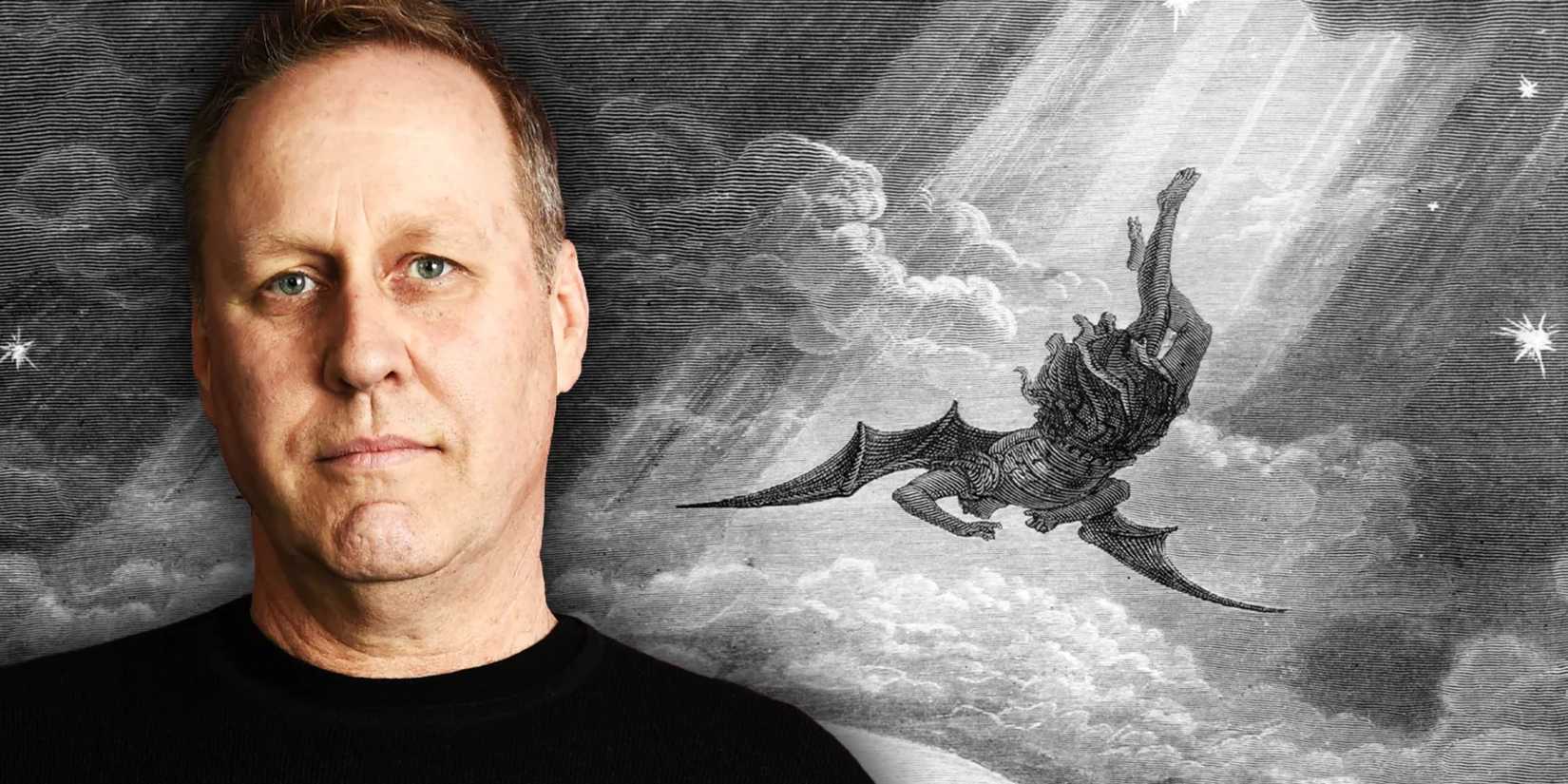
Roger Avary in front of Paradise Lost artCredit: Deadline
Ex Machina co-founder/CEO and film producer Marco Weber (The Thirteenth Floor, Igby Goes Down, Brooklyn’s Finest) is producing the project, with Kirk Petruccelli executive producing.
According to the studio, “Paradise Lost is the ultimate faith-based heroic saga: a cosmic war in the heavens where the charismatic, rebellious archangel Lucifer defies God, is hurled into the abyss of Hell, and vows revenge on all creation. From the fiery lake of damnation, Lucifer rises as Satan to seduce humanity’s first parents, Adam and Eve, in the flawless Garden of Eden, triggering the Fall of Man and the loss of Paradise itself. At its core, Paradise Lost asks the question every generation must answer: When faced with reckoning and crisis, do we obey, rebel, or redeem? This is the oldest story ever told. It is humanity’s origin myth reimagined as blockbuster cinema.”
However, the major catch is that the Paradise Lost movie will be produced through Ex Machina Studios’ “proprietary AI-enabled production pipeline,” the “same workflow now powering” the studio’s rapidly growing slate of projects, including Heaven from Alex Proyas, Cortés, and Space Nation. According to the studio, it “allows for expansive, richly imagined worlds to be realized at a responsible budget while preserving the primacy of real actors, human-authored narratives, and guild-aligned production practices.”
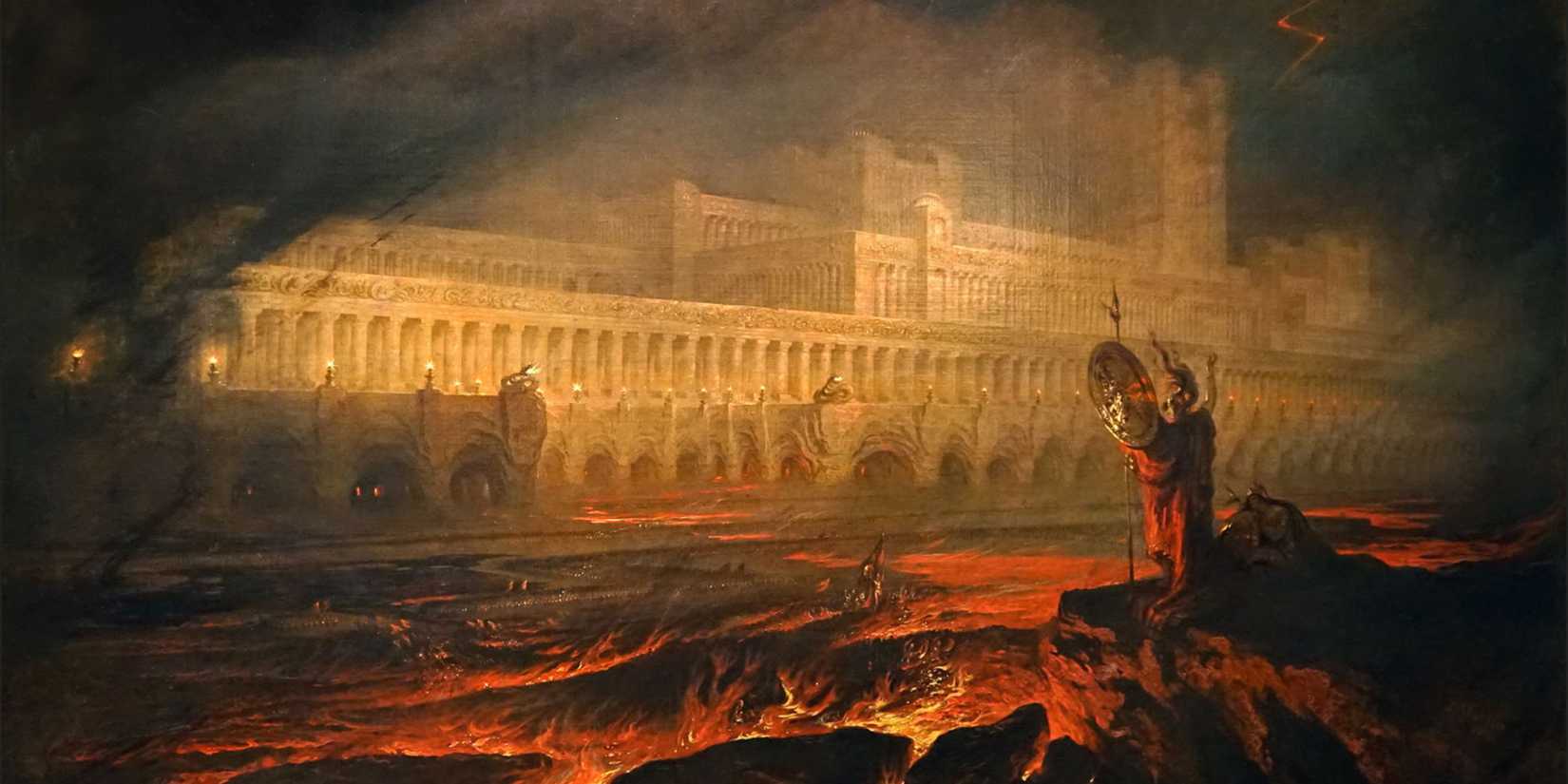
Paradise Lost: Book 1 in paintings and illustrations – The Eclectic Light Company
Still, the Paradise Lost movie will be produced “in active alignment with Hollywood guilds, reflecting Ex Machina’s ongoing commitment to consent, protection, and meaningful participation for artists at every level of production. Consistent with the studio’s commitment to keeping feature production in California, principal work on the project will be based in Los Angeles. Ex Machina retains flexibility to deploy best-in-class open-source video generation tools where appropriate, providing creative advantage, technical agility, and long-term resilience in a rapidly evolving AI landscape.”
The studio continues, “For a writer-director long celebrated for building immersive, otherworldly cinematic universes, the partnership offers a rare opportunity to realize a story of this ambition and scale without the compromises that have increasingly defined studio filmmaking.”
Roger Avary and Marco Weber shared the following statements:
Roger Avary: Beowulf was a revisionist reimagining made on a massive budget, but with Paradise Lost I’m taking a more faithful approach at a fraction of the cost, using cutting-edge generative AI to bring Milton’s vision to life in ways unimaginable just a few years ago. This project brings together everything I’ve learned as a filmmaker and proves that powerful storytelling doesn’t require blockbuster budgets, but the right tools and team. Partnering with Ex Machina and Marco Weber, we’ve created something I believe will move audiences, spark conversations, and remind us why we tell stories in the first place — to wrestle with what it means to be human in the face of the divine. I’m grateful for the opportunity to share it with the world.
Marco Weber: Roger Avary and Milton. Not much more that needs to be said. We are really excited about this one and cannot wait to see it come to life.
Roger Avary’s Paradise Lost movie continues the trend of established filmmakers embracing AI, echoing figures like Steven Soderbergh and Darren Aronofsky experimenting with the technology. Once wary, filmmakers are now cautiously exploring AI as a creative tool and experimenting with how it can expand visual storytelling without entirely replacing the human artistry at the core of cinema.
Even so, enthusiasm remains measured. Filmmakers, including James Cameron and Ben Affleck, have expressed curiosity about AI while stopping short of full endorsement, reflecting an industry still unsure whether the technology is revolutionary or just another passing phase. While it can enhance production, many insist that it should complement and not override the craftsmanship of artists and crews.
That tension defines projects like Avary’s Paradise Lost, arriving at a moment when Hollywood is weighing efficiency against artistic integrity. Much like the shift to digital filmmaking, AI could become invisible when used well, or stand out when used poorly. The bigger concern isn’t directors experimenting with the technology, but whether widespread reliance might erode quality.