
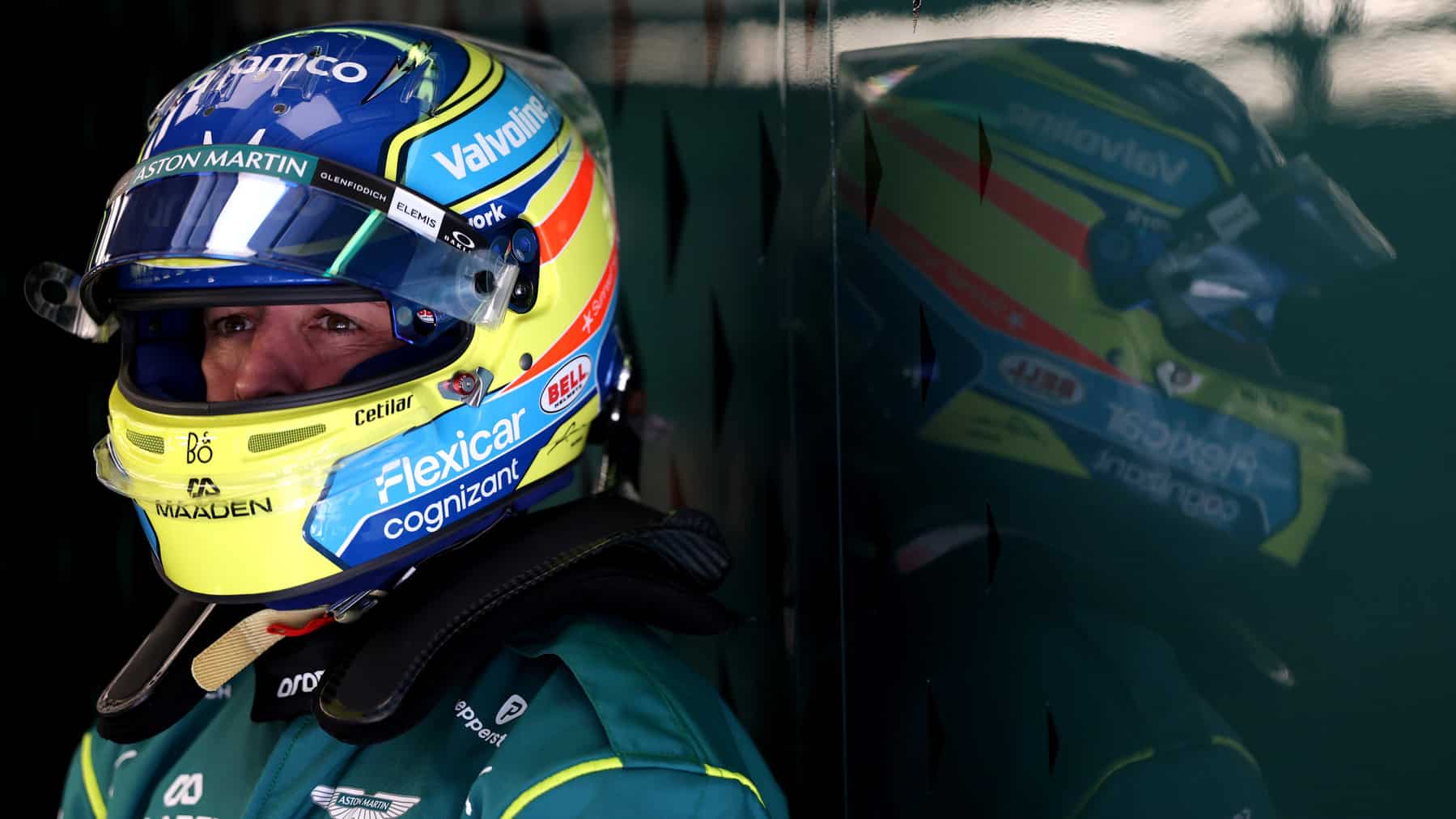
Talking at the Monaco Historic event last weekend, Fernando Alonso indicated strongly that he wishes to continue in F1 beyond his current contract, which expires at the end of this season.
“Time will tell,” he said. “I will feel it. At the moment, I don’t feel it is that time yet. I feel competitive, I feel motivated, I feel happy when I drive. So, yeah hopefully [this is] not the last season.”
Counter-intuitively perhaps, the longer the Aston Martin project takes to come good, the greater are the chances that Alonso will continue. Because his whole mission is to prove that he can still deliver grand prix victories, that he can still take on the whole field of F1’s best and beat them.
Feeling that he is still performing to a level at or close to his prime – a prime higher than 90% of the drivers on the grid – is one thing. Proving it to the watching world is something else.
There is naturally some cynicism that, at 44 years old, he can really be the driver he was when he last won a world title 20 years ago. The usual barometer of a team-mate doesn’t on paper make the case very strongly because, although he has totally dominated Lance Stroll at Aston for the last three seasons, Stroll’s standing isn’t that high, even though he is a driver with a podium and a pole position on his CV and who held a record for the youngest front row starter back in his Williams days.
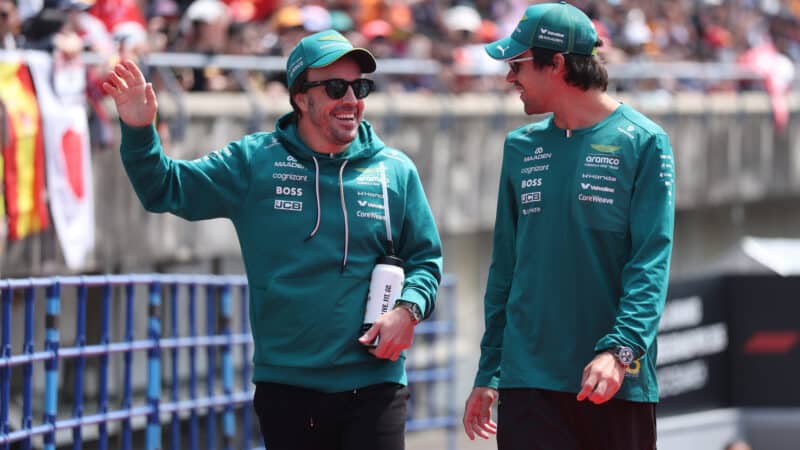
Alonso has dominated Stroll during their time at Aston
Aston Martin
There are better, deeper indications of Alonso’s level than his domination over Stroll, but with regard to that, it’s worth pointing out his qualifying advantage over him is substantially bigger than was Sebastian Vettel‘s (see below).
Year
Driver
Qualifying advantage over Stroll
2021
Vettel
0.116%
2022
Vettel
0.156%
2023
Alonso
0.454%
2024
Alonso
0.299%
2025
Alonso
0.313%
These numbers are expressed as an average to the fastest qualifying time at each race and take out any thwarted or severely compromised sessions. Anything more than 0.2% in qualifying counts as a big number over a team-mate in F1, even though qualifying prowess has never been the outstanding part of Alonso’s game.
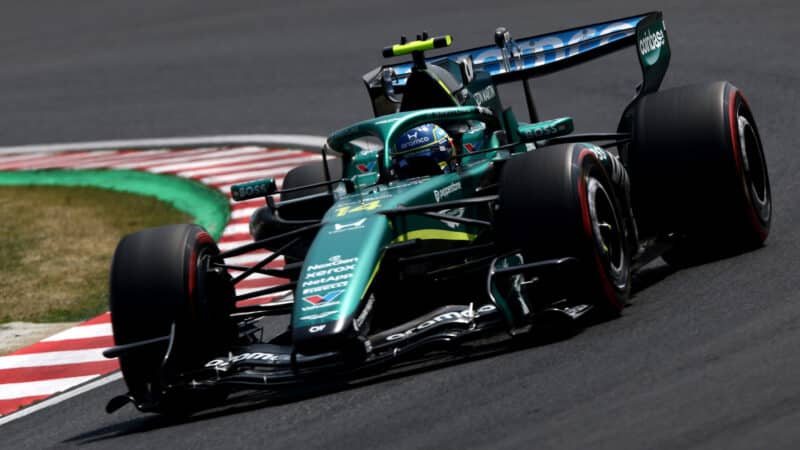
Alonso remains a phenomenon even at 44
Aston Martin
Prior to his Aston stint, Alonso was paired at Alpine with Esteban Ocon for two seasons, and some of Alonso’s detractors like to point out that in 2021 Ocon was marginally faster (by a tiny 0.02% average). But even then, in the sessions where a fair comparison could be made, Alonso was 10-6 up, head-to-head.
That was Alonso’s comeback season after two years away from F1 and another way of looking at it is that it took half a season for him to re-acclimatise. That faster Ocon seasonal average was founded in the first four races as Alonso got back up to speed. In 10 of the subsequent 12 events (83%) where a fair comparison was possible (ie taking out mechanicals, etc), Alonso was quicker, just not by enough to overcome the overall time advantage Ocon built in the early races. Into 2022, Alonso was faster than Ocon with no ambiguity this time, though the margins were small.