
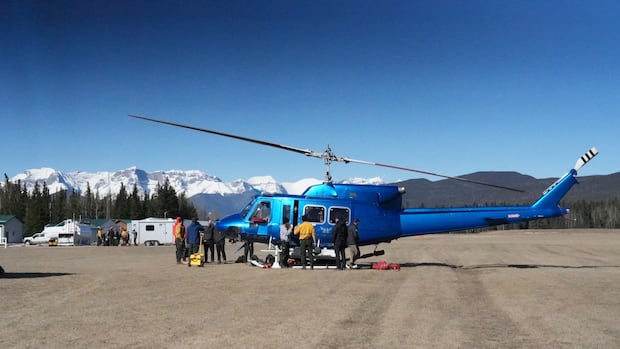
Air traffic in parts of west-central Alberta has been busier than normal over the last few days as the province prepares for another wildfire season.
Newly recruited wildland firefighters are participating in training sessions in Hinton, Alta., about 270 kilometres west of Edmonton. The rookies will learn how to initially attack a fire, a process that includes a helicopter ride.
Meanwhile in nearby Edson, Alta., about 90 kilometres to the east, seven planes have been stationed at the Edson Air Tanker Base.
The planes, which arrived on Monday, are ready to be deployed in the event a wildfire breaks out in the region, said Derrick Forsythe, an information officer with Alberta Wildfire. The area has seen less snow than other parts of the province.
Edson Mayor Kevin Zahara said he believes the increased air activity can be concerning for residents because it wouldn’t be the first time the region saw a fire event so soon after winter.
In 2023, Edson was evacuated twice because of wildfires — once in May and again in June. The second wildfire jumped fireguards and ended up just 1.5 kilometres from the town’s southern edge, forcing residents to flee for 12 days.
“So as soon as people see the planes and helicopters taking off, obviously there’s a lot of concern,” said Zahara.
“We’re just hoping for a wet spring.”
Training the new recruits
For now, the aircraft in Edson are stationed there for precautionary measures, while the helicopters flying over Hinton are for training.
Wildfire training specialist Emma Scullion is teaching new recruits how to approach a fire so they’re ready for early-season deployments.
“I want people to be safe and have a great season,” she said. “I really try to encourage people to follow up, to ask great questions [and] to be curious about the work that they’re doing so that they can be safe when they’re out there.”
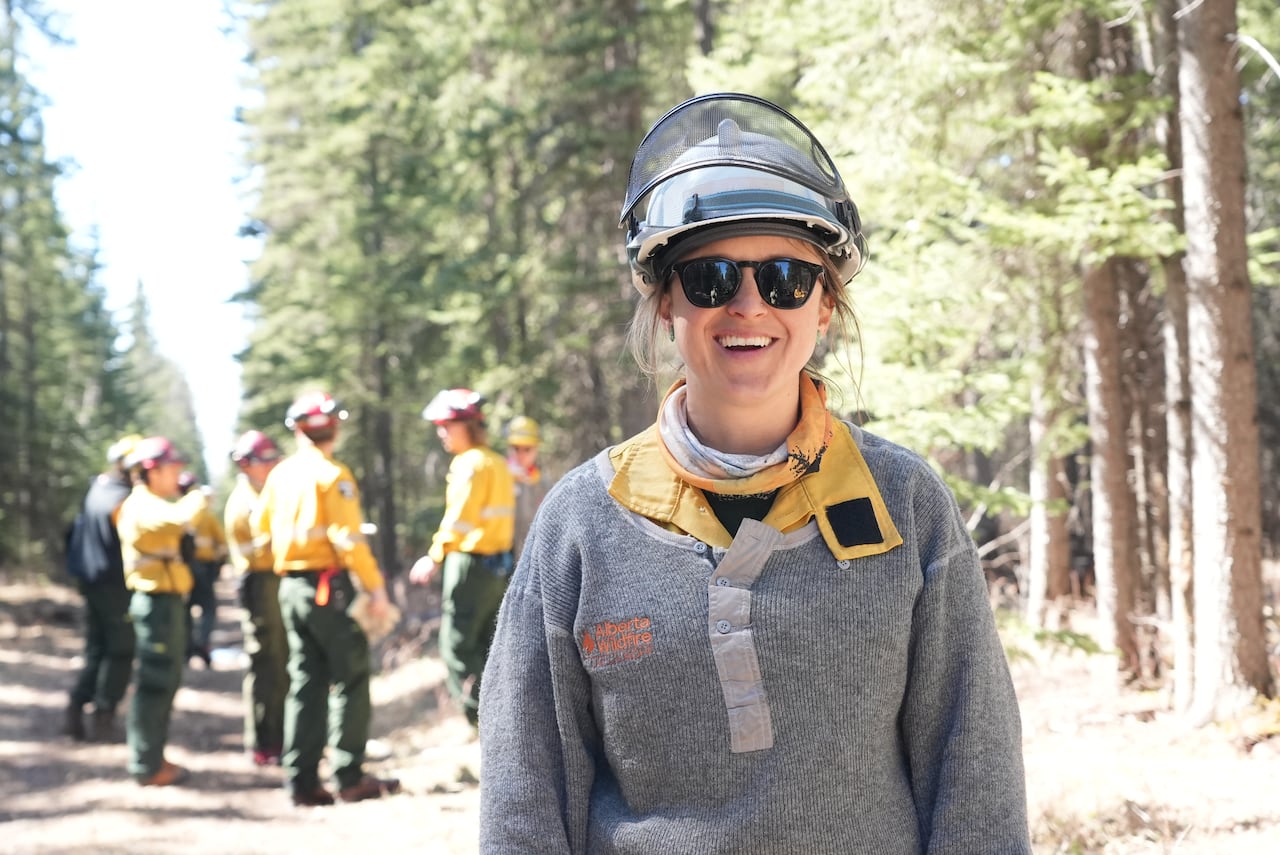 Emma Scullion, a wildfire training specialist at the Hinton Training Centre, said all new recruits should understand how to keep themselves safe in the field after their three-week orientation. (Maggie Kirk)
Scullion said it will take a few months for the new recruits to get fully up to speed.
After three weeks at the Hinton Training Centre, the recruits will join seasoned crews throughout the province, where they will continue training on base while they await deployment.
“Even though it’s a seasonal job, the folks that work for us are truly the best,” said Scullion.
She noted that while many recruits are university students or have winter careers, they undergo rigorous training to ensure they can operate safely in high-stress environments during wildfire season.
Training for the front line
One of those recruits is Evan Stronach. After seven seasons working in wildfire support roles, he will be heading to Lac La Biche, Alta., 220 kilometres northeast of Edmonton, for his first season on the front lines.
After a week in the classroom, Stronach had the opportunity to put what he learned into practice.
From the helicopter, Stronach said the crew scoped a water source. Once they landed, the crew of four hooked up their pumps to a nearby creek, laid their hose and then approached the simulated perimeter of the fire.
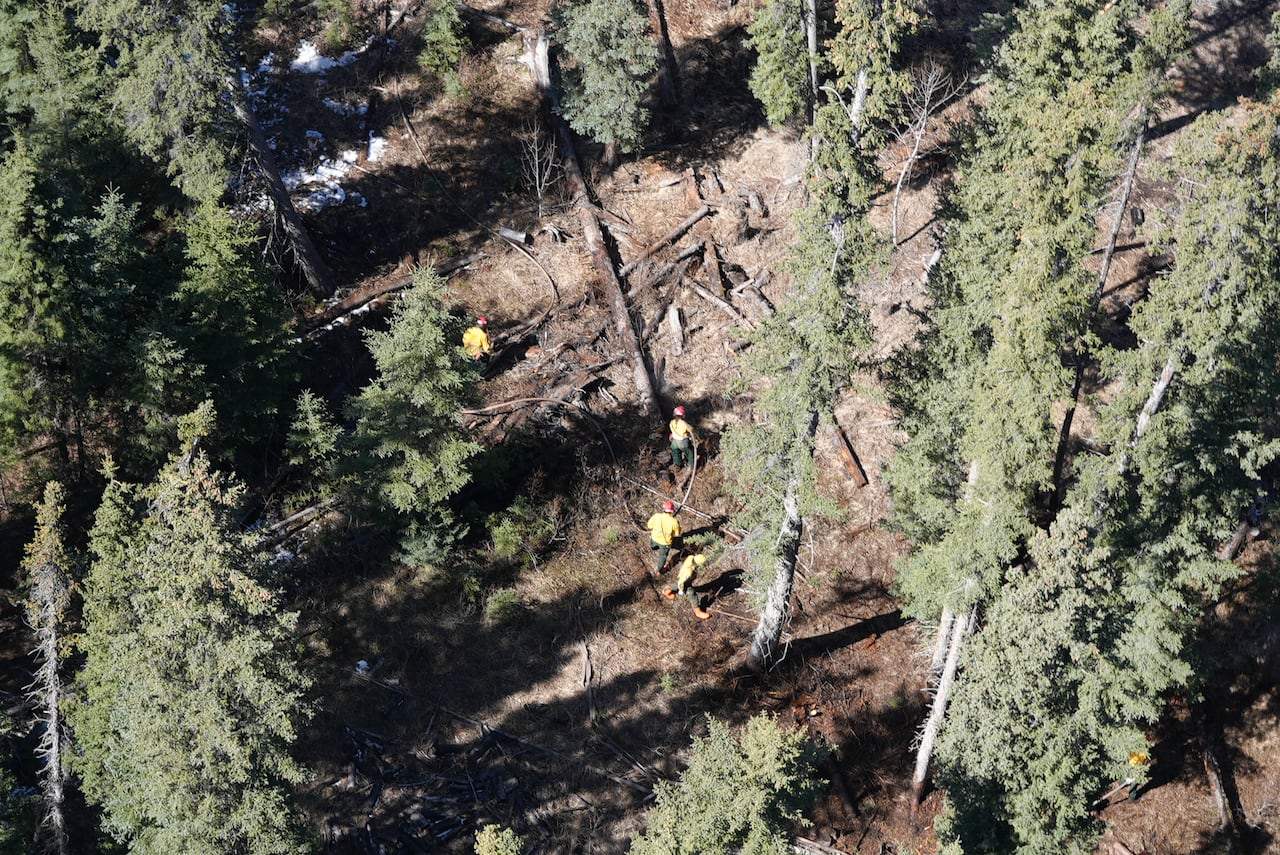 New recruits direct a hose at a mock fire, practising skills learned in the classroom. (Maggie Kirk)
The perimeter of the fire is marked with toilet paper, said Scullion, and the centre is a controlled bonfire representing the middle of the simulated wildfire.
Once the crews spray around the perimeter, said Stronach, they will go toward the centre of the fire to extinguish it.
“It would be foolish just to throw someone into a high-stakes situation without getting their reps in first in these sort of practice scenarios,” he said.
Even during training, Stronach said crews still face real safety risks of flying in helicopters and setting up gear.
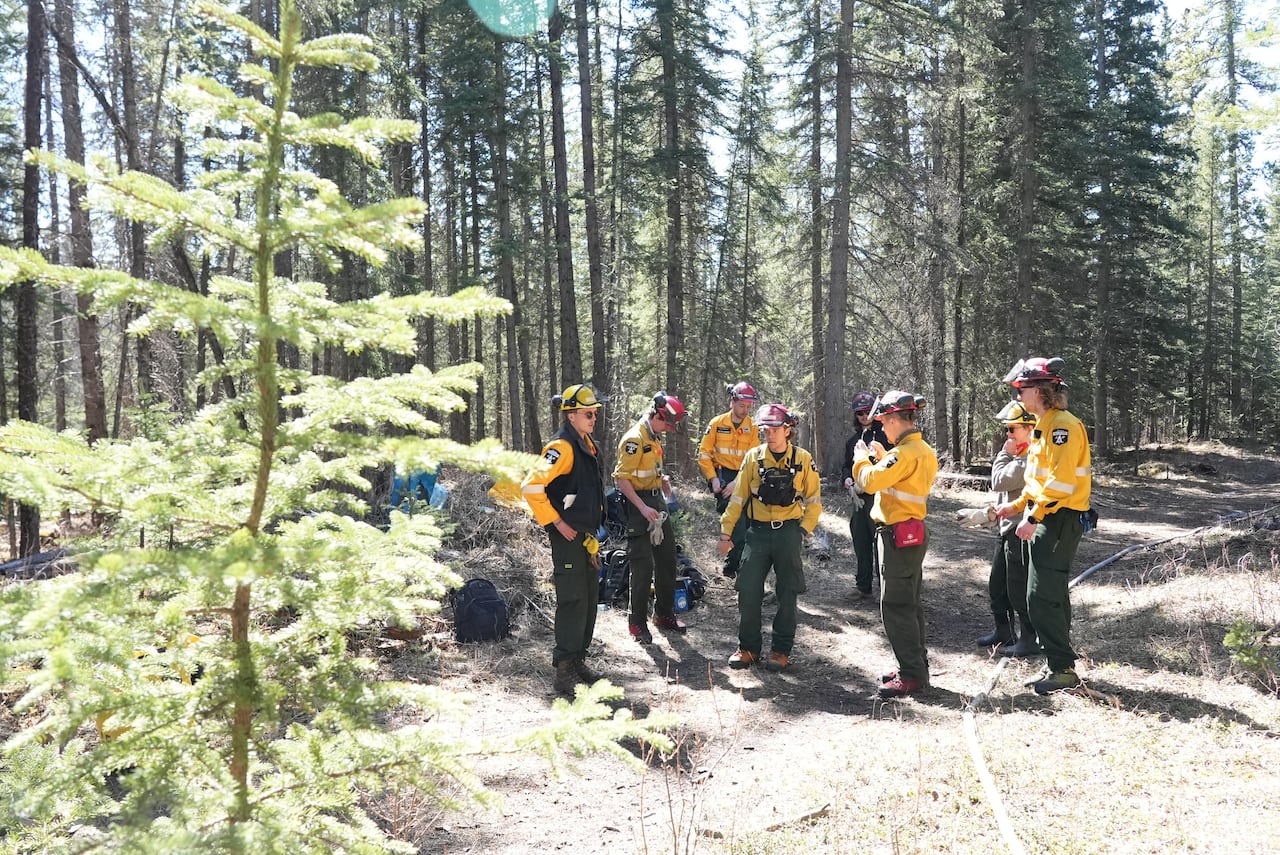 Every year, 150 new wildland firefighters come through the Hinton Training Centre before getting stationed across the province. (Maggie Kirk)The wildfire season ahead
According to the Alberta government’s website, there will be increased helicopter activity in Hinton until the end of May for training.
As of Tuesday night, the Edson Forest Area — encompassing Edson, Hinton and much of Yellowhead County — was considered by the province to be at moderate risk of wildfire due to warm and dry conditions.
Since the start of 2026, there have been 14 wildfires in the region, burning a total of 9.63 hectares.
“We haven’t seen some of the snow recently that some other areas of the province have,” said Zahara.
The period between snow melt and grass starting to green up can “be a bit of a volatile time,” Forsythe said.
“The risk will start to increase slowly as the weather gets warmer and we have less snow on the ground and more exposed fine fuels,” he said.
Stronach said he and the other new recruits will be prepared when the time comes to put out real fires.
“I’m really confident that we can handle whatever Alberta throws at us as far as fires go,” he said.