

Listen to this article
Estimated 4 minutes
The audio version of this article is generated by AI-based technology. Mispronunciations can occur. We are working with our partners to continually review and improve the results.
Saint John’s fire department wants the city to adopt a long-term plan to reduce the risk of wildfires and strengthen the ability to fight them.
A proposed plan, which includes raising public awareness and improving wildfire training for firefighters, earned the support of the city’s public safety committee at a meeting Wednesday.
Recommendations came after a detailed evaluation of wildfire risks based on terrain, weather and climate influences, locations of homes and other factors.
Saint John has not experienced large-scale wildfires in recent history, as other areas of New Brunswick have, but the evaluation identified a moderate overall wildfire risk in some areas of the city.
Steep hillsides, and extensive forestry, park space and other green areas — particularly near dense neighbourhoods — create risky conditions for the city uncommon in other parts of the province, Deputy Chief Ed Moyer of the Saint John Fire Department told the committee.
“The benefits of adopting this [plan] will improve life, safety and preparedness, better protect homes and critical infrastructure, and increase readiness,” Moyer said in a presentation to the committee.”
Moyer’s presentation came with an extensive report, “Community Wildfire Resilience Plan,” prepared by consulting group Transitional Solutions Inc.
Research looked at the city’s level of preparedness by studying fire resources, water supply and co-ordination with other governments and agencies.
The result was a range of proposed steps addressing public awareness, personnel training, and strategies for emergency preparedness, evacuation planning and structure protection.
City has ‘moderate’ wildfire risk
Moyer said the plan is a response to changing climate conditions and other factors, which include the need to respond more frequently to grass and brush fires.
The department evaluation notes that while many wildfire incidents are small and contained quickly, there is still a risk of “higher consequence” events during the hotter months.
Other factors putting areas of the city at risk are its wind exposure and its forests dominated by conifer trees, which are known for their combustibility.
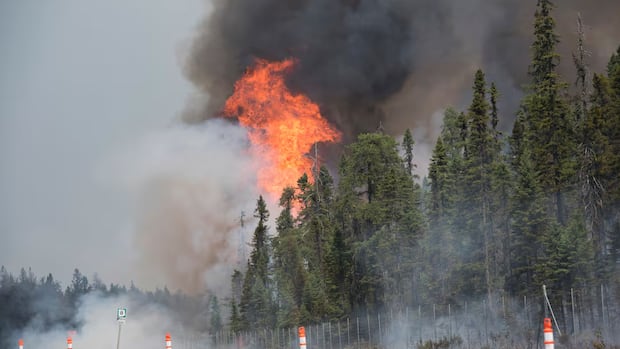
The proposed wildfire strategy comes after an active fire season for New Brunswick in 2025, when there were 448 reported wildfires, which burned almost 3,400 hectares. Most of these were caused by human activity.
The research about Saint John was funded by a federal and provincial program — totaling $2.6 million — announced in December meant to help communities in the province with wildfire planning.
The province announced the 2026 wildfire season early this year because of record-low precipitation during the winter and a summer projected to be drier than the last.
“I think this is one of those reports that we can all appreciate the importance given the environmental climate … and how much worse things seem to be getting,” Coun. Greg Stewart said.
“This is a welcome working document and I know that a huge amount of effort’s been put into this.”
The proposed plan goes to city council next. Staff said having the plan would improve the city’s eligibility for provincial and federal wildfire mitigation funding.
The report to the committee says the plan uses FireSmart frameworks, referring to a federal wildfire management program.
Evacuation planning, training and public awareness
The plan comes with 14 main objectives.
The highest priority items include protecting homes and other facilities during wildfires, strengthening water supply and reducing risks associated with human activity.
 Coun. Greg Stewart praised the fire department for the strategy. (City of Saint John)
The short-term objectives include things such as increasing public awareness about ways to reduce fires through education, emergency evacuation planning and strengthening partnerships between provincial and regional wildfire authorities.
The city would aim to implement these within one to two years.
Long-term goals include integrating FireSmart frameworks into city planning to prevent the creation of new wildfire-exposed areas and adopting training programs for firefighters on how to respond to wildfires. These would take two to five years.
The plan’s goals are intended to align with annual municipal budgets and future external funding.
Mayor Donna Reardon and Coun Greg Norton, the safety committee chair, praised the plan and staff for getting the funding for preparing it.
“It came at no cost to Saint John taxpayers,” Norton said. “Yet at the same time it builds a great deal of community resilience into our public safety plan.”