

Listen to this article
Estimated 4 minutes
The audio version of this article is generated by AI-based technology. Mispronunciations can occur. We are working with our partners to continually review and improve the results.
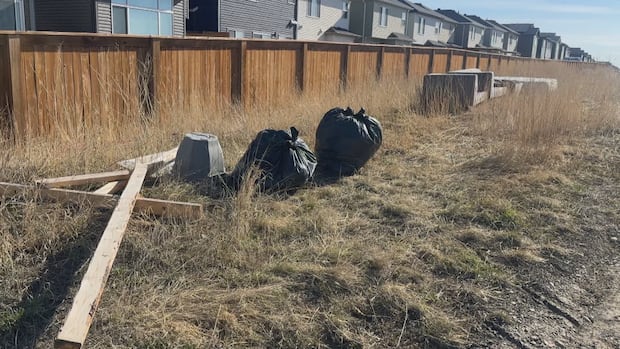
Calgary resident Rowellyn Sales says illegal dumping is getting worse in her northeast community of Cornerstone.
She said it’s not uncommon to wake up to a discarded tire on her lawn or furniture left across the street.
“I reprimanded one guy,” Sales said, after seeing him try to leave a bedframe on her neighbour’s property.
“I said, like, ‘Hey, you can’t dump in here. That’s illegal.'”
Sales isn’t alone. City officials previously told CBC News they received nearly 5,000 service requests for illegal dumping in alleys last year. While illegal dumping has been a persistent issue, the city said in a news release last week it has become more severe in recent years, particularly in northeast communities.
“Illegal dumping isn’t just unsightly. It creates real safety risks and pulls City crews away from other essential work,” Damian Cole, the city’s deputy chief of community safety, said in the release.
“Every illegal dumping call means resources are redirected from services Calgarians rely on.”
 Rowellyn Sales has lived in Cornerstone for the past two years. She says illegal dumping is getting worse in her community, and she would like to see more done to prevent it. (Colleen Underwood/CBC)
According to the city’s website, illegal dumping involves leaving waste, such as furniture, mattresses or construction materials, on public or private property without permission. It often occurs in parks, alleys, open lots and newly developed areas.
Illegal dumping can bring fines of up to $10,000, the city says.
Residents can report illegal waste disposal to 311.
Sales said she has reported instances of illegal dumping to the city, and they have picked up the garbage. But she also thinks this might encourage people to continue to do it.
“They think that they can just dump here and someone will pick it up,” she said.
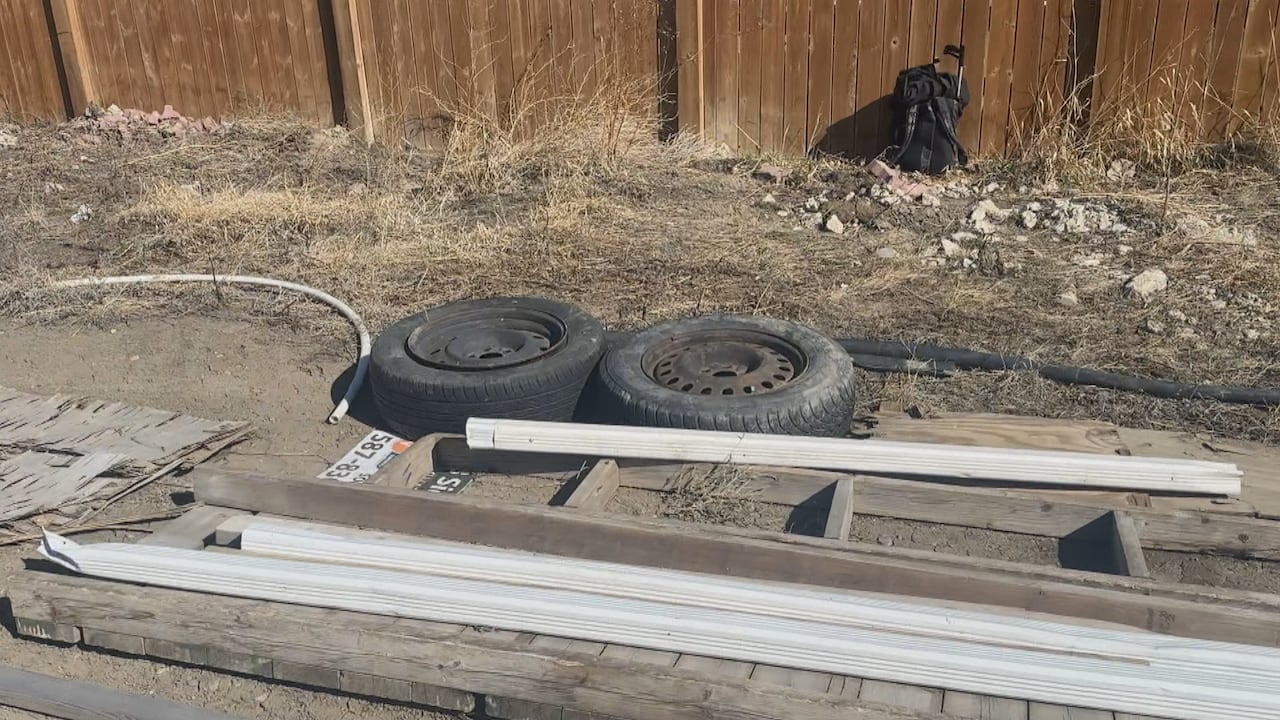 Illegal dumping involves leaving waste such as furniture, mattresses or construction materials on public or private property without permission. It can lead to fines of up to $10,000. (Colleen Underwood/CBC)
Matthew Edwards, who lives in the area and helps run the community group Cleaning Up Calgary, said he regularly sees large dumping sites in the northeast and southeast, and reports them to the city.
“There have been areas that I’ve come to clean up in the past that I’ve gone back to like a year later and it is relatively better,” Edwards said. “But I do see a slow decline in our city towards waste management.”
Edwards started the cleanup group in 2023, and says it has since helped remove nearly 10,500 kilograms of garbage in 80 communities around the city.
Still, he said education is key to preventing the problem in the first place.
Education the first step, city councillor says
Ward 5 Coun. Raj Dhaliwal, who represents northeast Calgary, thinks many people might not be aware that dumping is illegal and can lead to fines.
He and his team have started posting lawn signs in affected areas as part of an education campaign to inform people what is and isn’t allowed.
“If you look at southeast and you look at northeast, 95 per cent industrial area lies in these two quadrants,” Dhaliwal said.
“It takes time for industrial land to develop. So they sit empty, and they attract these kinds of activities because people feel, ‘OK, well, this is just sitting there empty. I can just throw it in here.'”
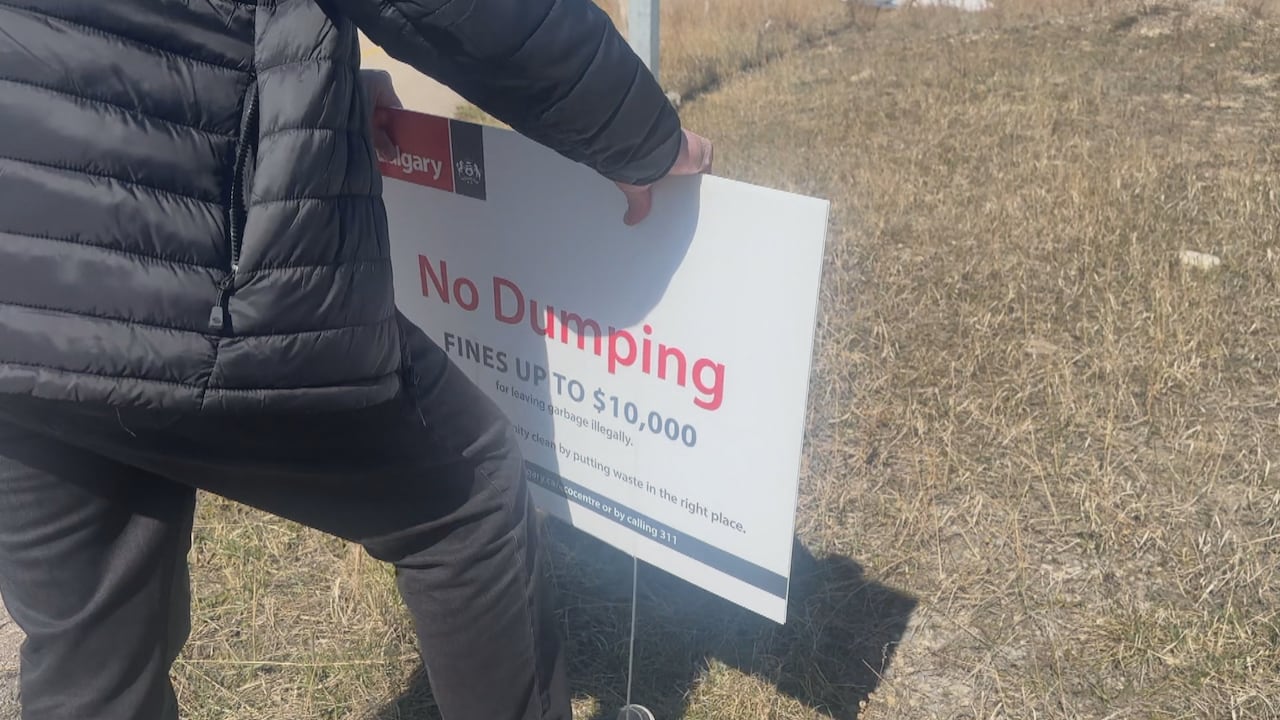 Ward 5 Coun. Raj Dhaliwal places a sign in the city’s northeast warning of the consequences of illegal dumping. (Colleen Underwood/CBC)
Dhaliwal said larger signs will be going up next week, and the city will be holding community cleanups in the coming weeks, where residents can drop off household items that do not fit in their black garbage bins.
Teams will also be distributing pamphlets about the issue and notifying residents of when their community’s cleanup will be, he said.
Sales said while educating residents is important, signs are not enough. Instead, she would like to see cameras placed in high-risk areas to discourage people from dumping.
She also said providing community bins for larger items or offering one free day a week to drop off items at the dump could help.
Dhaliwal said those options would be expensive to implement, although he might consider looking into them if education does not work.