
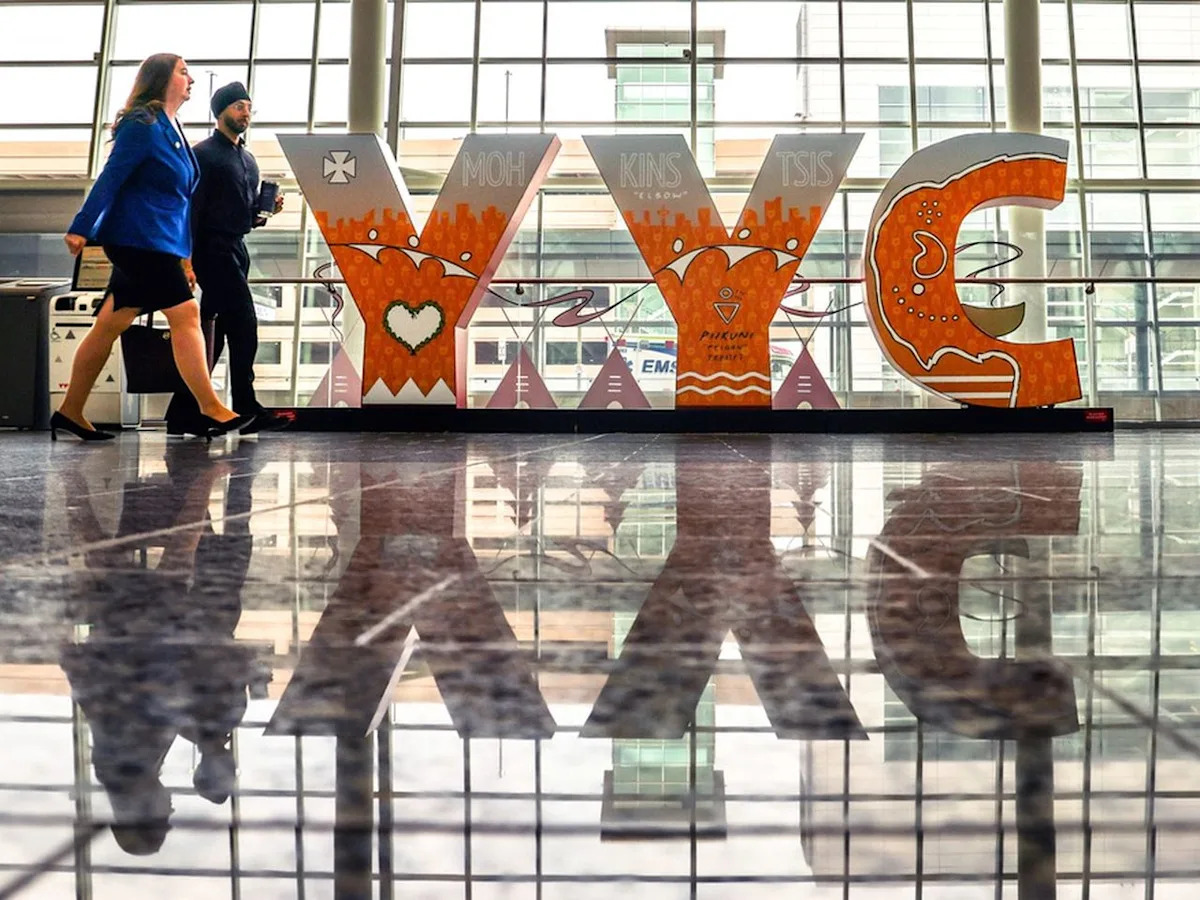
Travellers will see continued construction at the Calgary International Airport as all three domestic concourses are updated over the next five years, but the Calgary Airport Authority said the payoff will be well worth it.
At the Calgary Airports AGM on Thursday, president and CEO Chris Dinsdale outlined a series of projects planned to optimize YYC’s domestic terminal, which he said “needs some improvement.”
“We’re re-imagining the flow of the domestic terminal,” he said. The second phase of the centralized screening project, which consolidates three security checkpoints into one, is set to open this year, significantly increasing the terminal’s capacity.
The next phase, he said, is completing the restoration of concourse B, which suffered significant damage during an August 2024 hailstorm. Significant progress was made in 2025, including the replacement of its 60,000-square-foot roof, and by 2027 travellers will see what Dinsdale said is “in effect, a brand-new concourse.”
“If you went through it, you would not recognize it. It’s completely emptied out,” he said. “It looks gorgeous. This is going to be one heck of a concourse.”
Next up will be a revamp of the terminal’s retail spaces, after which concourses A and C will be refurbished, around 2030 to 2031. When the work is complete, Dinsdale said, it’ll feel like an entirely new terminal — but at a fraction of the cost.
The plan is part of a larger strategy to support the airport’s growth and, ultimately, the growth of Calgary’s aviation sector as a whole.
Dinsdale said a successful 2025 put the airport on track to meet future targets, including reaching 25.2 million annual passengers by 2030.
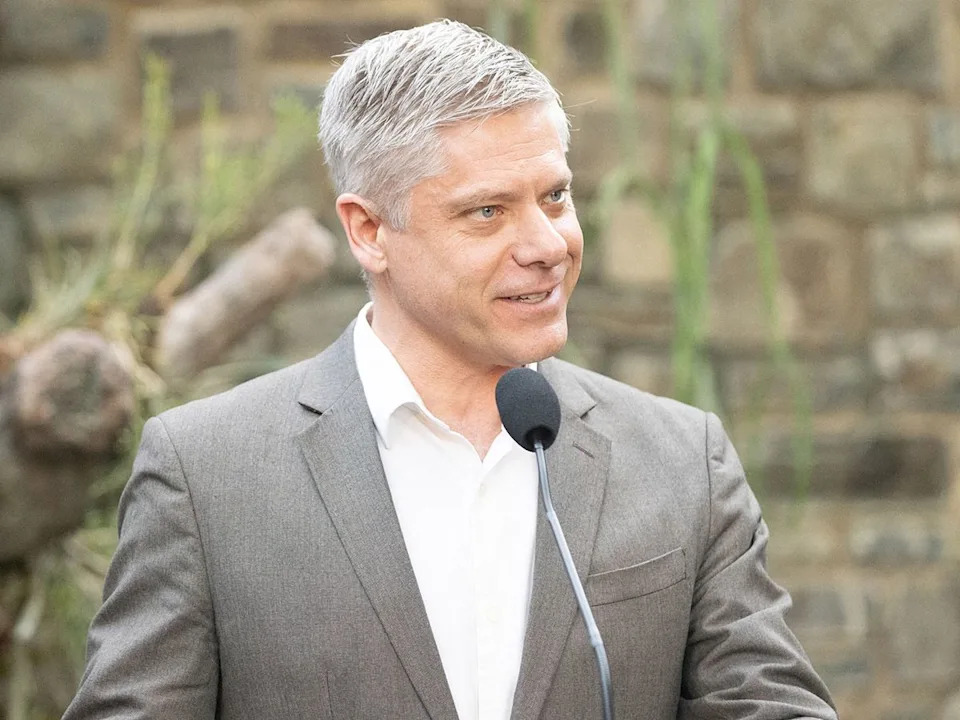
Chris Dinsdale, president and CEO of the Calgary Airport Authority, speaks to media on Jan. 19, 2026.
Less travel to the U.S. offset by more domestic, international trips
Last year saw a total of 19.4 million passengers, an increase of 2.7 per cent from 2024. YYC’s two busiest months, July and August, saw more than two million passengers each — a record high for Calgary’s airport. Total revenue reached $541 million, up 4.3 per cent from 2024.
As well, 13 new non-stop routes added in 2025 brought the total to 108, which Calgary Airports CFO Jen Pon said makes YYC “one of the best-connected airports of (its) size.”
Though travel to and from the U.S. was down in 2025, domestic and other international travel saw an increase, leading to overall growth of 2.7 per cent.
More than $233 million of capital was reinvested into the airport in 2025, Pon said, among the largest capital spending the organization has seen in recent years.
Infrastructure milestones in 2025 included the completion of the west runway and Phase 1 of centralized screening, as well as the groundbreaking of the new Lufthansa Technik engine maintenance, repair and overhaul facility in June.
“Calgary airports is investing $120 million into the Lufthansa Technic facility, and we anticipate that once operations commence in 2028, we will see 160 permanent jobs created in Calgary by 2030,” said Chris Miles, Calgary Airports’ COO.
A second development under the YYC AeroNex banner, the CAE flight simulator and training facility, was announced in September, and is set to open in December 2028.
Two more AeroNex projects are to be announced later this year, Miles said, both of which are planned to be completed by 2029.
“The goal is to really position Calgary, this region, this province, this airport, as that centre of excellence,” he said. “Everything that we are doing as an airport today is about sustainability and investing for the future.”
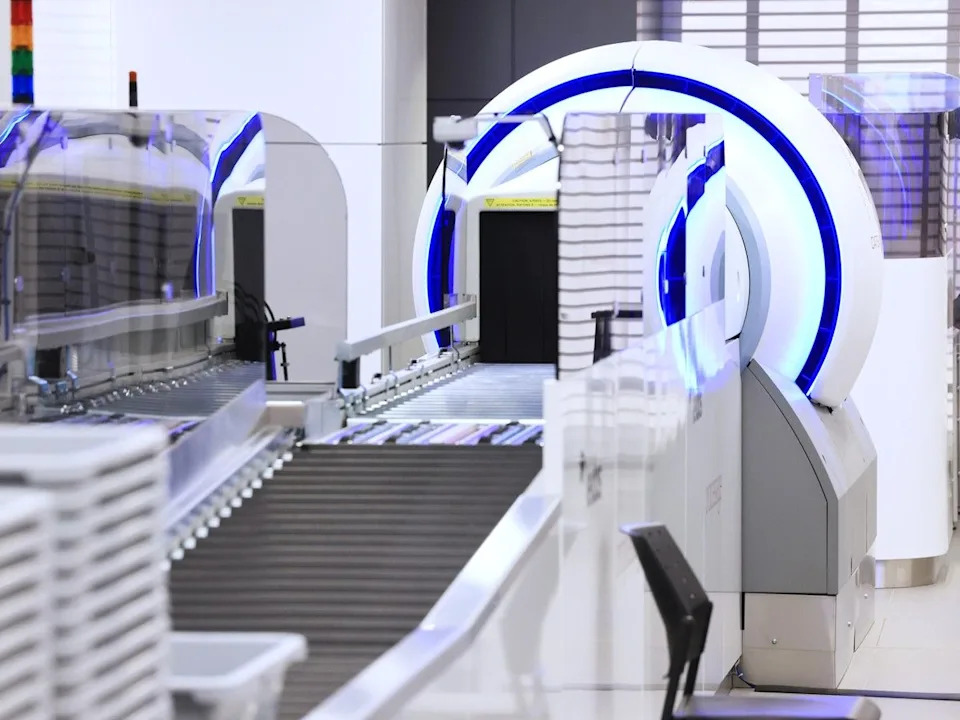
The Calgary International Airport’s centralized security screening area was photographed on Tuesday, December 9, 2025.
Airports seek to modernize federal regulations
Dinsdale also credited co-operation with the federal government.
“Canada suffers from very antiquated regulations . . . But the new federal government, actually, to their credit, has really stepped up,” he said. “We’ve seen a notable shift in the last year of progress finally being made.”
Calgary Airports, along with several other airports and airlines from across the country, made a pre-budget submission to the federal government with several recommendations, he said, including the implementation of biometrics and the digitalization of existing processes.
“These are things that bring the cost of flying down, increase safety, increase security — all the things that everyone wants, and they’re right in front of us, if we have the right regulation,” Dinsdale said.
“We need someone just to go through these regulations, clean them up, bring them up to the modern world.”
Canadian Airports Council president Monette Pasher said that although changes have been slow moving, particularly since the COVID-19 pandemic, the new federal government has helped to move things along.
“There’s been a shift, in that they want to move at speed,” she said. “I think we also have a government that’s very investment- and globally minded, and all of those things are great for airports, they’re great for aviation.
“We’re a global industry and a global sector, so I think all of those pieces about making Canada stronger and increasing investment and foreign investment in our country are all great examples of ways we can move forward.”
Catch up with the day’s headlines, curated by our editors and delivered to your email inbox at lunchtime on every business day. Sign up now for the Calgary Herald Noon News Roundup.