
Classic rock history has a funny way of rewriting itself. Once a song becomes untouchable—blasted through stadium speakers for decades, streamed hundreds of millions of times, folded permanently into pop culture—it starts to feel inevitable. Like everyone involved instantly recognized greatness the second it came together in the studio. That almost never happens.
Some of the biggest songs in rock history began as afterthoughts, rehearsal jams, runtime fillers, or tracks bands barely argued for at all. Labels missed them. Artists underestimated them. In some cases, musicians were so close to the material they genuinely couldn’t hear what would eventually connect with millions of people. And honestly, maybe that’s part of why these songs lasted.
None of them sound reverse-engineered for mass appeal. They feel loose, accidental, human. The imperfections stayed intact because nobody was treating them like sacred masterpieces while they were being made. Most bands were focused on entirely different songs they assumed would carry the album.
That disconnect between perception and legacy is what makes these stories so fascinating decades later. Because once a song becomes woven into culture itself, it’s almost impossible to imagine the people who created it hearing anything ordinary. But they absolutely did.
Sweet Child o’ Mine — Guns N’ Roses
The opening riff to “Sweet Child o’ Mine” now feels almost mythological—one of those guitar parts so recognizable it practically exists outside the song itself. But according to Slash, the riff originally started as a joke while warming up during rehearsal.
Slash despised the opening riff for years. He wasn’t trying to write a hit; he was doing a string-skipping technical exercise to warm up his fingers—basically a musical joke. He was reportedly annoyed when Axl Rose started writing lyrics to it, calling it a “circus melody.”
The band slowly built around it without immediately treating it like a future classic. That casual beginning makes the song’s eventual legacy even stranger. “Sweet Child o’ Mine” became Guns N’ Roses’ only No. 1 single on the Billboard Hot 100 and remains one of the defining rock songs of the 1980s—all from a riff nobody initially took that seriously.
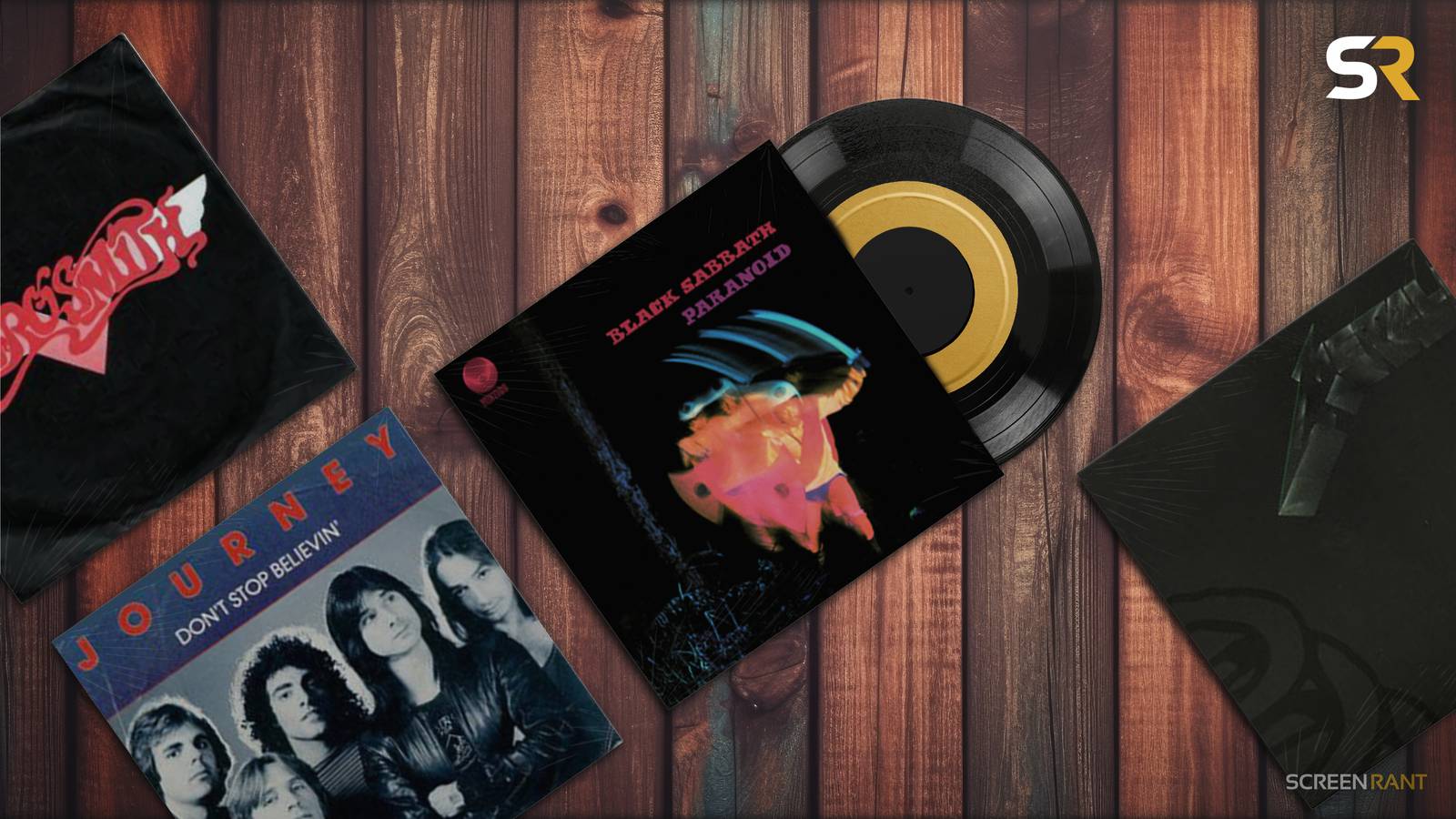
Don’t Stop Believin’ — Journey
Today, “Don’t Stop Believin’” feels less like a song and more like permanent infrastructure. Sports arenas, karaoke bars, streaming playlists, television finales—it somehow became unavoidable without ever really disappearing.
What’s easy to forget is that its dominance happened gradually. Upon release in 1981, the track wasn’t viewed as the obvious defining centerpiece of Journey’s catalog. Over time, it simply refused to go away, eventually becoming one of the best-selling digital songs of the 20th century and one of the most streamed classic rock tracks ever made.
Paranoid — Black Sabbath
One of heavy metal’s foundational songs reportedly came together because Black Sabbath needed another track to help complete the runtime of their 1970 album. “Paranoid” was written quickly in the studio and initially treated more like a practical solution than a defining artistic statement.
Black Sabbath’s biggest hit was written in literally 25 minutes. The band finished the rest of the album and the producer told them they were three minutes short. Tony Iommi strummed the riff while the rest of the band was at lunch; by the time they got back, the song was finished. They almost didn’t include it because they thought it sounded too much like a pop song.
The irony now feels almost absurd. What started as a fast filler track became the band’s signature song and one of the records that helped shape heavy metal itself. The speed and urgency that made it feel disposable at the time ended up becoming the exact qualities that made it immortal.
Under Pressure — Queen & David Bowie
“Under Pressure” wasn definitely not a calculated masterpiece; it was a beautiful, wine-soaked accident born from a 24-hour marathon session in Switzerland. David Bowie and Queen were just jamming and experimenting to see what would stick. The session was famously chaotic, fueled by ego and alcohol, with Bowie reportedly taking over the mixing desk and clashing with the band over the song’s direction. Because it was born from pure improvisation rather than a mapped-out plan, it was initially viewed as a loose, throwaway experiment that might not even see the light of day.
The song’s iconic bassline was almost lost forever. After a long night of jamming and a heavy lunch break, bassist John Deacon completely forgot the riff he had created. Thankfully, drummer Roger Taylor remembered the notes and played them back to him, saving one of the most recognizable hooks in rock history from being a literal filler memory.
The very looseness that made the band skeptical became the song’s greatest strength. Unlike the overly-sanitized, synth-heavy productions of the early ’80s, “Under Pressure” captured a raw, lightning-in-a-bottle tension that felt dangerously alive. It exploded because it offered something human and unpredictable—anchored by one of rock’s most iconic basslines—that resonated far beyond the studio.
James Hetfield originally viewed “Nothing Else Matters” as too personal for Metallica, reportedly unsure whether the song even belonged on a Metallica album at all.
That hesitation makes the song’s crossover success even more fascinating in hindsight. What once felt emotionally vulnerable became one of the band’s biggest global hits, helping expand heavy music into spaces metal rarely occupied before. The very thing that made Hetfield uncomfortable ultimately made the song universal.
More Than a Feeling — Boston
James Hetfield never intended for “Nothing Else Matters” to reach the public, let alone become a staple of Metallica’s live sets. Written in a hotel room while he was feeling homesick on tour, the track was a deeply personal exercise in vulnerability that Hetfield initially felt was too soft for the band’s aggressive brand of metal. He was reportedly so unsure about the song that he didn’t even play it for his bandmates at first, viewing it as a private demo rather than a potential track for The Black Album. It was only after drummer Lars Ulrich heard the tape and pushed for it that the band decided to record it, though Hetfield remained skeptical that their core fanbase would ever accept a ballad so raw and exposed.
That very hesitation is what ultimately fueled the song’s unprecedented crossover success. By leaning into an emotional vulnerability that heavy metal rarely occupied, “Nothing Else Matters” shattered the genre’s rigid boundaries and introduced Metallica to a global audience far beyond the headbanger demographic. It transformed from a track Hetfield was embarrassed to share into one of the most recognizable power ballads in history.
Dream On — Aerosmith
“Dream On” eventually became one of classic rock’s definitive power ballads, but its rise wasn’t immediate. The song initially struggled commercially before gradually building momentum through re-release and radio support.
This is the only song on their debut album where Steven Tyler used his real voice; he sang higher on the rest of the album because he was insecure about how he sounded.
That slower trajectory changed the entire perception of the track. Over time, “Dream On” transformed from a modest early single into the emotional centerpiece of Aerosmith’s catalog. Some songs explode instantly. Others take over culture over the course of decades.