
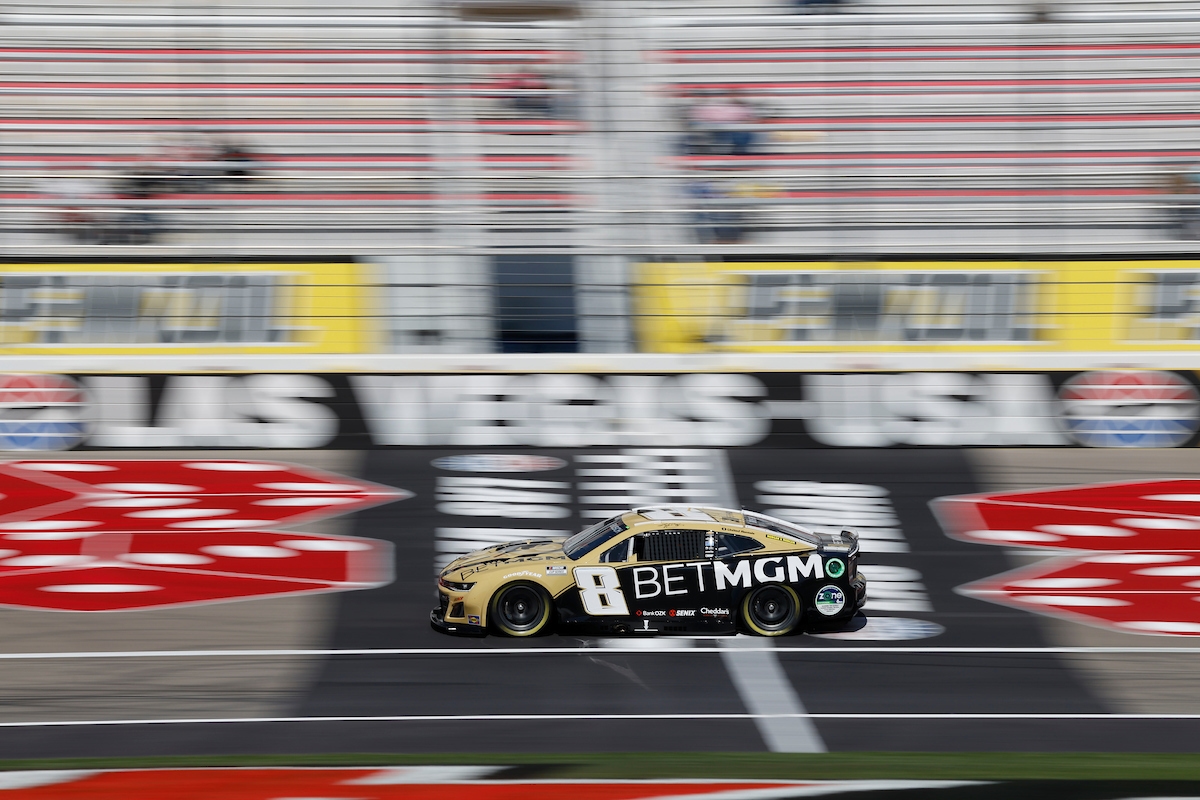
The roar of engines at Daytona, the strategic pit stops at Talladega, and the heart-pounding finishes at Bristol have always captivated racing fans. But now, there’s another dimension to the excitement: betting. Sports betting on NASCAR has exploded across the United States, with total sports wagers increasing from $4.9 billion in 2017 to $121.1 billion in 2023, and 94% of those wagers placed online. As fans place bets on their favorite drivers, lap leaders, and race outcomes, it’s easy to get caught up in the odds and predictions. Yet behind every wager lies a sobering reality that betting apps don’t advertise: NASCAR remains one of the most physically demanding and dangerous sports in America.
The Explosion of NASCAR Betting
The legalization of sports betting following the 2018 Supreme Court decision in Murphy v. National Collegiate Athletic Association transformed how fans engage with NASCAR. The number of states with operational sportsbooks jumped from just one in 2017 to 38 by 2024. Fans can now bet on everything from race winners to head-to-head driver matchups, stage winners, and even whether there will be a caution flag in the opening laps.
This accessibility has created a new generation of NASCAR enthusiasts who follow races not just for the sport, but for the action on their betting slips. Mobile apps make it possible to place live bets during the race, adjusting strategies as drivers jockey for position. While this adds excitement for viewers, it can also create a disconnect from the genuine physical risks these athletes face every time they buckle into their cars.
Behind the Spectacle: Real Risks Drivers Face
When fans watch cars navigate turns at speeds exceeding 200 mph, they’re witnessing athletes who put their bodies on the line every weekend. Research published by the National Institutes of Health examining professional motor car racing drivers found that despite significant safety improvements, injuries remain a constant concern in the sport. High-speed impacts, even with modern safety equipment like the HANS device and reinforced cockpits, subject drivers to tremendous physical forces.
Dale Earnhardt Sr.’s fatal crash in 2001 serves as a stark reminder of these risks. Analysis showed his car’s velocity was more than 150 miles per hour, with deceleration upon impact of roughly 43 mph in just 0.08 seconds. While safety innovations implemented since that tragedy have dramatically reduced fatalities, drivers still face risks of concussions, orthopedic injuries, and conditions like hand-arm vibration syndrome from sustained exposure to high-frequency vibrations.
Pit Crew Injuries Often Go Unnoticed
While drivers command the spotlight, pit crew members face their own set of serious injury risks that rarely make headlines. A comprehensive study of NASCAR team members treated between July 2003 and October 2014 revealed that 118 injuries occurred during NASCAR racing events or practices. The majority of these injuries affected tire changers (42%), followed by drivers (16%), carriers (14%), jack men (11%), fuel men (9%), and utility men (8%).
These injuries aren’t minor sprains or bruises. Pit crew members commonly suffer from epicondylitis, tendon injuries, and repetitive stress conditions from the explosive, high-precision work they perform in race-critical seconds. A tire changer might execute hundreds of movements during a single race weekend, each requiring perfect form under immense pressure. One mistimed motion can result in a career-altering injury.
When Racing Accidents Lead to Legal Questions
The risks inherent in NASCAR extend beyond the track itself. When drivers, crew members, or even spectators suffer injuries, complex legal questions often arise about liability, negligence, and compensation. While professional racing involves assumed risk, that doesn’t eliminate all legal recourse when accidents occur due to equipment failures, inadequate safety protocols, or third-party negligence.
For individuals involved in motor vehicle accidents of any kind, understanding legal options becomes crucial. Whether it’s a high-speed racing incident or a collision on public roads, Florida’s trusted legal teams can help injured parties navigate insurance claims, determine fault, and pursue appropriate compensation for medical expenses, lost wages, and long-term care needs.
Understanding the Stakes Beyond the Bet
NASCAR betting has undeniably added a new layer of engagement for millions of fans. There’s nothing inherently wrong with enjoying the sport through the lens of strategic wagering. However, it’s worth remembering that every bet placed represents real human beings performing extraordinary feats under extraordinary physical risk.
Research from the National Library of Medicine indicates that as sports betting becomes more prevalent, approximately 61.3% of adults in North America now report gambling within the past year, with 13.8% engaging in risk gambling activities. The excitement of betting can sometimes overshadow the human element of the sport itself.
The next time you place a bet on the Daytona 500 or your favorite driver’s qualifying position, take a moment to appreciate the courage, skill, and physical resilience required to compete at NASCAR’s highest level. Behind every data point, every statistical trend, and every betting line are athletes who understand that the real stakes are far higher than any wager. The cars may be getting safer, the technology more advanced, and the medical response faster, but racing will always carry inherent risks that no safety innovation can completely eliminate. That’s what makes it compelling, and that’s what makes the athletes who compete worthy of respect beyond their value as betting propositions.