
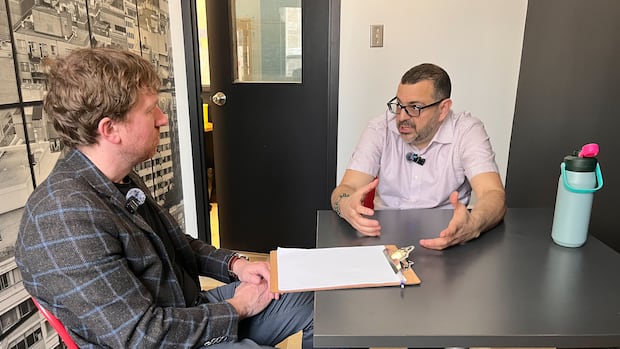
This story is a collaboration between Concordia University’s journalism department and CBC Montreal.
On a late fall evening in 2021, Jeff Shoer was settling in his dorm at Welcome Hall Mission homeless shelter, when he received a text message from his former dormmate who had just moved out.
It was a photo of his new apartment.
“That just clicked into place,” said Shoer, recalling how seeing the photo made him feel that his own goal of finding permanent housing by Christmas was within reach.
“It was nice to see somebody go and get their own place,” said Shoer. “It was inspiration.”
Shoer and his former dormmate were both part of a program designed for those experiencing homelessness and mental health issues.
Launched in 2013, PRISM has helped hundreds of people find permanent housing by bringing psychiatric, medical and social services directly to a shelter over a period of two to three months. The program’s success has inspired other cities in Quebec, as well as in Toronto.
Shoer benefitted from the program after the pandemic disrupted his life. With sanitary restrictions closing dining rooms, the 52-year-old restaurant marketer lost many clients, and found himself without a home. The forced isolation also affected his mental health.
After a few months of couchsurfing, Shoer was referred to the program at Welcome Hall Mission where he received intensive health care over two months. PRISM also helped him find a new apartment, where he continues to live.
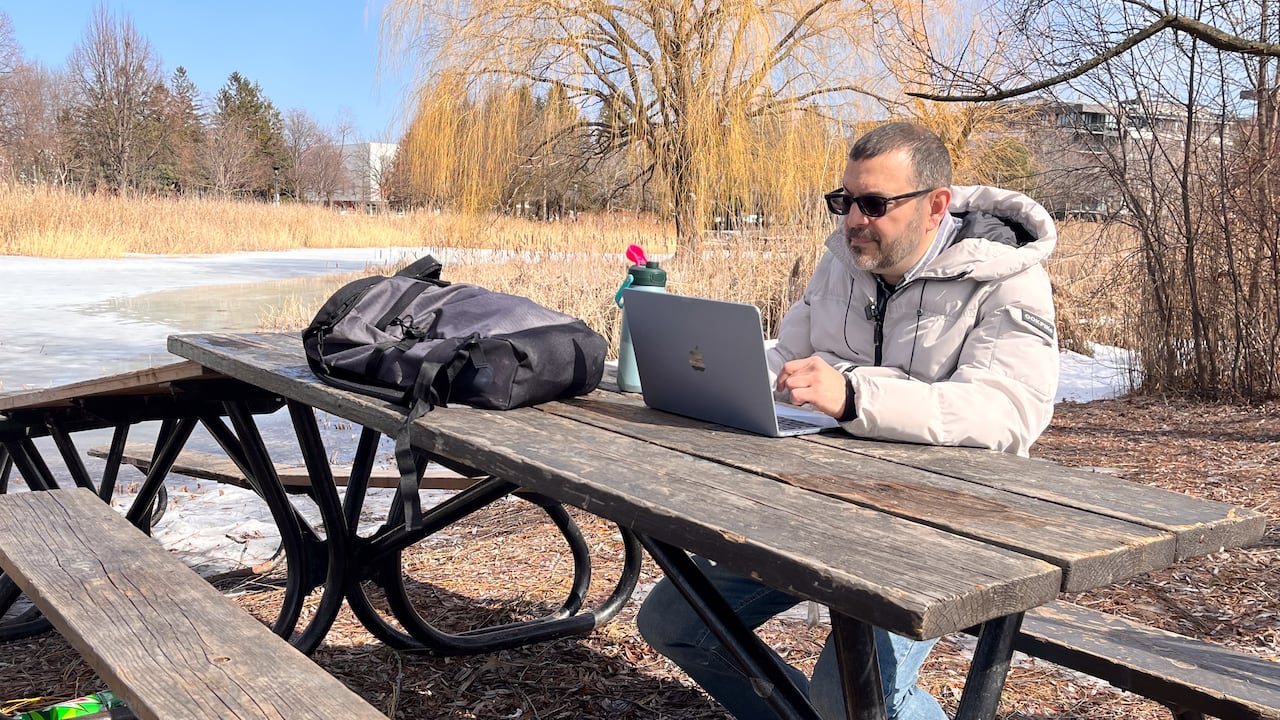 Jeff Shoer, a former PRISM participant, says the program helped him find a new apartment, where he continues to live. (Manoj Subramaniam)Effective rehousing
PRISM started as a pilot project at Old Brewery Mission. It currently offers over 70 spaces for men and women experiencing or at-risk of homelessness across shelters in Montreal.
It has proven successful. More than half of those who participated in PRISM between 2013 and 2019 stayed in permanent housing and nearly 85 per cent continued to receive out-patient services, a year after the program, according to a 2021 study.
Olivier Farmer, psychiatrist at Hôpital Notre-Dame, said he designed PRISM based on his experience with “housing first” programs in New York.
During his fellowship at Columbia University, Farmer learned that just by providing stable housing to unhoused people, both their mental and physical health improved.
“The key here is not necessarily to give them just mental health care and a pill or an injection,” Farmer said in an interview. “It was really to provide a whole pathway towards housing.”
Mylène Demarbre, mental health clinical director at Doctors of the World, said losing one’s home can be extremely destabilizing.
“The links between mental health and homelessness are bidirectional,” Demarbre said. “Someone who ends up on the street has a significantly higher chance of developing psychological difficulties that will affect their ability to function.”
WATCH | How PRISM works:
Inside a Montreal shelter that blends housing and mental health support
For people struggling with both homelessness and mental illness, finding stable housing can feel out of reach. PRISM, a Montreal program that combines psychiatric, medical and social services within shelters, helps the homeless population find permanent housing.Growing crisis
The growing homelessness crisis in Montreal in recent years has also put the spotlight on the mental health of those living on the streets and the cost of services.
A 2022 homelessness census showed that a majority of unhoused people in Montreal had at least one mental health issue.
An unhoused individual with mental illness in the city cost taxpayers $56,406 per year, on average, between 2009-11, according to a study led by McGill University economist Eric Latimer. He estimates that figure to be well over $70,000 now.
In comparison, PRISM costs $5,000 to $7,000 per participant, on average, for an eight- to 12-week stay in a shelter, with the care and social support.
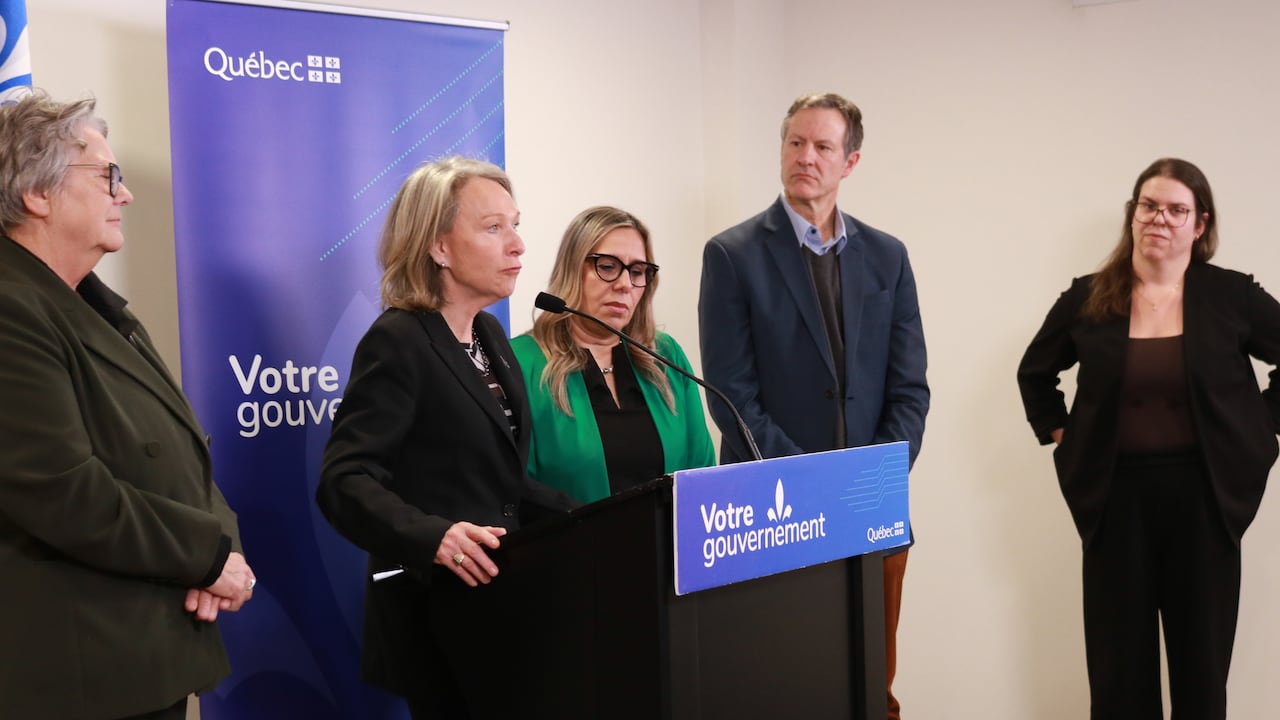 Quebec Health Minister Sonia Bélanger at the opening of a new PRISM shelter by Old Brewery Mission in Montréal-Nord in February. (Hassan Bale)
“Think about that in the context of a hospital stay, where it’s several thousands a day,” said Sam Watts, CEO of Welcome Hall Mission, which has offered PRISM since 2017.
By preventing repeated hospitalization and ER visits, PRISM reduces the cost of providing services to taxpayers, Watts said.
PRISM’s price tag includes a psychiatrist and a nurse working part-time and a full-time social worker. Participants are also getting support to renew their health and social insurance cards, seek legal help, and fast-track their path to housing.
“That is a much more attractive kind of proposal for people who are homeless,’” Farmer said.
Inside PRISM
Welcome Hall Mission started operating PRISM for men in 2017, and expanded the program to women in 2024.
Residents have private or shared rooms separated from the rest of the shelter area. There is a shared kitchen and common area where people can socialize. Unlike in hospitalizations, residents can bring their belongings and come and go freely.
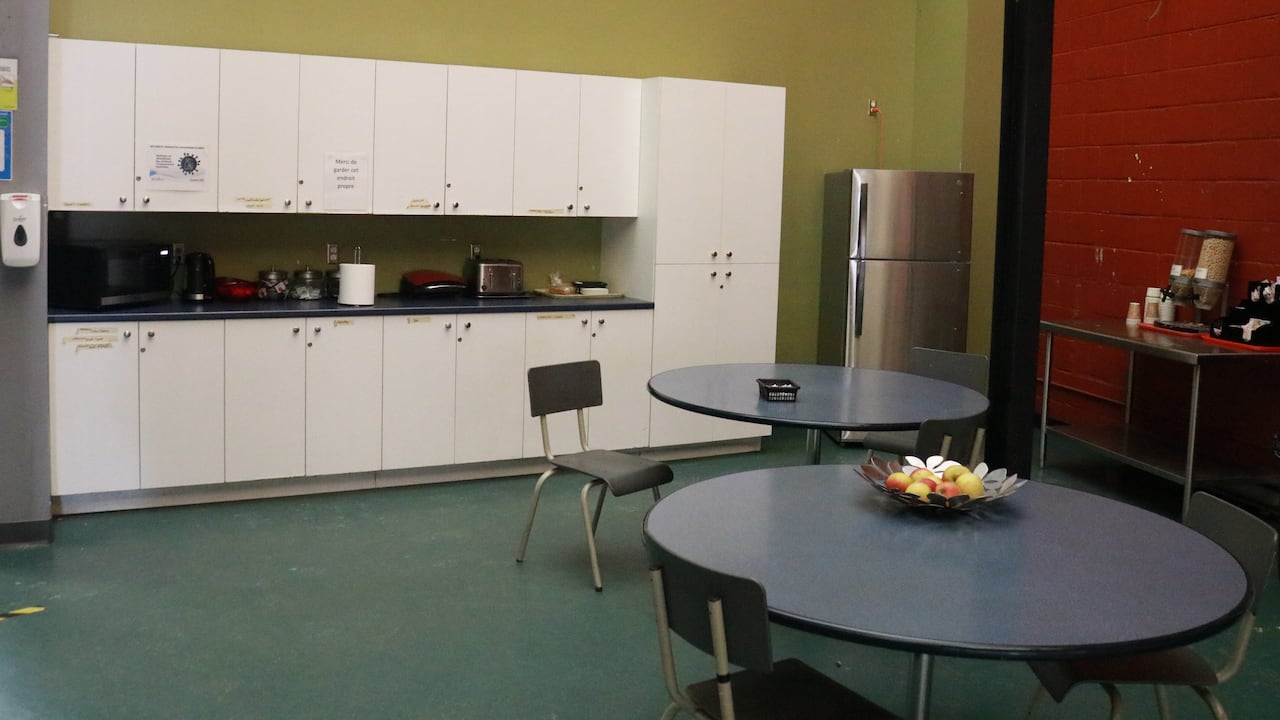 At this PRISM space run by Welcome Hall Mission in Montreal’s Sud-Ouest borough, the women taking part can freely enter and use private shelter spaces and common areas. (Lucas Fanichet)
“It’s nicer than most hospitals,” Watts explained on a tour. “That’s very deliberate. We want people to understand that they’re in a quality place.”
Watts said it would be impossible to replicate PRISM without “a well-equipped, well-qualified frontline organization and without [a] partnership with the health-care system.”
Building momentum
Currently, PRISM operates in seven locations in Montreal, with the latest facility opening late February in Montréal-Nord operated by the Old Brewery Mission. The facility will receive an annual funding of $500,000 from the Quebec government starting in 2026-27.
PRISM-inspired programs are also operating or being planned in Quebec City, Gatineau, Roberval and Trois-Rivières, according to Farmer.
Quebec’s Ministry of Health and Social Services (MSSS) said in an email that PRISM programs received $10 million in the last two fiscal years as part of a 2021-26 government homelessness plan.
PRISM also caught the attention of David Heath, a retired psychiatrist from Ontario and an expert in at-home psychiatric treatment. He entered PRISM for the “One Great Idea” citywide contest in Toronto. Out of 150 submissions, Torontonians voted PRISM as the best idea to improve the city.
“The general public sees this as a hot button issue,” said Heath, who is currently partnering with the Toronto Alliance to End Homelessness to bring the model to the city.
Fragile links in a chain
Farmer attributed PRISM’s effectiveness to services working together, from referring participants to the program to finding them housing afterward.
That also means any fragile “link in a chain of things” makes the program vulnerable. For example, the Quebec government has to rapidly process temporary health-care cards and social insurance numbers, Farmer said.
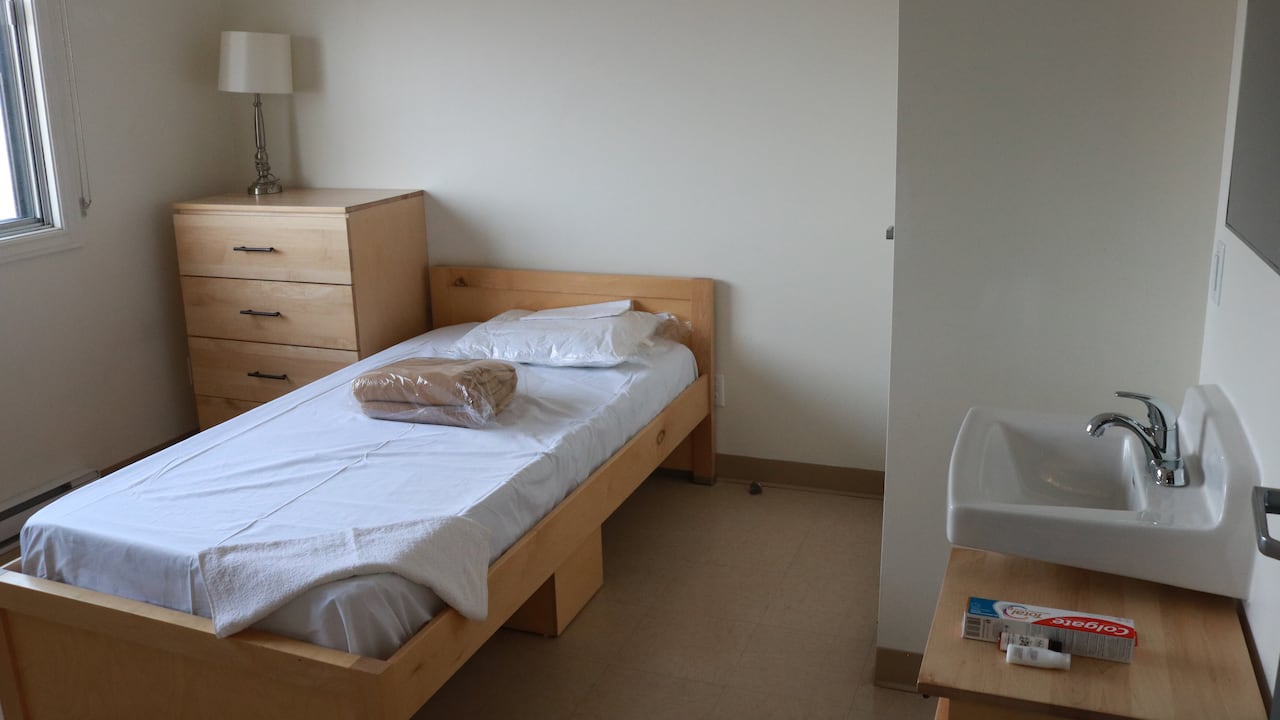 The PRISM facility by Old Brewery Mission opened in late February with Quebec government support. (Lucas Fanichet)
“We need a housing partner to get people into housing when they’re ready to get into housing, otherwise, it doesn’t work.”
As affordable housing became harder to find in recent years, PRISM participants stayed in shelters several weeks longer than in initial years.
Despite a growing interest in PRISM, both Farmer and Watts said that governments at all levels should focus on preventing vulnerable people from losing their current housing.
“Once they’re on the street, it becomes progressively difficult to help somebody get back into housing,” Watts said.
For Shoer, the journey from losing his home during the pandemic to finding his own place took several months. He fondly recalled the camaraderie among participants.
When his former dormmate sent the photo of his new apartment, Shoer told himself, “Carpe diem. Seize the moment.”
And, a few weeks later, he moved into his new apartment, in time to celebrate Christmas in his own place.
About the authors
Manoj Subramaniam is a Montreal/Tiohtià:ke-based journalist whose work has appeared on CityNews and The Suburban. His work has earned him The Montreal Gazette-Susan Carson Memorial Prize, a finalist for a Canadian Association of Journalists award and an RTDNA award nomination. He studied journalism at Concordia University and City College of San Francisco.
Lucas Fanichet is a French journalist with a bachelor’s degree in international communication from ISCOM Paris. His early work started in PR in France before pursuing a graduate diploma in journalism at Concordia University in 2025. His work spans photojournalism, documentary, and long-form reporting, with a focus on human and social stories across Montreal.
Hassan Bale is a social media marketing specialist with over 10 years of experience, he holds a bachelor’s degree in marketing and economics from the University of Alexandria in Egypt and later moved to Montreal, Canada, where he earned a diploma in Journalism from Concordia University.