
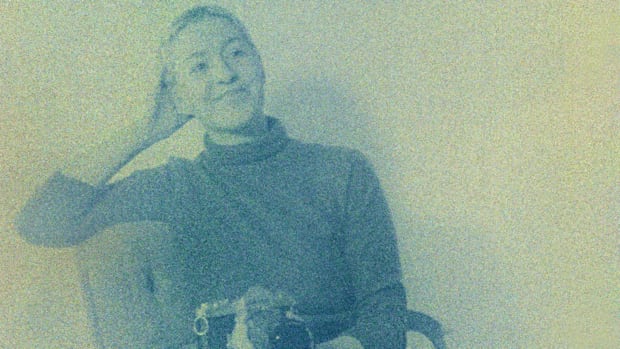
Long gone are the days of taking a photo and waiting for it to be developed before you can see how it turned out. Instead, we carry cameras in our pockets, snapping images and video wherever we go and instantly sharing them with the world.
But for Jess Beaudin, the process of developing film has long been a fascination.
“My first camera was actually a film camera,” she told CBC’s Daybreak Kamloops.
“It’s just like such a different experience … you really have to dial in your settings and kind of know what it’s going to look like after it’s been developed. That challenge and the technicalities that come with it is always something that’s drawn me back to film.”
The young artist loves it so much, she’s actually figured out a new way to develop film using plants — sagebrush and chokecherries, both native to B.C. — and shells. Her photos developed using that technique will be showcased in an exhibit at the Kamloops Courthouse Gallery from May 2 to 28.
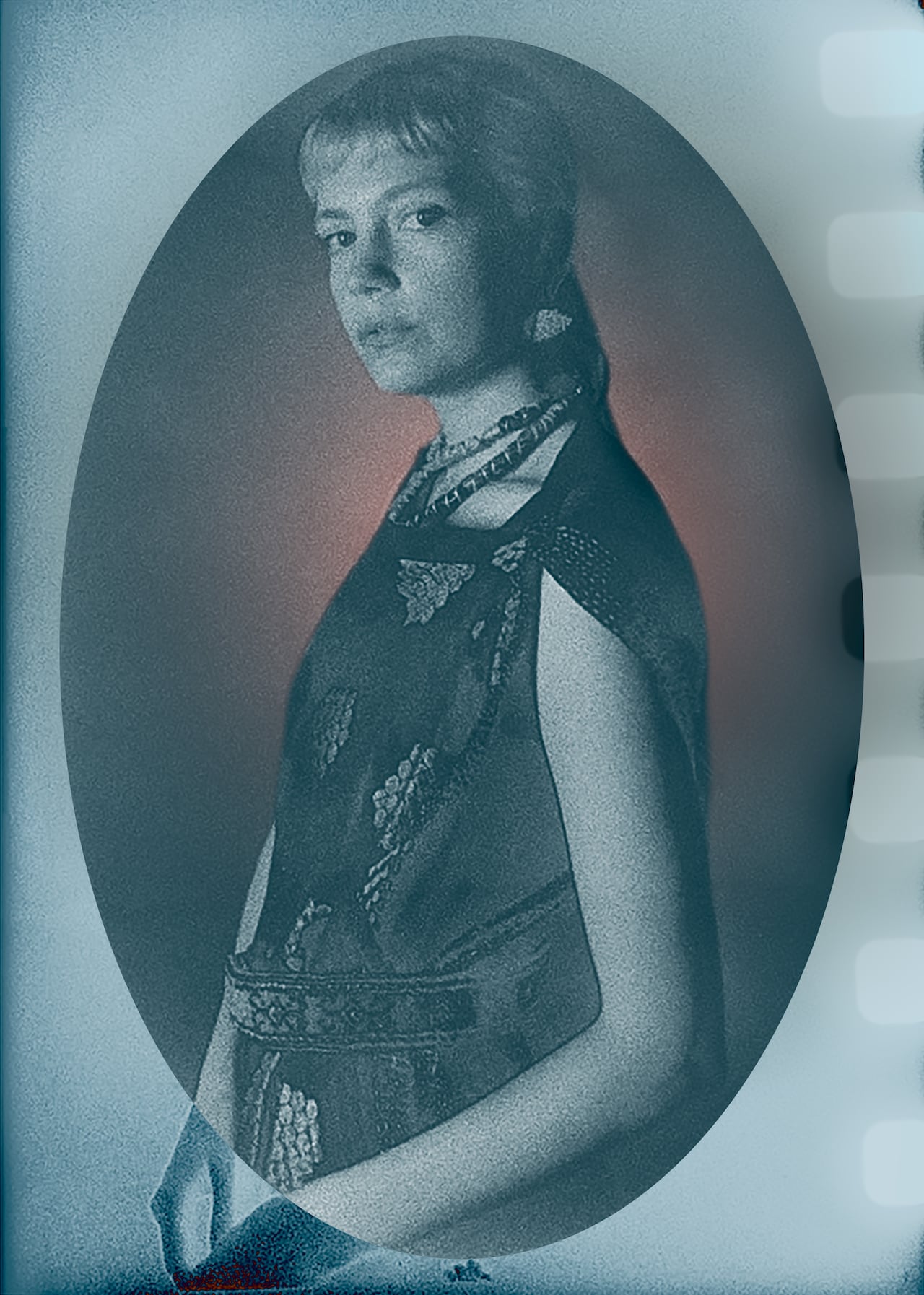 A portrait photographed and developed by Jess Beaudin. (Jess Beaudin)
She spoke with CBC’s Doug Herbert about how she created the technique, and her upcoming art show.
This interview has been edited for length and clarity.
Tell us about the way that you develop your film.
Usually, traditional film chemistry is really toxic when you’re developing an image. So I wanted to do something that had a much lower toxicity, but was also really connected to the land that we’re on, Secwepemcúl’ecw. So I’m using sagebrush, chokecherries and some shells from the river to develop my film.
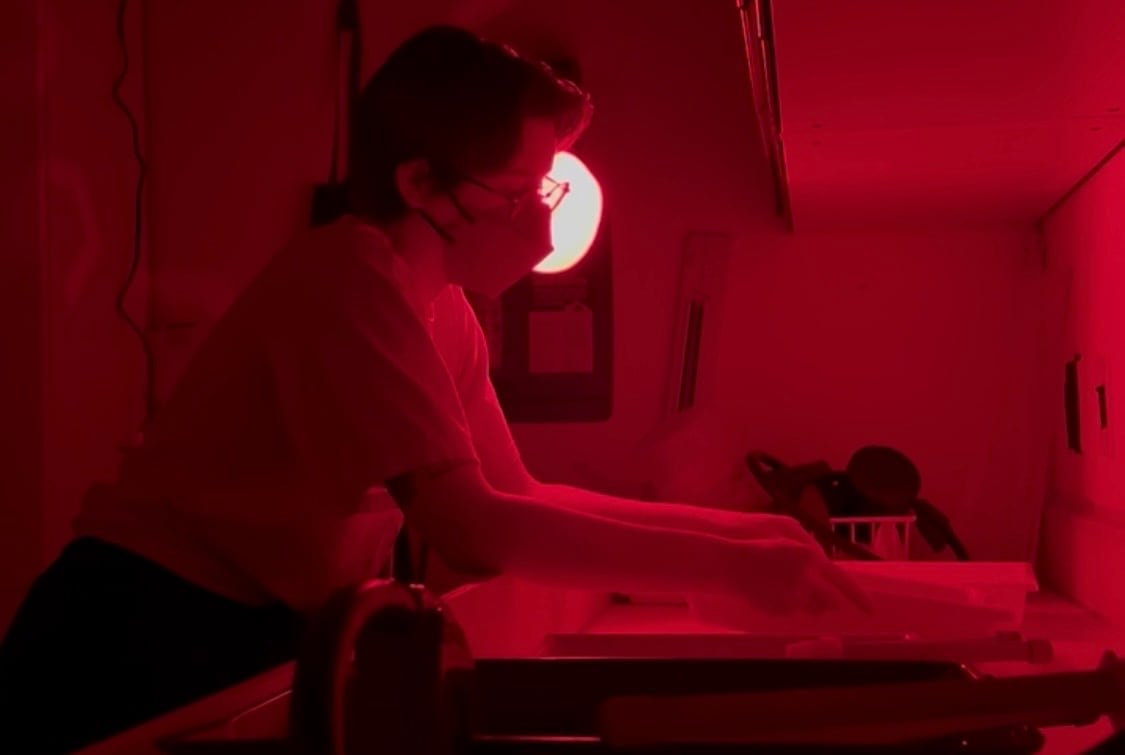 Photographer Jess Beaudin develops film in a dark room. (Jess Beaudin)
You combine all of that and you somehow develop film with it?
So each of those things has its own kind of chemical makeup that reacts to different elements that are in the film and it helps bring out an image. It’s really magic in science.
How long did it take you to figure out that equation, the right stuff to make it work?
It took me about three months of really seriously being in it and then I had to wait until the summer to be able to collect the shells to kind of do my final iteration. So overall about a year and a half, but maybe four months of actively working on it.
What inspired you to to create this? It’s so unique, so different.
I really love to work with the land in general in my photographic and design process. I had heard of ways to develop film that was a little bit more eco-friendly using coffee as well as sodium carbonate or baking soda and vitamin C. And I was like, that’s really interesting, but I bet you I can do something, you know, one step better. And so it was kind of a game of leveling up what’s already out there.
The colour tone is quite different.
If you’re looking at a digital image, it’s going to be pretty smooth, there’s a lot of colour and a lot of depth, so I can see the highlights compared to the shadows. A lot of it pops, there’s a lot of contrast, whereas the film that’s been developed this way is a little bit flatter compared to a traditional film photograph.
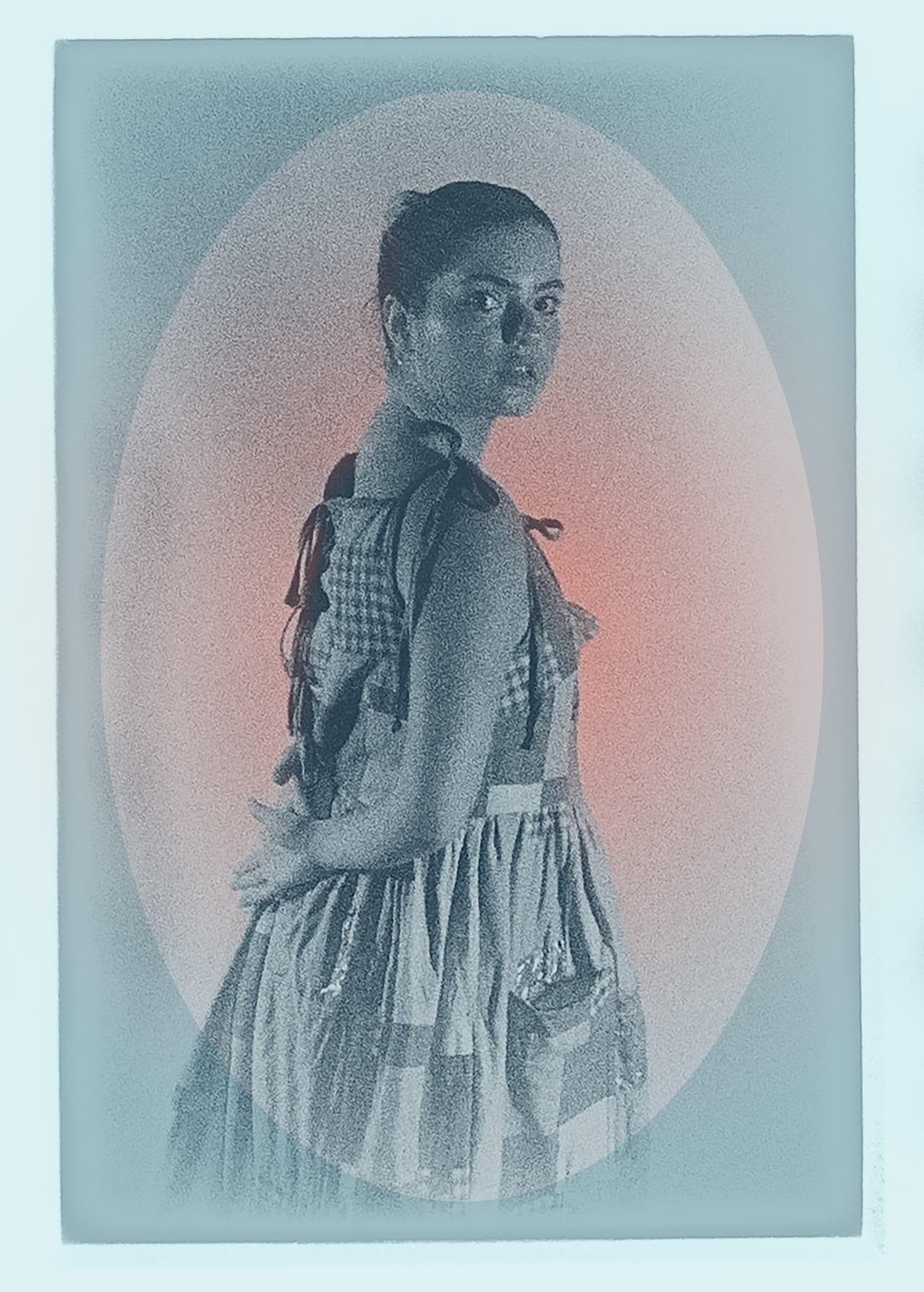 A portrait photographed and developed by Jess Beaudin. (Jess Beaudin)
There’s not as much tonal range with the highlights and shadows. But it also is monochrome, so it’s either going to be black and white if I’m shooting a black and white film stock or it’s going to have a really interesting colour cast if I’m shooting a colour film stock. So it’s going to be all green or all orange or something weird.
Now this new method of developing film, it’s all yours. But I understand your plan is to share this recipe freely so anybody can do this.
We all need to reconnect with the land and more sustainable practices to continue to make our world better.
I’ve seen other people selling the information for recipes that are longstanding, as well as recipes that they’ve created using the vitamin C and sodium carbonate that are based on Indigenous knowledge for how they’re harvesting the plants.
I’m Metis but I’m also culturally white and so it doesn’t feel like my place to be making a profit off of Indigenous ways of reciprocity and harvesting from the land. I want us all to be able to connect with the land. I also don’t want another white person to come in and be able to make money from it. So if I just put it out there for free, it’s great and everyone can do it.
Is this labour intensive?
It’s incredibly labour intensive. So when I’m developing, like regular film in my home, it takes maybe 15 to 20 minutes from start to finish.
But this process takes about five hours because there’s not all of those chemicals that are supercharging the activation process in the development.
I bet your darkroom smells better though.
Actually it smells really bad once you add the calcium carbonate from the shells.
Tell us about your upcoming show at the Courthouse Gallery in Kamloops.
It’s a combination of digital and plant-based photographs and it features seven female sustainable designers that work across B.C., because photography and fashion often go hand-in-hand and they both are really extractive industries historically, so it’s kind of a celebration of these eight — if you include me — female designers and artists that are pioneering and creating new ways to do things just a little bit more eco-friendly in our everyday work.
This show is really supposed to inspire ways that everyday practices can be innovative to create more environmentally friendly practices in your everyday life. So maybe you’re not an artist, but what’s little stuff you can do, not all the time, but even just sometimes to make your practice a little bit more environmentally friendly.