
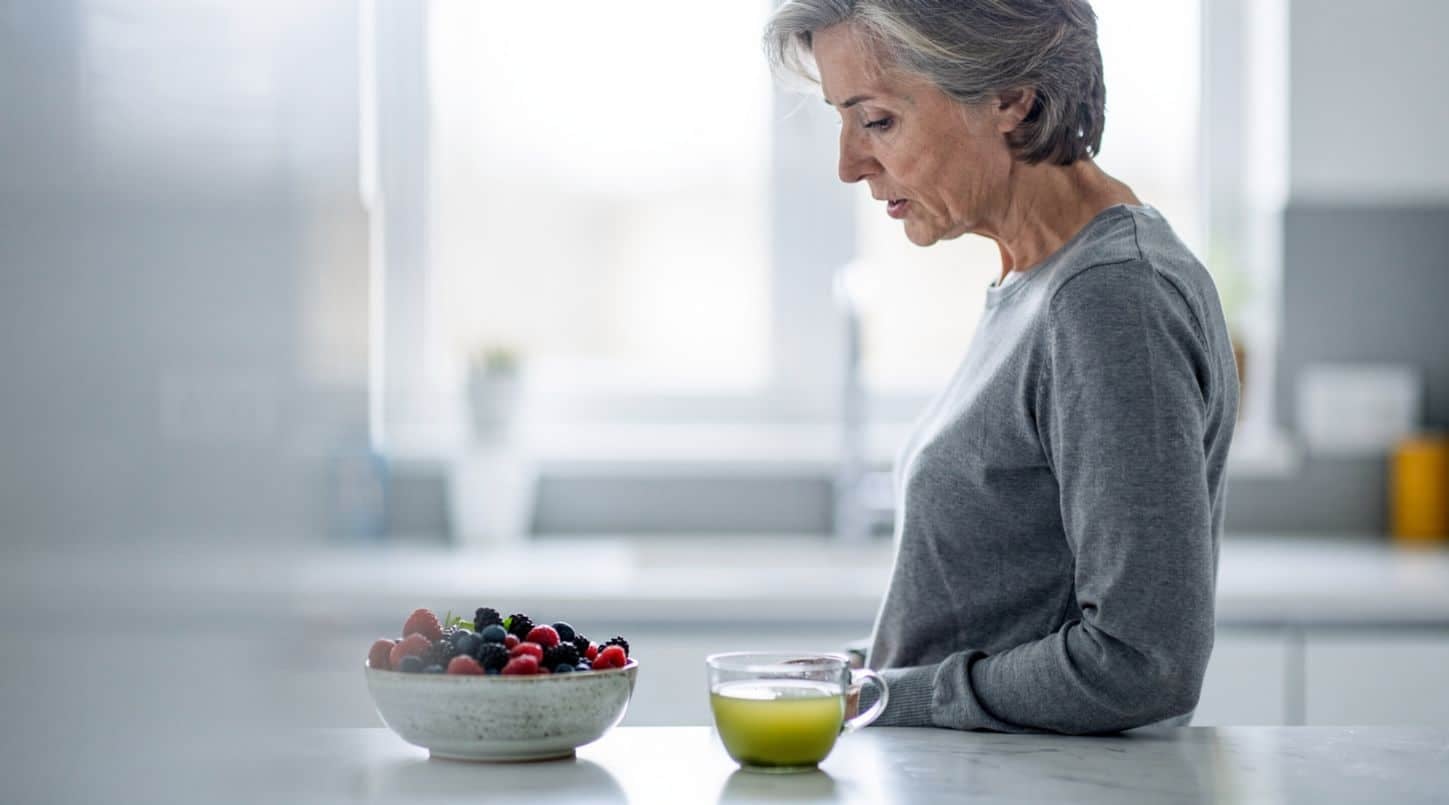
© Image credit: Most people don’t realise the nutrient quietly deciding how sharp and independent they’ll be at seventy isn’t in their supplement cabinet — it’s in the bowl of berries they keep skipping at breakfast because it feels too small to matter – D/R
Everyone you’ve ever met has assumed the same thing about aging well. They think the cost is the discipline — the 5 a.m. workouts, the collagen powder stirred into lukewarm water, the magnesium glycinate tablets lined up on the bathroom shelf like tiny promises. They think if they’re not doing something effortful and expensive, they’re falling behind. That the gap between who they are now and who they hope to be at seventy is best closed with a premium product, a new protocol, something that arrives in a white box with a lot of small print on the back.
It’s a reasonable assumption. The supplement industry is very good at making ordinary food feel insufficient. A handful of blueberries tipped into a bowl on a Tuesday morning — the kind that have been sitting in the fridge since Saturday, slightly soft now, nothing glamorous about them — doesn’t feel like a health decision. It feels like a small, forgettable thing. Barely worth counting.
But this is exactly where the assumption starts to quietly unravel. Because what research into healthy aging has been circling for years now points not toward the cabinet above the sink, but toward the bowl you keep meaning to finish before it goes off. The people who tend to maintain their cognitive sharpness, their physical independence, their sense of self-direction well into their later decades are not, it turns out, the ones with the most sophisticated supplement stacks. They’re often the ones who have, for years, been eating the foods that felt too ordinary to feel medicinal.
Key Insights:
The Ordinary Advantage: People who age with cognitive sharpness intact often rely on simple, flavonoid-rich foods rather than expensive supplements.
The Accumulation Effect: Flavonoids work through cumulative, gentle protection over years — not dramatic single interventions.
The Accessibility Gap: The most protective compounds for aging are already in most kitchens: berries, dark chocolate, green tea, red onions.
Adults who are paying attention to how they age — really paying attention, the kind that involves reading ingredient labels at 9 p.m. and bookmarking articles they’ll return to on the weekend — tend to be looking in the wrong direction. Not out of carelessness. Out of a cultural story that has taught them small things don’t add up to much.
Why Do We Keep Missing the Obvious Answer?
The lazy interpretation here is that people are simply uninformed. That if they just knew about flavonoids — the broad family of plant compounds found in berries, dark leafy greens, citrus, dark chocolate, red onions, certain teas — they would immediately reorganise their mornings around them. Information deficit, problem solved.
But that’s not quite it. Most people who care about aging well have heard of antioxidants. Many have a vague sense that berries are good for you. The issue isn’t ignorance. It’s a deeply held suspicion that anything this accessible, this unbranded, this already in the house, cannot possibly be doing the serious work. We have been trained, over decades of wellness marketing, to distrust the ordinary. The supplement cabinet feels like action. The fruit bowl feels like decoration.
The Numbers:
Flavonoids – Found in over 6,000 plant compounds already in common foods
Cost comparison – A punnet of blueberries costs less than a single premium supplement serving
Accessibility – Dark chocolate, berries, and green tea are available in virtually every grocery store
There’s also something about consistency that makes small things hard to credit. A new supplement feels like an event. Eating a handful of raspberries on a Wednesday feels like nothing. And yet the research into flavonoids and aging is not about dramatic interventions. It is, almost stubbornly, about the accumulated weight of unremarkable mornings.
What the Science Has Been Quietly Saying
Here is what almost nobody outside this conversation understands: flavonoids are not one thing. They are a large, varied family of compounds — quercetin in red onions, anthocyanins in blueberries and blackberries, catechins in green tea, luteolin in parsley and celery — and they work through several overlapping pathways that researchers have been mapping for years. They appear to reduce chronic low-grade inflammation, the kind that doesn’t announce itself with a fever but accumulates quietly in the body across decades, contributing to the cognitive decline and physical fragility that most people associate with simply getting older.
According to research on lifestyle drivers of healthy aging, these compounds support the health of blood vessels, including the small ones that feed the brain. They interact with gut bacteria in ways that researchers are still working to fully understand, but that seem to matter for how well the brain functions over time.
What makes this relevant to the person standing in their kitchen at 7:30 in the morning, deciding whether to bother with the berries, is that the effect appears to be cumulative and dose-dependent in a gentle, long-game kind of way. Not a single superfood eaten once a week. Not a concentrated extract in a capsule. But a steady, varied, unremarkable presence of these compounds across years of ordinary eating.
I’ve noticed, reading through the research in this area, that the findings tend to make people feel slightly cheated. As though the answer should have been harder to come by. If you’re curious about other simple approaches to cognitive support, natural alertness enhancers follow a similar pattern of accessibility.
What Does This Actually Feel Like on a Slow Thursday?
There is something worth sitting with here, about what it means to do the right thing in a way that feels like nothing.
The bowl of berries doesn’t feel like a decision. It doesn’t feel like discipline. It doesn’t produce the small dopamine hit of opening a new supplement and reading the promised outcomes on the label. It just sits there, slightly cold from the fridge, smelling faintly of something dark and sweet, and you eat it or you don’t, and either way the morning moves on and you forget about it entirely.
What Research Shows:
• Flavonoids reduce chronic low-grade inflammation that accumulates over decades
• These compounds support blood vessel health, including brain-feeding capillaries
• The protective effect appears strongest with consistent, varied intake over years
This is, in a strange way, exactly what makes it powerful. The things that quietly decide the quality of our later lives are almost never the things that felt significant at the time. They are the unremarkable accumulations — the walks taken in ordinary shoes, the sleep protected without fanfare, the breakfast that felt too small to matter. Flavonoid-rich foods fit this pattern almost perfectly. They are not dramatic. They are not expensive. A punnet of blueberries costs less than a single serving of most premium supplements. Dark chocolate exists. Red onions are in virtually every kitchen in the country.
What researchers in this field have observed for years is that the gap between people who age with their faculties intact and those who don’t is rarely explained by access to rare or costly interventions. It tends to be explained by the steady, unspectacular presence of protective habits that were never glamorous enough to feel worth tracking.
Why Does the Supplement Cabinet Keep Winning the Argument?
The slightly painful underside of all this is that our brains are not well-designed to value invisible, cumulative protection. We are wired to respond to the concrete and the immediate. A supplement taken at a specific time, with a specific dose printed on the bottle, satisfies something in us that a handful of frozen blackberries tipped into yoghurt simply does not. One feels like a system. The other feels like a whim.
And so we keep buying the white boxes. We keep reading the small print. We keep feeling, faintly, that we are doing something serious about the future — while the fruit bowl sits on the counter, slightly past its best, quietly containing the thing we were actually looking for.
This is not an argument against supplements. Some fill genuine gaps. But the cultural story that positions them as the serious intervention and food as merely the backdrop is, in the case of flavonoids and aging, almost perfectly backwards.
The Permission You Didn’t Know You Needed
There’s a kind of tiredness that comes with caring about your health in a culture that keeps moving the goalposts — and a quiet competence in the people who have, despite everything, kept doing the small things anyway. The ones who have been eating the berries not because they read a study but because it felt right, or because their grandmother did, or because the punnet was on offer and they didn’t overthink it.
If that is you, even occasionally, even imperfectly — the Tuesday morning blueberries, the green tea gone slightly cold before you finished it, the dark chocolate eaten without guilt at 4 p.m. — then you have been doing something that matters more than it looked like it did. More than the packaging ever told you. More than the wellness industry, which profits from your sense of insufficiency, would particularly like you to know.
The nutrient quietly deciding how sharp and independent you’ll be at seventy is not hiding in an expensive bottle. It is hiding in the ordinary, in the overlooked, in the small things that never felt significant enough to count as a decision.
The bowl of berries on a Thursday morning, the fridge light catching the dark skin of them, the fact that you almost didn’t bother — that is the thing. That has always been the thing.