
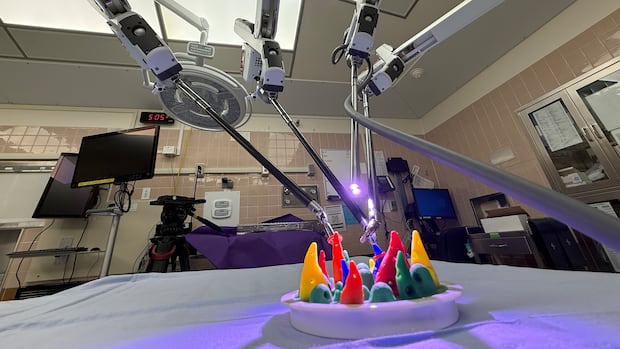
A robot named Erin is now helping doctors treat Saskatchewan patients who have drug-resistant epilepsy.
The first successful stereotactic robotic epilepsy surgery was completed on March 23.
“It’s a big deal,” said Dr. Amit Persad, who led the surgery team at Royal University Hospital in Saskatoon.
About 12,000 people with epilepsy live in Saskatchewan and roughly a third of them can’t manage the condition with medication, Persad said.
The goal of the procedure is to map out the source of a patient’s seizures. It requires precise targeting so surgeons can place tiny electrodes. That’s where the robot comes in.
“What it does is it aims for you. So you program in where the electrodes are going to be beforehand and then the robot calculates, based on your plan, the perfect angle and distance,” he said.
“All I have to do as the surgeon is drill a hole and then put the electrode in, and it makes it so that the rate of inaccuracy is less than a millimeter and the rate of issues is one per cent or less for the whole surgery.”
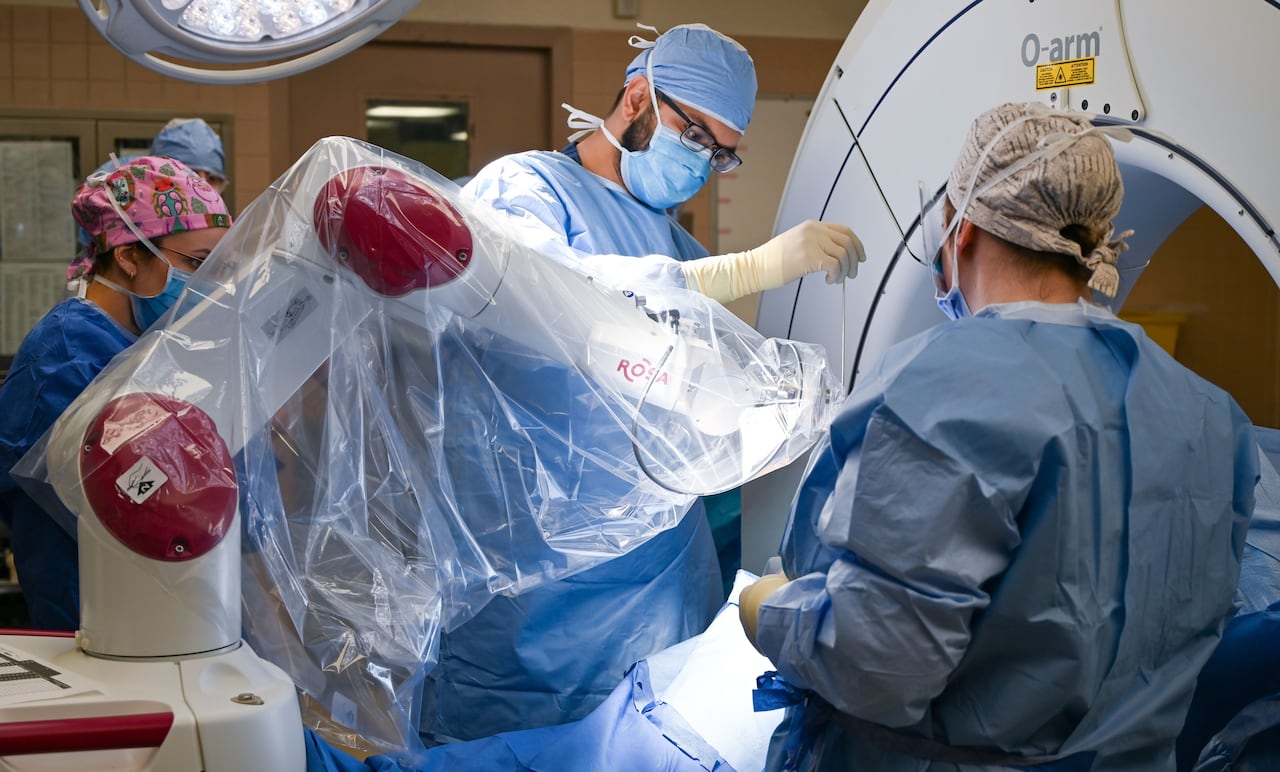 On March 23, Dr. Amit Persad led the team that conducted Saskatchewan’s first stereotactic epilepsy surgery. (Saskatchewan Health Authority)
If doctors can figure out where the seizures are coming from, they can plan a surgery to treat that problem area with the goal of restoring the patient’s quality of life and independence.
“If you cut out where the seizures are coming from, that patient is oftentimes cured completely of their epilepsy,” Persad said.
With Erin the robot’s help, the March 23 surgery took about 90 minutes. Without the robot, it would have taken all day, he said.
This is just one example of how robot-assisted surgeries are evolving in Saskatchewan.
WATCH | Saskatoon doctors demonstrate robot-assisted surgery: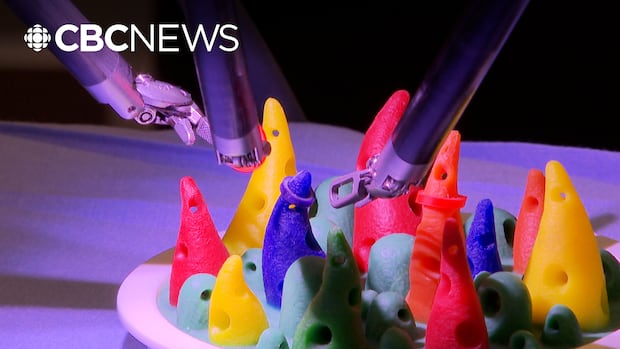
Saskatoon doctors demonstrate robot-assisted surgery
Dr. Katlin Mallette shows how she uses a robot-assisted surgical system at Saskatoon’s Royal University Hospital.
“We’ve seen a surge of interest in it,” provincial head of surgery Dr. Michael Kelly told CBC
Last fiscal year, the province recorded 472 robot-assisted surgeries. When the program first launched four years ago, there were around 50.
What is it?
A surgeon still conducts this type of surgery, using robots as a tool that helps with overall access or dexterity.
In 2022, St. Paul’s Hospital in Saskatoon received the province’s first two da Vinci robotic surgical systems. The city’s Royal University Hospital and Regina’s Pasqua Hospital also received them later on.
Dr. Katlin Mallette, a liver and pancreas surgeon, described the robot she uses in an interview with CBC. Mallette said the da Vinci has four arms that can be either docked or positioned onto the patient, while the surgeon sits at a separate console close by.
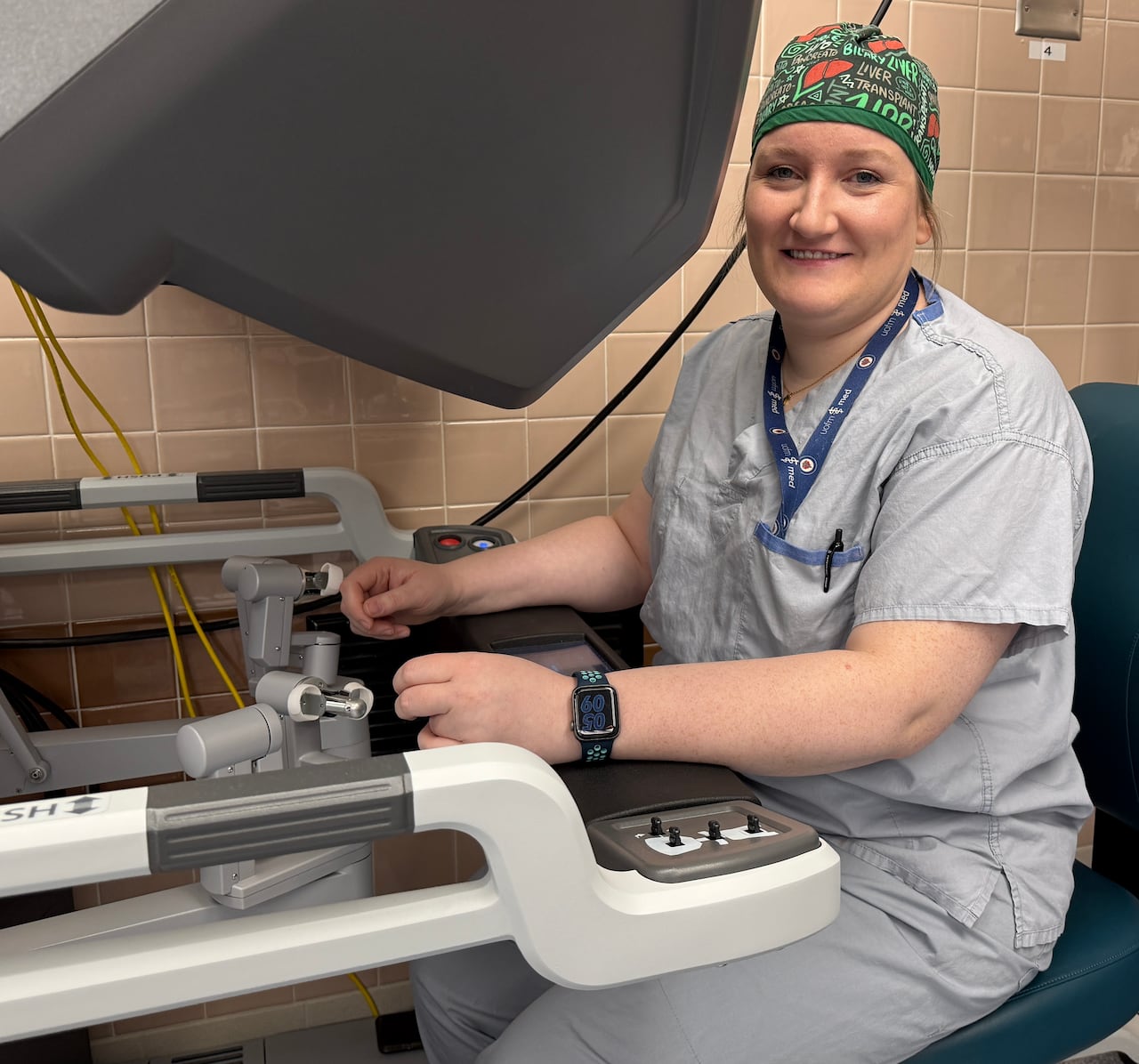 Dr. Katlin Mallette is one of the surgeons who works with the da Vinci robotic system in Saskatchewan. (Don Somers/CBC)
“As the surgeon, you get to control all four of those arms … [unlike in] open surgery where you depend on somebody else to help you,” Mallette said.
The robots have increased the scope of the patient’s anatomy that’s visible during surgery, which allows for the most minimally invasive surgeries possible.
“Our patients are quite satisfied with it, and that’s kind of at the forefront … of why we want to do these things,” Mallette said.
Kelly attributed the growing interest in robotic-assisted surgeries to several factors. One is that patients are more well-informed and actively seeking it out; another is the doctors themselves.
“The surgeons we’ve been recruiting here have a lot of expertise in robotic surgery and that [is] actually one of the reasons why they’re choosing to come here,” Kelly said.
Cutting-edge technology
Urologist Dr. Varun Bathini, who operates on the bladder, prostate and kidneys, said St. Paul’s Hospital recorded over 300 robot-assisted surgeries last year.
The robots have drastically reduced operating times, he said.
“Patients are going home much quicker and with less pain.”
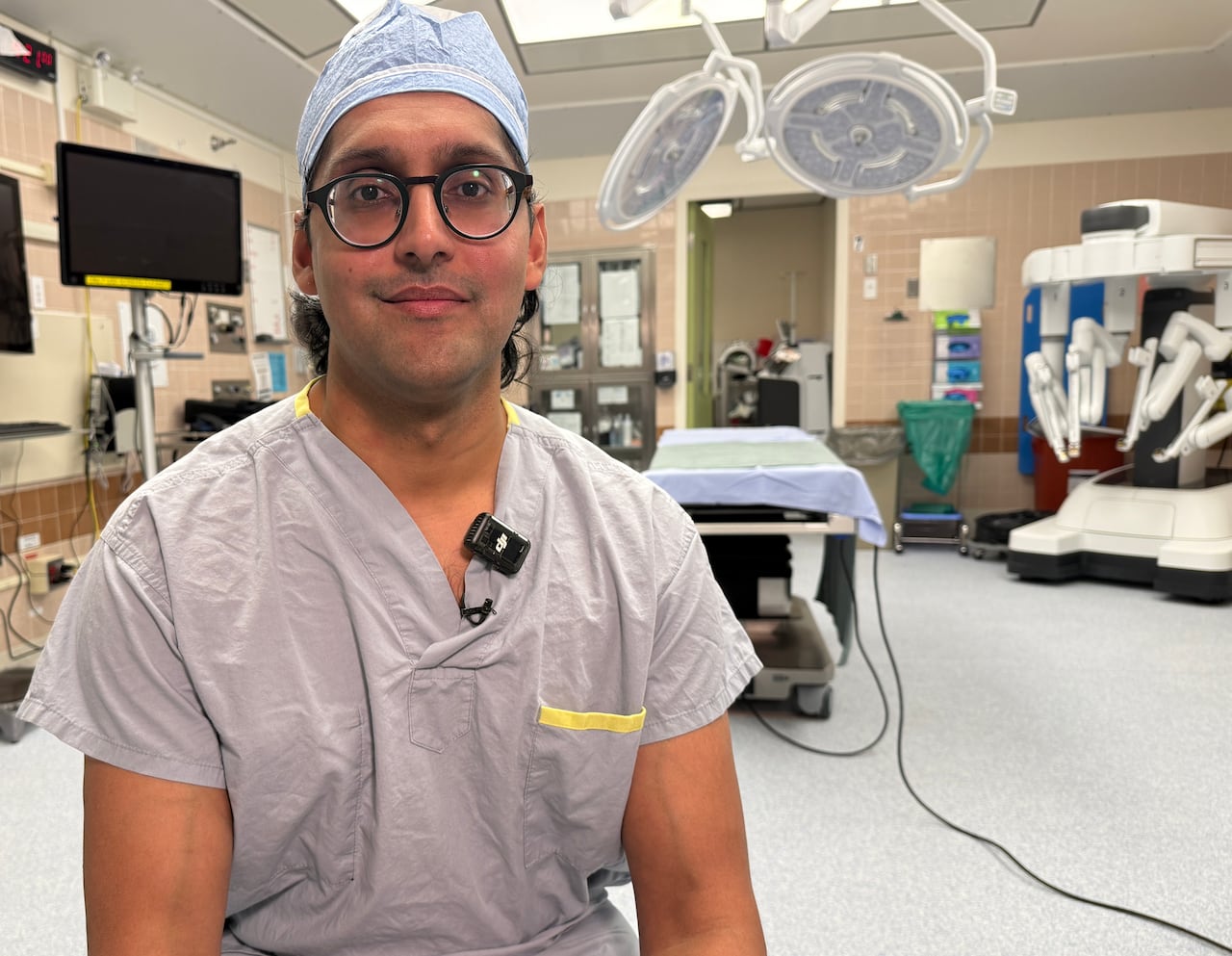 Dr. Varun Bathini, a urologist, says the robots have improved patient care significantly. (Don Somers/CBC)
The robots have allowed him to do certain procedures in a minimally invasive way, which means those patients no longer have to have open operations, he said.
Benefits for women
“Access to the robot-assisted surgery is a total game changer for women’s health,” said Dr. Elizabeth Miazga, an obstetrician gynecologist who operates on uteruses, tubes and ovaries.
Certain surgeries without robots require larger incisions, with increased risks of complications and longer recovery times, she said.
Certain body parts were at risk during pre-robotic surgery, including the uterus, bowel and bladder. The machines have lessened the chances of damage to those organs, she said.
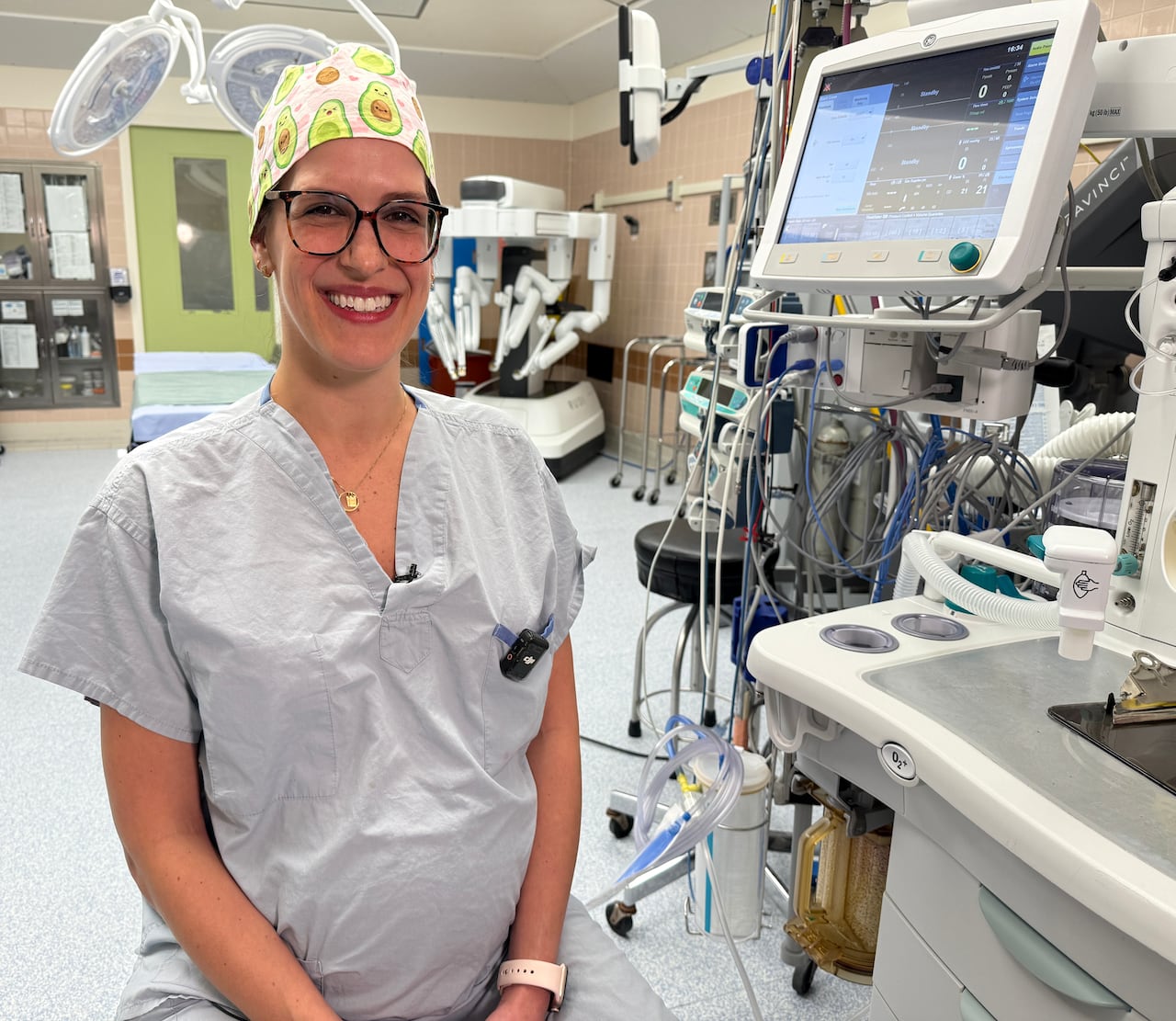 Dr. Elizabeth Miazga says robot-assisted surgery is a ‘game-changer for women’s health.’ (Don Somers/CBC)
In the past, most patients spent three or more days in hospital and their recovery time was around six to eight weeks due to the massive incision.
With the robot, most leave the hospital on the same day as their surgery.
“They’re walking out of here, going back to life really quickly [and] often not requiring narcotics for post-op pain,” Miazga said.
WATCH | Dr. Miazga explains why surgical robotics is ‘a total game changer’: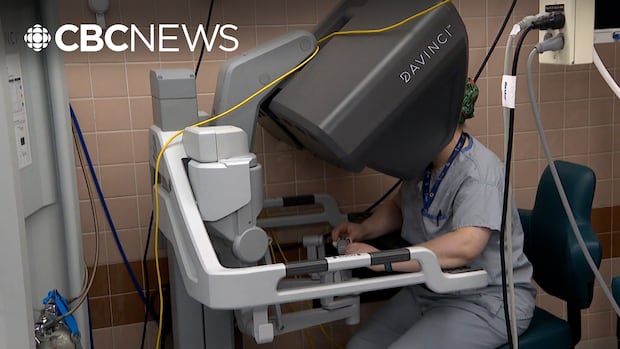
Gynecologist says surgical robotics is ‘a total game changer’ for women’s health
Dr. Elizabeth Miazga explains how minimally invasive surgical robotics is transforming gynecological care.