

Listen to this article
Estimated 3 minutes
The audio version of this article is generated by AI-based technology. Mispronunciations can occur. We are working with our partners to continually review and improve the results.
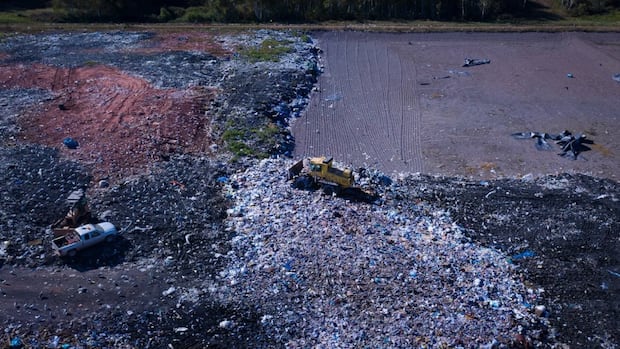
Island Waste Management Corporation says upcoming changes to how Prince Edward Island processes black-bin waste are expected to extend the life of the province’s only landfill from about nine years to roughly 22.
Heather Myers, the corporation’s director of operations, said the East Prince Waste Management Facility — home to the Island’s landfill — has been in operation for more than 30 years.
She said the landfill’s lifespan can be significantly extended thanks to a major expansion at P.E.I. Energy Systems in Charlottetown, which is expected to open in 2028.
“We would be able to increase the capacity of the landfill once that new facility opens,” Myers said.
The $180-million expansion project at the Riverside Drive site will create a waste-to-energy plant roughly twice the size of the current facility. Once up and running, it is expected to process up to 90 per cent of all burnable waste generated on Prince Edward Island.
Myers said the current facility can burn about 24,000 metric tonnes of waste annually, while the Island produces about 55,000 metric tonnes of burnable waste each year. The remainder is sent to landfill.
With the expansion, capacity would increase to about 49,000 metric tonnes per year, meaning much less waste would be landfilled, helping extend the site’s lifespan.
To supply the expanded Charlottetown plant, IWMC plans to build a new transfer station at the East Prince facility. A tender for that project is currently out.
Myers describes the transfer station as a large building where trucks will deliver waste that would otherwise go directly into the landfill.
“When the waste arrives, it’ll go into the building, and the loads will be emptied on the receiving floor.”
At that stage, staff will carry out sorting to remove non-burnable materials, which are items that either cannot be incinerated or are too large for the system, and will still be sent to landfill. These could include materials such as vehicle windshields, glass or bulky items like sofas.
Everything you ever wanted to know about P.E.I.’s landfill
We have the answers to your questions about the Island’s only landfill, where your black cart waste may end up.
The transfer station will also change how waste moves across the Island, she added.
Instead of having many smaller collection trucks driving all the way to Charlottetown, waste will be consolidated into much larger loads.
“So the functions of a transfer station is really a holding and loading facility, rather than having all the individual collection trucks go directly to P.E.I. Energy Systems. So that improves the transportation efficiency by transferring the waste in larger vehicles,” Myers said.
Myers said the financial impact of the new system, including the new transfer station and the cost of hauling waste to Charlottetown, has been built into IWMC’s arrangement with P.E.I. Energy Systems and into the current rate structure.
“A lot of calculations went into making sure that IWMC protects our ratepayers, so that it’s not them paying for the extra cost to get waste to P.E.I. Energy Systems to produce the energy,” she said.
“Our cost should remain about the same with consumer price index increases each year.”