
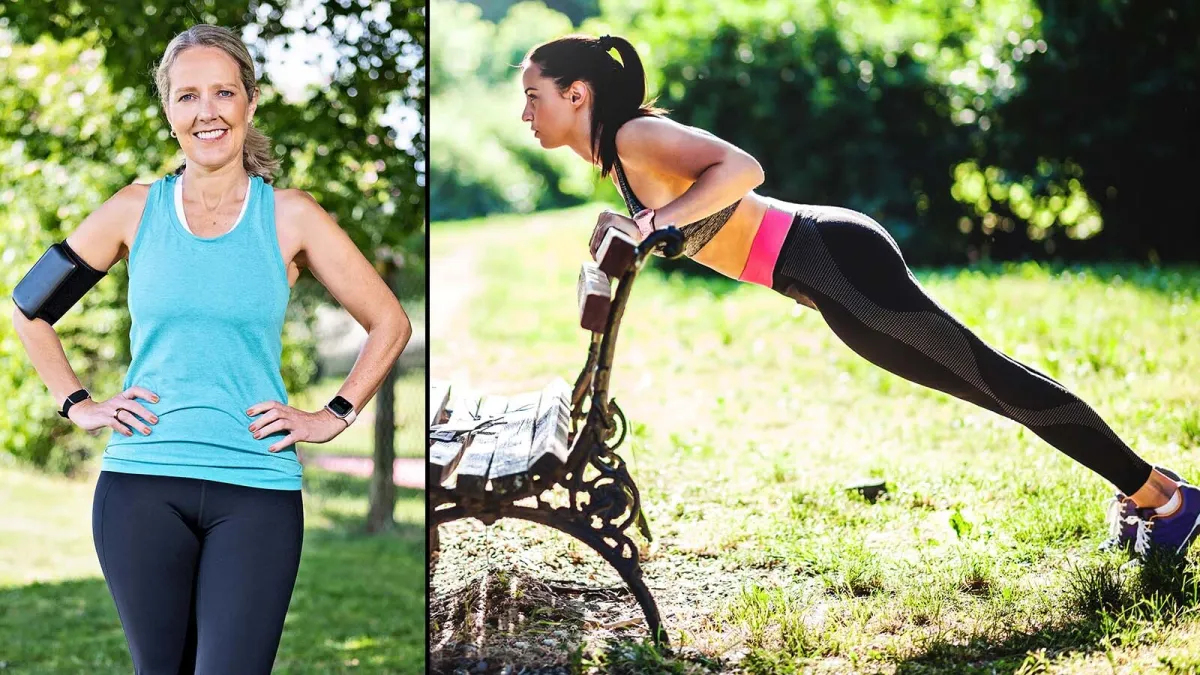
Broadly speaking, there are two types of exerciser: those who enjoy working out in gyms and those, like myself, who can’t wait to leave them. I run outdoors most days, whatever the weather, use trees or fences for stretches and often finish with a mini fitness circuit in the park.
I’ve found the humble park bench to be an ideal substitute for gym equipment when doing step-ups and press-ups, and I’m not alone: on Instagram there are thousands of reels of people using them as they demonstrate park workouts.
This, even though many parks are equipped with free-to-use outdoor gyms and devices such as air walkers, cross trainers, leg and chest presses, and even t’ai chi wheels. One company, Fresh Air Fitness, which has made 5,000 installations, has an interactive online map showing the nearest to you (freshairfitness.co.uk).
They are worth trying. A study of midlifers found that twice weekly sessions on outdoor fitness equipment led to significant improvements in body composition and overall physical health after eight weeks, while a recent review of 11 studies showed outdoor park sessions boosted cardio fitness and strength as well as enhancing mental health and cholesterol levels.
It’s worth pointing out, though, that the equipment varies in quality. The set-up in my local park seems designed for giants; for me, at 5ft 5in, my feet barely reach the pedals, nor my hands the handlebars.
“Often open-air gym machines are constructed to suit people 5ft 10in or taller and many machines are not adaptable,” says Luke Worthington, a qualified sports scientist and personal trainer. “They can serve a purpose but they can also feel a bit uncomfortable as one size is expected to fit all.”
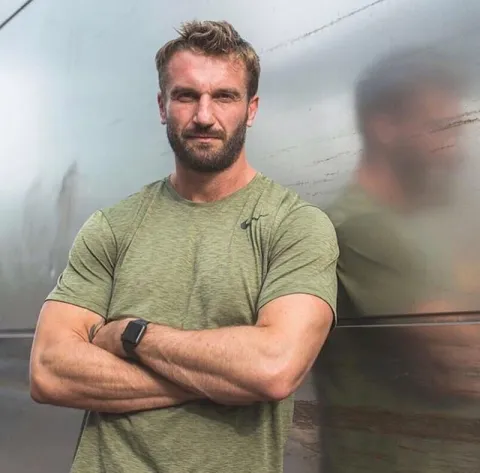 The sports scientist and personal trainer Luke Worthington
Which brings us back to the park bench. Worthington, who specialises in getting actors into shape for screen roles — he has worked with the Marvel, Lucasfilm and Netflix studios — says it’s pretty much the perfect base for an outdoor circuit. Here’s his advice on how to use it.
Get ready
Jog or walk briskly for five minutes to warm up.
Spiderman Often called the world’s greatest stretch, this move recruits the hip flexors, glutes, hamstrings and lower back, all of which get tight after lots of sitting. To do it, start in press-up position, hands beneath your shoulders, then engage your core to bring your left foot forward. Plant your left foot as near to the outside of your left hand as you can. Your right leg should remain in place. Lower your torso to stretch the glutes and hold the position for 10-20 seconds before you slowly return to the start position. Do the same on the other leg and repeat eight times on each side.
Scapular retractions The scapular muscles of the shoulder blades are used in everyday movements such as brushing the teeth, reaching for an item on a shelf, typing and lifting bags. They are also important for pain-free movement of the arms. They are often overlooked in a warm-up but these scapular retractions will help to get the shoulder muscles ready for some upper-body work. Stand with feet hip-width apart, shoulders relaxed and spine lengthened. Squeeze your shoulder blades together as if trying to hold a pencil between them and hold for five seconds. The idea is to pull the shoulder blades together towards your spine without allowing the shoulders to move up towards the ears. Relax and repeat eight times.
The workout
by Luke Worthington
Perform one set of the assigned number of repetitions. Once you can comfortably manage 15-20 reps of each exercise, add another set.
1. Bench step-ups
How many Beginners 6-8 reps on each leg; intermediate 10-12; advanced 15-20
A park bench is pretty much the perfect height for most of us to perform step-ups, a move that will strengthen the lower legs as well as the hamstrings and quads and which, if you do it quickly, will work your cardiovascular system. A 2020 study that looked at a variety of common strength exercises for the glutes, from hip thrusts to deadlifts, concluded that “the step-up exercise and its variations present the highest level of glute activation”. Step up with your left foot onto the bench surface, pressing through the heel to straighten your left leg. Raise your right foot to meet your left foot on the bench. Bend your left knee to step back down to the ground with your right foot. Step down with your left foot. That’s one repetition. Repeat the set before changing sides.
Make it harder Add ankle weights or a heavy backpack.
2. Park bench push-ups
How many Beginners 6-8 reps; intermediate 10-12; advanced 15-20
Push-ups of any variety are an excellent whole-body move that challenge the muscles of the chest, shoulders, core, back, hips and legs. If you find regular press-ups at ground level too hard, start by standing a few feet behind a bench and placing your hands on the highest surface. You may need to move your feet to ensure that your body is in a straight diagonal line from head to feet when your arms are straight. From this position, bend your elbows to lower your chest towards the back of the bench. Keep elbows at a 45-degree angle to protect your shoulders. Don’t let your hips or head drop. Pause at the bottom of the move, then push away from the bench until elbows are extended again.
Make it harder Use the lower surface of the seat for a harder push-up. For an advanced inverted push-up, place your feet on the seat and hands on the floor.
 Getty images
3. Bulgarian squats
How many Beginners 6-8 reps on each leg; intermediate 10-12; advanced 15-20
A study in the Journal of Strength and Conditioning Research found the Bulgarian split squat worked the glutes and hamstring muscles up to 30 per cent harder than a classic deadlift exercise with weights.
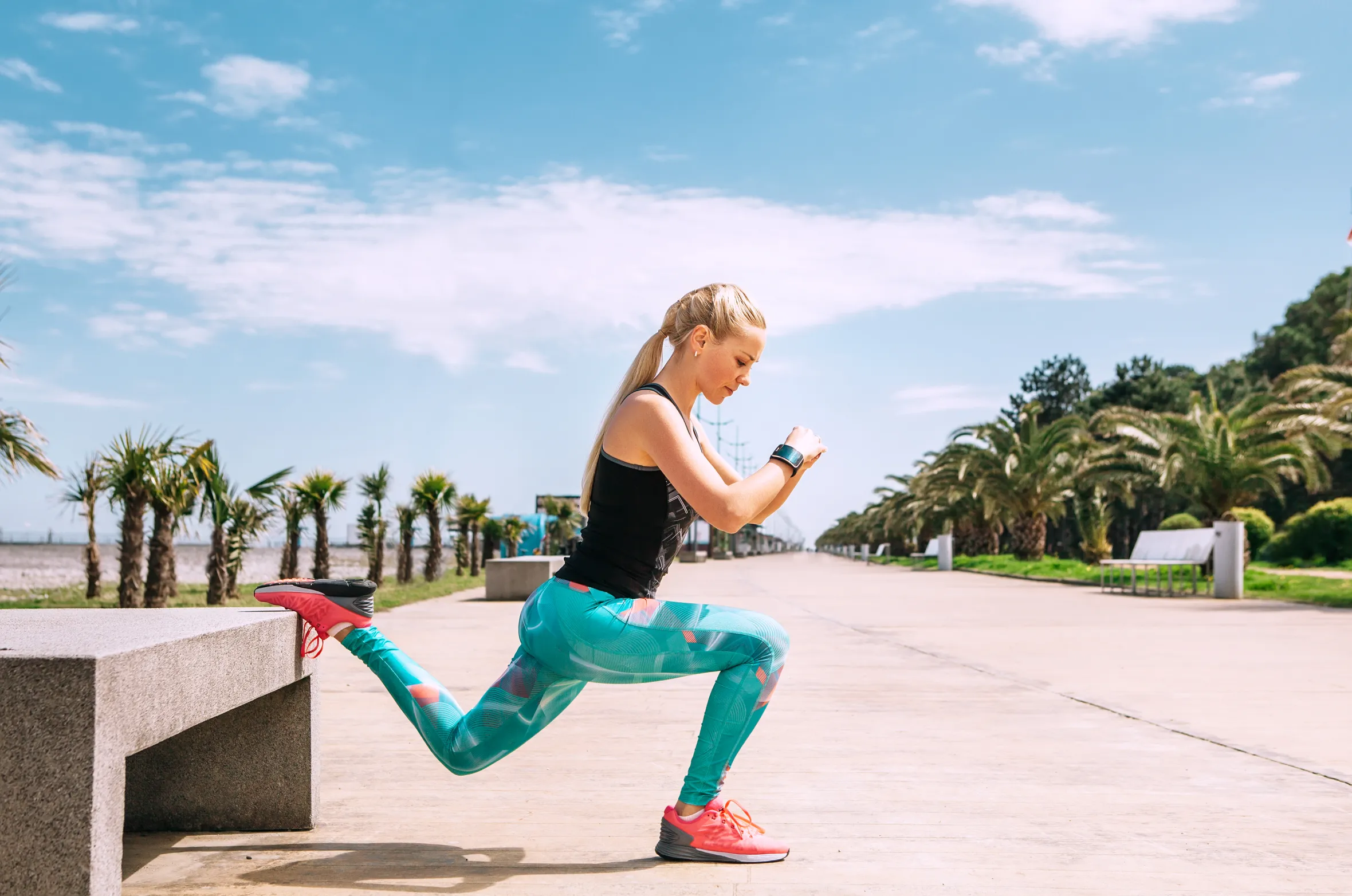
Stand in front of a bench facing away from the seat and place your left foot on the surface. Keep your hips square and bend your knees to lower until your right thigh is almost parallel to the ground with your right knee in line with your foot. Don’t allow the left knee to touch the ground but drive up through the right heel back to the start position.
Make it harder Carry a backpack with a few books (add an extra book each week) or wear a hydration vest filled with water, which gives an extra 3-4kg in weight.
4. Walking lunges
How many Beginners 6-8 reps on each leg; intermediate 10-12; advanced 15-20
These can be done anywhere and involve a basic lunge with motion. Step forward with your right leg and bend until your back knee almost touches the ground. Push back up through the heel, then repeat with the other leg. Keep your body upright and your head straight at all times. Researchers from Sweden who asked people to do walking lunges or jump lunges twice a week in addition to regular workouts found it was the walking lunges that improved hamstring strength and tone by 35 per cent.
Make it harder Add a set of stationary reverse lunges. Take a large step backwards and lower the back knee to the floor. These target the glutes and leg muscles but place less stress on the knees. Also add lateral lunges — stand with your feet hip-width apart, then lunge to the right side with your right foot and to the left with your left foot.
5. Seated bench squats
How many Beginners 8 reps; intermediate 10-12; advanced 15-20
Squats are an important functional movement that improve balance, stability and co-ordination, as well as strength in the glutes, hamstrings and quadriceps. Stand in front of a bench with your back to the seat. Have feet hip-width apart and bend the knees to lower down to sit on the seat, keeping arms outstretched in front of you. Fully sit, then push back through the heels to stand up from the seat without using your hands. Anatomical limitations mean that even some of the strongest and fittest people find it hard to squat too low, so this is the safest way of doing it for everyone.
Make it harder Carry a weighted rucksack or wear a weighted jacket.
 Getty images
6. Bench side planks
How many Beginners hold for 10-12 seconds on each side; intermediate 15-20; advanced 20-30
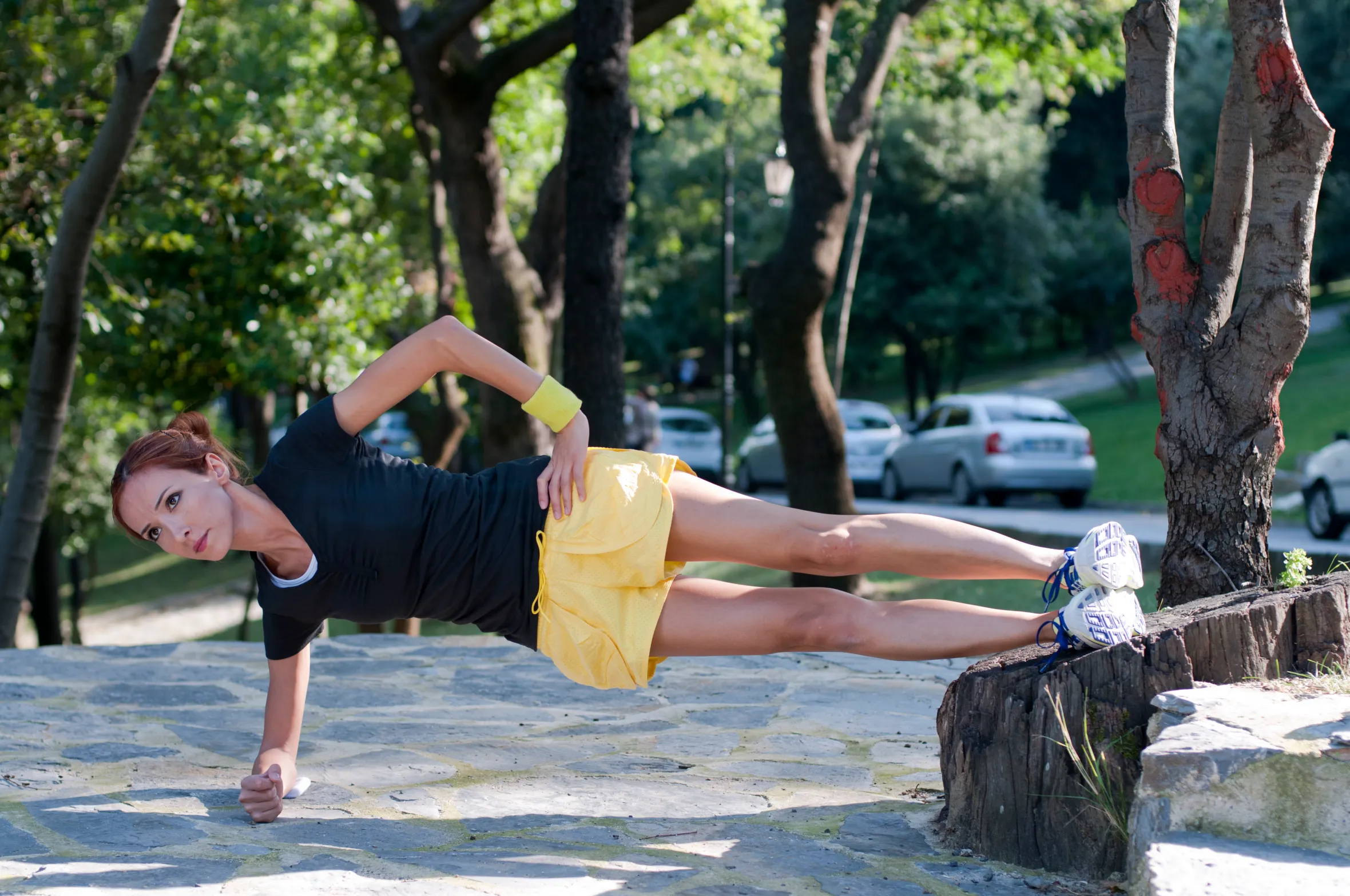
Side planks are great for working the internal and external oblique muscles at the sides of the waist, which are important for posture. Place your forearm (or hand) on the seat of the park bench and step your feet out so that your right shoulder and hips form a straight line. Put your feet on top of each other and raise your left hand up toward the sky. That’s one repetition. Complete 15, then switch sides.
Make it harder Add a leg raise. With your right arm on the bench, squeeze your buttocks and lift your left leg upwards, pausing at the top before lowering back down to the start position. Repeat on the other side. Also try side planks on the floor next to the bench — the closer to the ground you perform a side plank, the harder they are to master.
7. Inverted row
How many Beginners 8 reps; intermediate 10-12; advanced 15-20
Think of this as an upside-down push-up in which you work the back, shoulder and biceps muscles, all important for postural stability. Have a look around for some railings, a low tree branch, a fixed picnic table or a climbing frame to perform the exercise. Grab the edge of the surface with both hands, using either an overhand or underhand grip, keeping your hands shoulder-width apart. Position your body face up, forming a straight line underneath with your legs extended forward and start with arms fully extended. The only point of contact between your body and the floor should be your heels. Bend your elbows to pull your chest towards the equipment. Keep your body as straight as possible. Pause, then lower to the start position.
Make it harder The higher the incline, the easier the row, so try with equipment a little closer to the ground.
The finishers
After my park circuit I like to finish with 15-30-second hard efforts of running, with a 30-second recovery. Start with three reps and build up to six. As you get stronger, try doing these up a slope. Cool down with a three to five-minute jog or walk.
lukeworthington.com
Keep your high-end gyms. I prefer working out in my local park
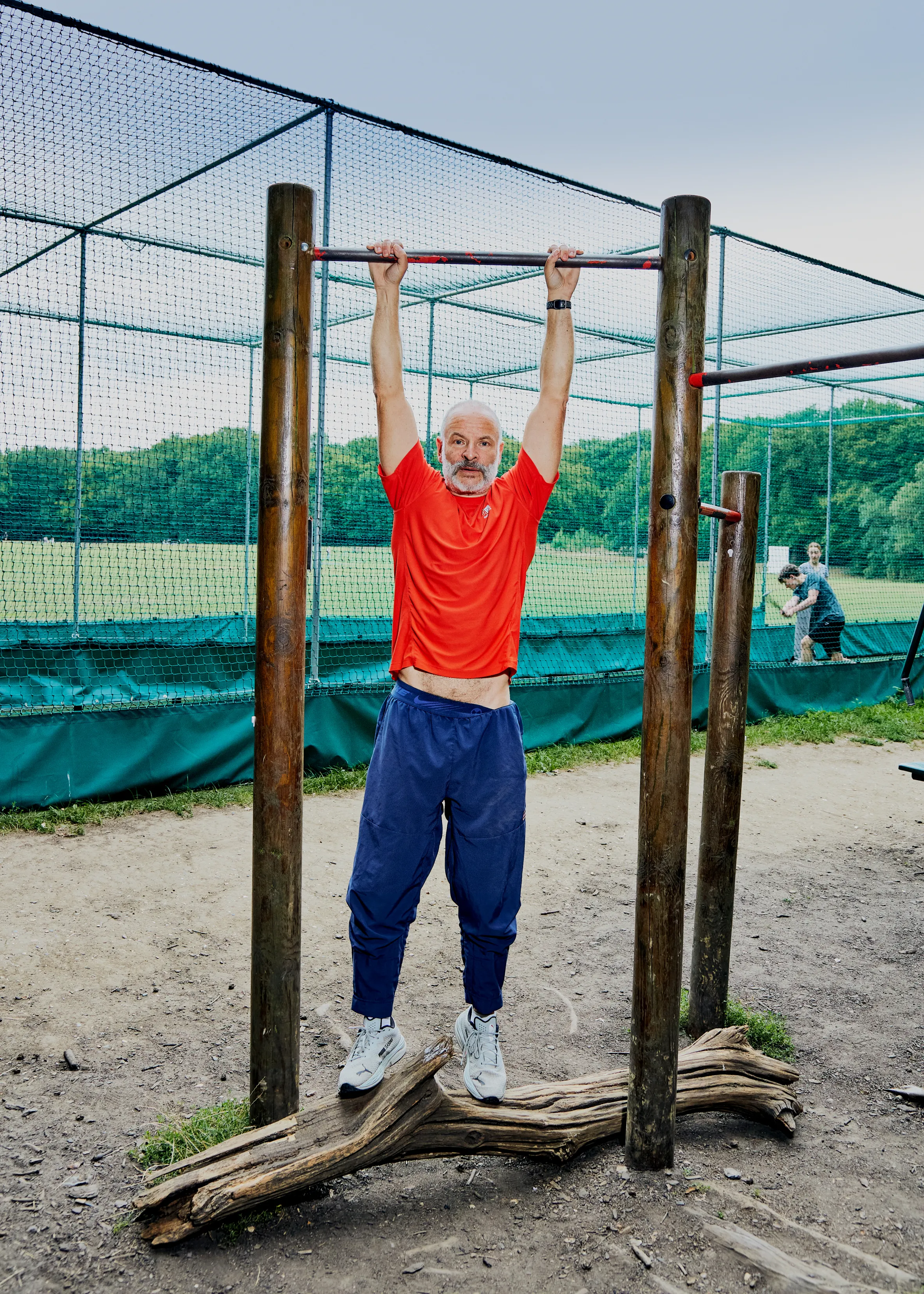 Phil Hilton Chris McAndrew for the times
Phil Hilton
Park workouts are uniquely social and magically motivating. Every few months a young person will come up and tell me, in youth speak I can barely comprehend, that I’m doing great for my age (which is 62, as you ask). I live for this. It’s like receiving an Oscar combined with an Olympic gold. I then proceed to destroy myself showing off for them. Perfect. Only in the park can this happen.
As a health writer, I am often given access to our most costly and well-equipped gyms. While I’m grateful for a chance to try their AI-designed infrared saunas and luxuriously padded recovery suites, my favourite session takes place on Primrose Hill in London and is entirely free.
My circuit hasn’t changed in decades. I run the full length of the hill three times, then I do three sprints using the top half of the slope. I’m usually among a bunch of runners, some bursting past me, some slogging up heroically.
The longer run hits my heart and lungs, the sprints are an energising compromise between strength and cardio. The hill is excitingly steep and I find the view at the top is best enjoyed while struggling to control your breathing. Once that’s done, I wobble to the fitness area. I try for three sets of pull-ups, at least two sets of dips and as many burpees, squats, press-ups and hanging leg raises as feels good. I can work my cardiovascular system and every muscle group, and usually spot at least two international celebrities as I go.
I do this on icy days when the metal bars require gloves and on steamy summer mornings when it’s packed with shirtless men doing one-arm handstands.
Every gym has its demographic: the entrance fee, the equipment, the decor mean that people end up with people like themselves. But when you exercise in a park you meet people with different lives, different backgrounds and different energy: this is very healthy and in much more than a physical sense.
I’ll never forget a man who told me he was recently out of prison. It was just the two of us, some trees and a pull-up bar. He was wearing jeans and looked as though he was experimenting on the equipment without a plan. Soon he was telling me his story. He was trying to reassemble the pieces of his life through exercise. He was determined to change and I was unwittingly sharing day one of his new existence. I did my best to support him and he supported me right back. That’s the park — no judgment, no snobbery, just positive vibes. You rarely have conversations like that at David Lloyd.
Three pieces of advice. 1. Enjoy the vitality of those around you but never compete and never compare. 2. Remember to take in the trees and the sky; don’t disappear into your own head. 3. Take off the headphones, if only for a minute: birdsong and swishy leaves melt your stress.
When I go abroad I take my park workout with me. I’ve done this all over the world. I can recommend the Fitness Court on Marina Green in San Francisco and this year I enjoyed some calisthenics in Plaza Vicente Lopez y Planes in Buenos Aires.
All park workout spaces share the same egalitarian, welcoming atmosphere. I think it’s the combination of the natural setting and the basic human struggle to stay healthy and strong for as long as possible. One sunny day, Primrose Hill will be too steep to climb and I’m fine