
Stay up to speed with stories written by drivers, for drivers.
Get automotive news, DIY tips, market trends, in-depth car profiles, and more right in your email inbox.
Part of the curiosity of Formula 1 is the formula itself. Since the sport’s inception in 1950, its governing body, the Fédération Internationale de l’Automobile, or FIA, has imparted a set of rules—the formula—that dictate the technical parameters within which each team must construct its cars. They’ve always been single-seaters, but beyond that, a car’s dimensions and weight, its engine specs, various safety features, aerodynamic elements, and more all comprise the formula, as do broader sporting parameters like race distance, required tire compounds, and refueling (or not refueling).
The sexiest part of the formula has always been the engine specs, because the noise is a key ingredient to the sport’s spectacle. And this week, F1 fans have been given a reason to celebrate, with the news that V-8s are set to return for 2031, and possibly even 2030. “It’s coming,” FIA president Mohammed Ben Sulayem told Reuters during the Miami Grand Prix. “At the end of the day, it’s a matter of time.” That timing is uncertain because it depends on who, precisely, has a say in the matter. “In 2031,” Ben Sulayem continued, “the V-8, the FIA will have the power to do it, without any votes from the PUMs” (power unit manufacturers, or engine suppliers, if you will).
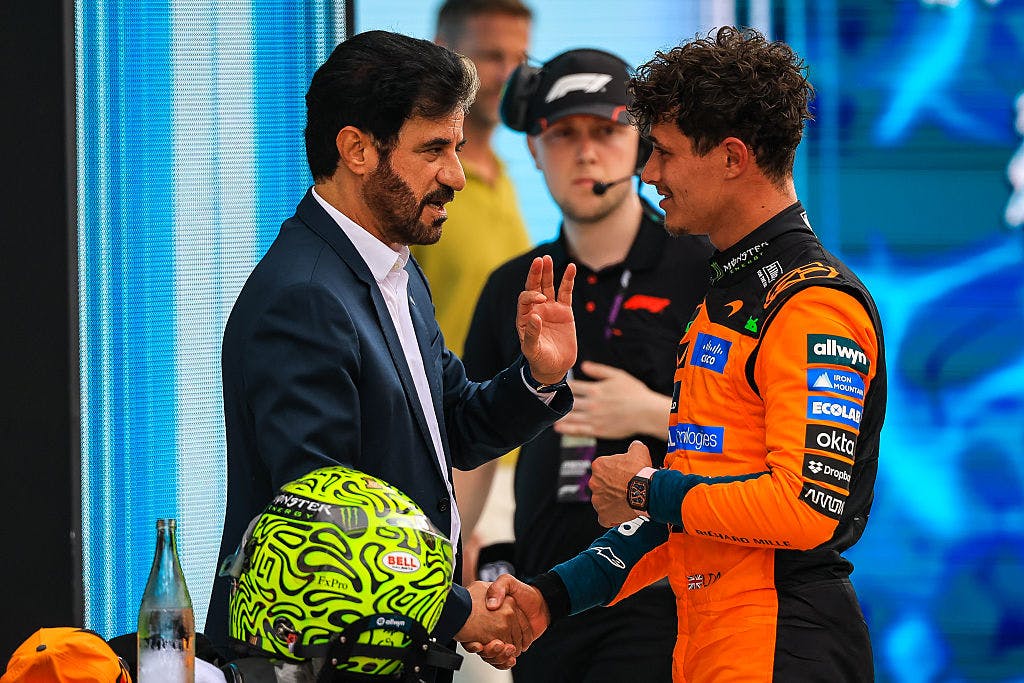 FIA president Mohammed Ben Sulayem explains to current world champ Lando Norris that V-8s will be a little more exciting than the current formula…Getty Images
That’s when the FIA is set to deliver the new regulations governing the sport, and it would have the authority to standardize V-8s (or V-10s, or even inline-sixes for that matter) then and there. The possibility of introducing V-8s a year sooner, however, must be voted on and approved by four of the six PUMs—Audi, Ferrari, General Motors, Honda, Mercedes, and Red Bull—and it’s still too early to tell how that might go.
Formula 1 entered its “hybrid era” in 2014, when 1.6-liter turbocharged V-6 engines, integrated with heat energy and kinetic energy recovery systems (KERS), became the norm. Fans and drivers alike immediately lamented the loss of the rowdy 2.4-liter V-8s that powered the sport from 2006 to 2013, and plaintive cries that “it just doesn’t sound the same” were widespread. The cars didn’t drive the same, either, and drivers were forced to add a new dimension to their game in order to use energy that wasn’t necessarily there a lap ago.
Updated regulations for the current season have taken these hybrid power plants in a dramatically different direction, and no one seems very happy about them. Engine configuration and displacement have remained the same, but recharging the batteries in these hybrids, which split power 50/50 between the V-6 and a 350-kW electric motor, seems to be best achieved by heavy braking. Peak output isn’t always available, and drivers have had to get creative—sometimes dangerously so—with their braking in order to top off the batteries lap after lap to help them achieve that peak power. Max Verstappen, perhaps the most vocal opponent to this latest formula, referred to the cars as “Formula E on steroids,” and his distaste for his day job seems to be personified by his after-hours pursuits racing sports cars in GT3.
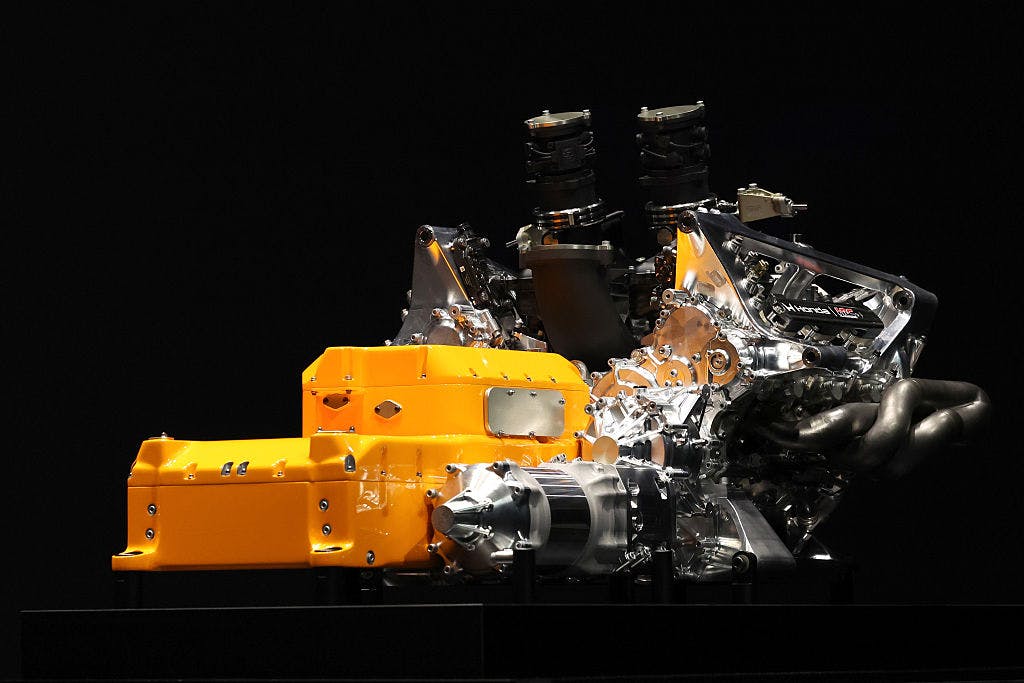 Honda’s RA626H hybrid V-6 power unit propels the Aston Martin Aramco F1 team this season.Getty Images
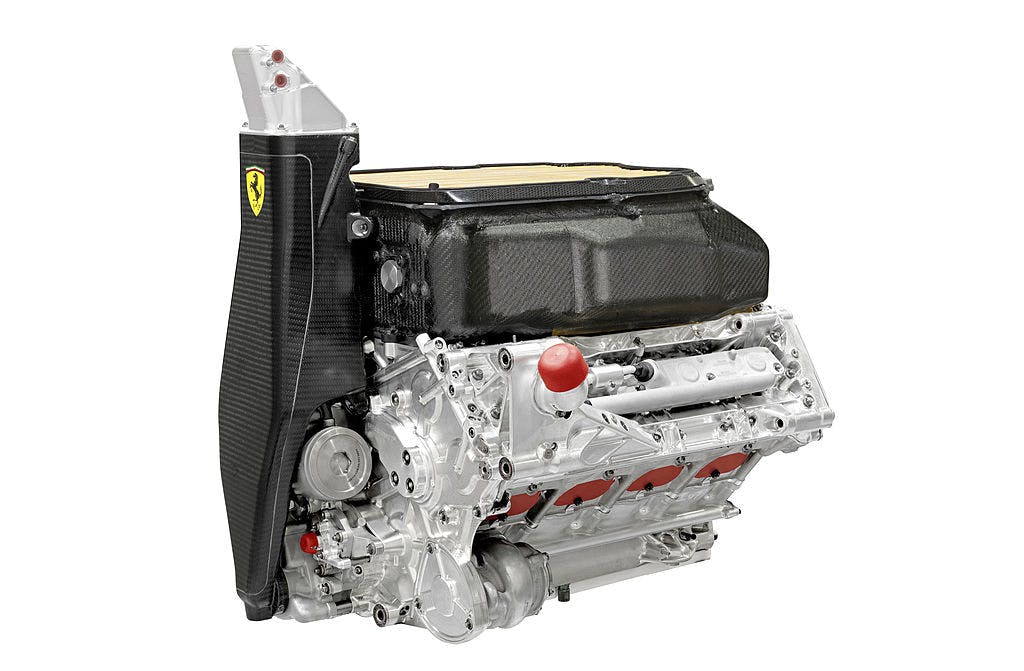 Ferrari’s final V-8, the F138, closed out F1’s V-8 era in 2013.Getty Images
As the FIA scrambles to revise the current regulations mid-season to satisfy safety concerns—and as automakers around the world scramble to revise their once bold, now heavily revised electrification strategies—it’s no wonder V-8s are back at the top of the sport’s talking points. “The mission will be less complication, not like now,” Ben Sulayem said.
From 1995 to 2005, F1 relied on 3.0-liter V-10s, though Ben Sulayem has ruled out their return. Prior to 2006, the last time V-8s appeared on the grid came during a long spell from 1966 to 1985, when the Cosworth DFV ruled the sport, though growing competition from smaller turbocharged engines began in the late-’70s, when the Renault-Gordini 1.5-liter V-6 debuted and quickly ushered in the turbo era.
Ben Sulayem has been vocal about a return to V-8s in the past but is now certain the sport is headed back to them. Sooner rather than later, one hopes. “I’m positive they [PUMs] want it to happen,” he said. But let’s say the manufacturers don’t approve it. The next year it will happen. In 2031, it’s done anyway. It will be done. V-8 is coming.”