
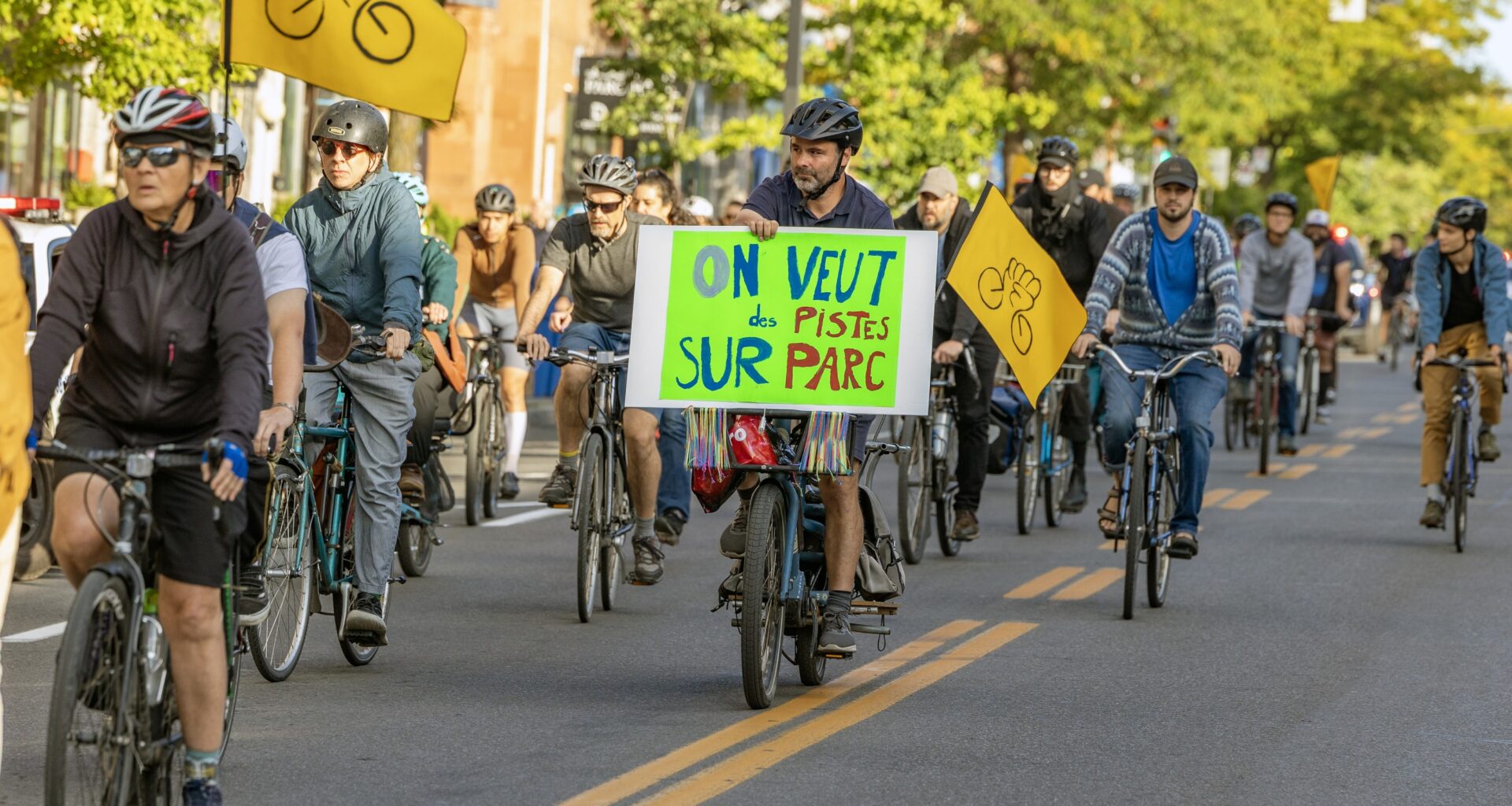
The dangerous configuration of one of Montreal’s busiest thoroughfares contributed to the September 2025 death of 31-year-old cyclist Amanda Augustsson, a Quebec coroner has found.
Augustsson, who died in a Sept. 7 accident on Parc Ave. just north of Bernard Ave., suffered an acute trauma to the head after hitting a parked vehicle and falling on the road while attempting to avoid a heavy truck driving behind her, the report said.
Though initial reports said Augustsson had collided with the heavy truck, coroner Marie-Claude Boutin concluded that the truck had not struck the cyclist.
The report found that the incident had occured while “Ms. Augustsson was travelling in a dense urban environment devoid of dedicated cycling infrastructure,” which required her to “continously adjust her trajectory to handle parked vehicles on one side and moving vehicles on the other.”
Boutin recommended the City of Montreal review Parc Ave.’s configuration to “formalize a continuous and safe bike path.”
The city should also consider a new route for active transport, she said, listing nearby Hutchinson St. as an example, and take measures to moderate traffic on Parc Ave.
The coroner cited the city’s own analysis of the incident, which she said found “that the current geometrical configuration of (Parc Ave.), combined with the presence of parking on the side of the road, the density of traffic and the absence of dedicated cycling infrastructure creates an environment where the room to maneuver and level of safety for cyclists is insufficient.”
Keeping a safe distance between cyclists and motorized vehicles on the road is “difficult and sometimes impossible,” the coroner added.
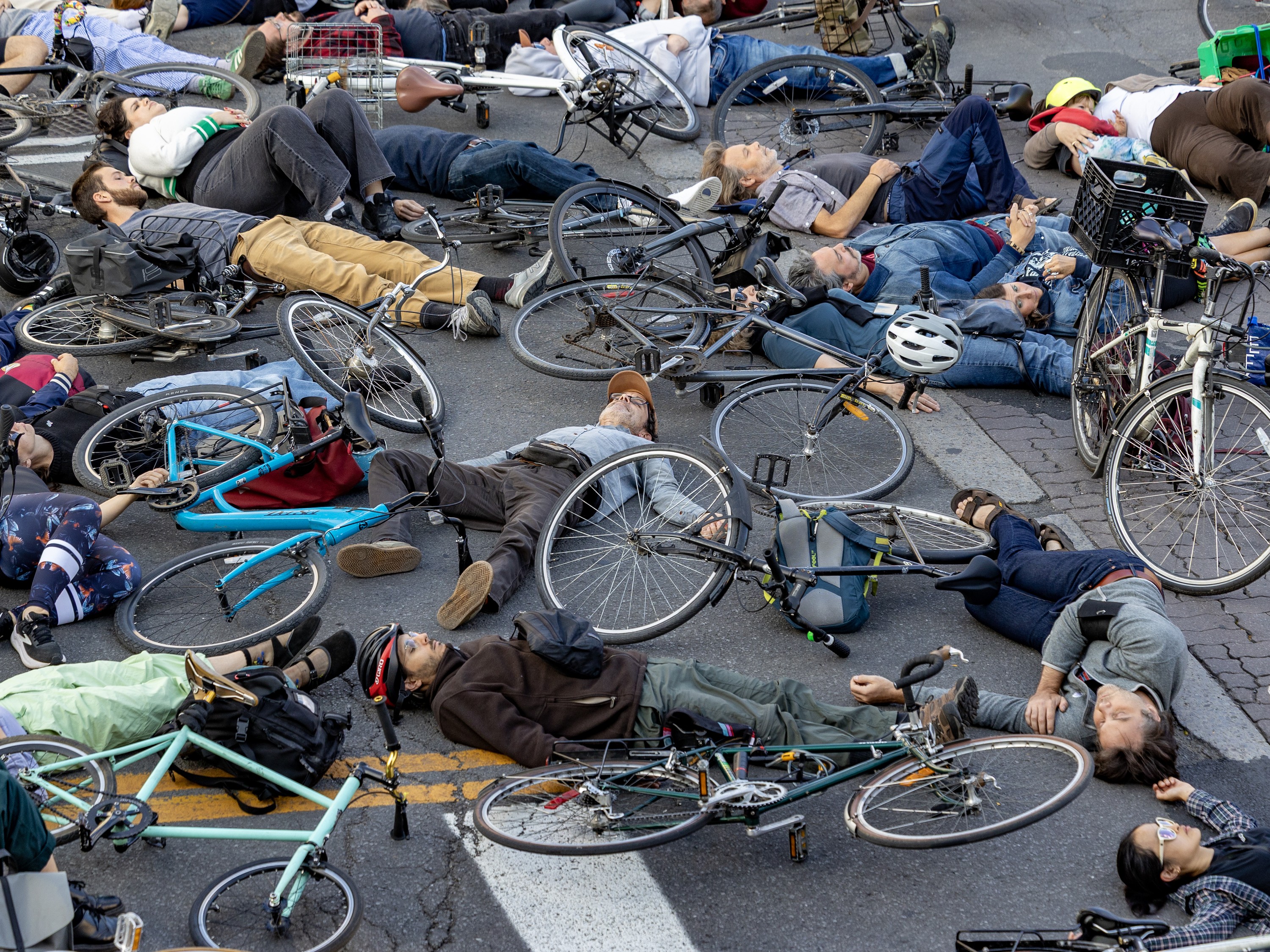 A die-in was held on Parc Ave. at Bernard Ave. in Montreal in September 2025 after cyclist Amanda Augustsson was killed. A coroner’s report blames, in part, the lack of a dedicated bike lane. John Mahoney / Montreal Gazette
While the report focused on the layout of Parc Ave., Boutin also noted that Augustsson was not wearing a helmet and that her bloodstream was found to contain MDMA, a recreational drug that could hamper reflexes and coordination.
While she said both factors might have influenced the incident, the coroner said she couldn’t say that either the substance or the lack of a helmet had caused the cyclist’s death.
Since 2013, at least four cyclists and nine pedestrians have been killed on Parc Ave., according to a tally of coroner’s reports and Gazette articles.
Deaths on the busy thoroughfare have long prompted calls for action from residents living nearby.
The day after Augustsson’s death, dozens of cyclists gathered close to the spot she’d been killed, calling for safety measures on Parc Ave.
“The city has had to do something about Parc Ave. for a long time,” Atigh Ould, president of the Association des Gens d’Affaires du Mile End told The Gazette days after the incident. “Up until now, there hasn’t been such a change.”
“Parc Ave. is a strategic north-south corridor for active and motorized travel,” Boutin said in her report. “But its configuration does not respond to this vocation and generates conflict zones, especially for cyclists.”

I’ve reported for The Gazette since 2024. I love covering a good politics story, but any day I tell Montrealers something new about the world around them feels like a good one. Got a tip for me? Email me at jawilson@postmedia.com