
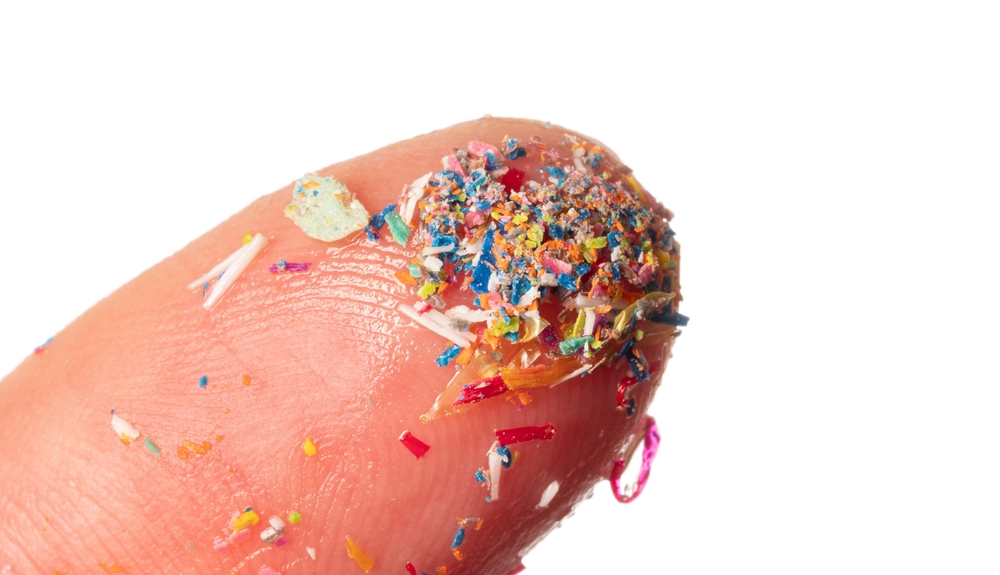
Researchers in Fudan University have found that coloured microplastics contributed to global warming at a level equivalent to 16.2% of that caused by black carbon.
The research reveals a “a long-overlooked link” between microplastics and global warming, said study co-author Hongbo Fu. Previous research suggested that the impact of microplastics on climate change was minimal, but these studies were conducted on clear plastics, despite most plastics being coloured with pigments.
“Our work suggest that climate models need to be updated,” Fu said. “The Intergovernmental Panel on Climate Change (IPCC) should take notice.”
Microplastics are present in every environ
Microplastics come from a variety of sources, such as textile fibres and tyre abrasion and are prevalent across land, sea and air. More than 20 times as many microplastic particles are released into the air from land-based sources rather than the ocean.
Whilst the actual number of microplastics on Earth is harder to calculate, they have been found in almost every region, and are particularly present in urban environments.
Urban areas have recorded up to 1,300 microplastic particles per square metre per day and another study found that 94% of airborne microplastics measured less than 10 micrometres – small enough to reach the deepest parts of the lungs.
Mimicking real-world plastic ageing to better gauge environmental impact
The study measured optical properties of a variety of differently-sized and coloured plastics, with a focus on how the materials would age in the environment. Exposure to ultraviolent light caused clear and lighter plastics to yellow, whereas darker plastics bleached.
These findings were then simulated on a global scale with atmospheric climate models and found that the warming effect of the darker microplastics (which absorbed heat) far outstripped the cooling properties of the lighter plastics (which were more likely to reflect heat).
Co-author Drew Shindell of Duke University said to USA Today that the research demonstrates that “The net effect of atmospheric microplastics on climate is to cause additional warming…From our study we can see that these particles absorb about five times as much sunlight as they reflect, so that in the net they make our planet hotter, which was not clear before.”
This raises concerns about the role of plastics not only as a pollutant in the environment, but how they “Can also act as a heating agent in the atmosphere,” as Fu warned.
The study was published in Nature Climate Change and led by Yu Liu and Hongbo Fu.