

For decades, a single number governed how millions of households set their thermostats. It appeared in government leaflets, energy-saving campaigns, and official advice columns without much challenge. That number is now being questioned. Energy researchers and public health bodies have begun walking away from it, concluding it no longer matches how modern homes retain heat or how people stay healthy indoors.
What is replacing it is not a different fixed figure but a flexible range, one that shifts depending on the room, the time of day, and who is at home. The World Health Organization and the UK’s Energy Saving Trust both weigh in on where that range should sit, and their guidance points in a consistent direction.
This is not simply a dispute about comfort. Researchers warn that rigid attachment to an outdated thermostat setting can raise the risk of respiratory illness, cardiovascular strain, and structural damage from condensation and mold.
A Rule Born from a Fuel Crisis
The old standard traces back to the 1970s energy crisis, when fuel shortages forced governments to push conservation measures. It was a political number, not one derived from building science. Homes at the time were draftier, insulation was patchy, and heating controls offered little precision.
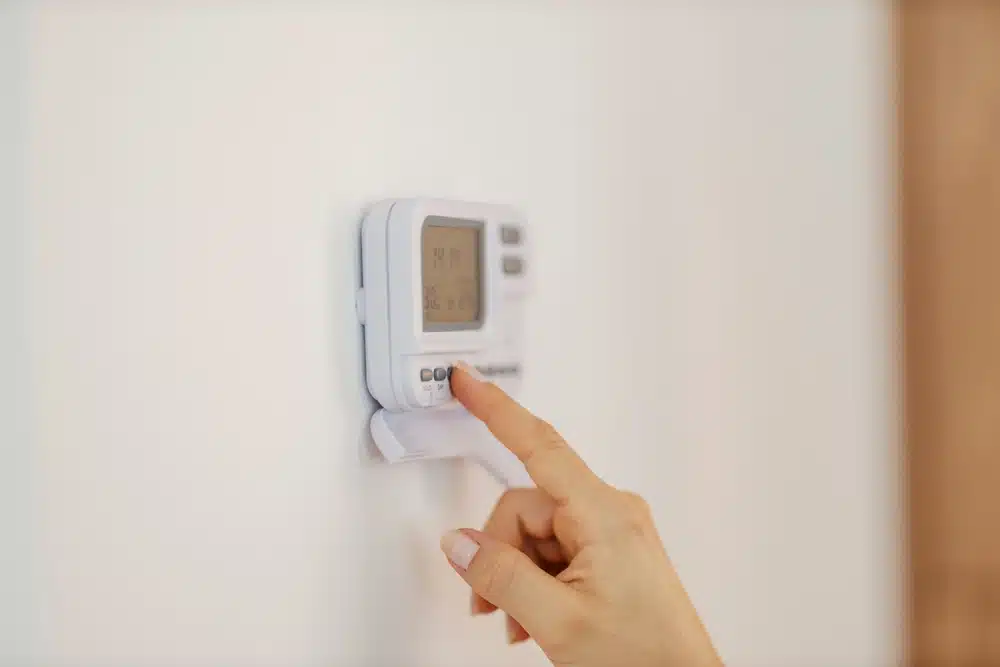 The 19°C standard came from 1970s politics
Fifty years later, those conditions have changed. The Energy Saving Trust now tells households to find “the lowest comfortable temperature for your needs,” noting that for most people this falls between 18°C and 21°C. Dropping a thermostat from 22°C to 21°C saves roughly £90 a year in Great Britain, the Trust calculates. Small adjustments add up, but not always in the direction the old rule assumed.
Cold Rooms Carry Health Risks
The World Health Organization has long warned that indoor temperature should not slip below 18°C. Colder conditions pose a particular danger to older adults, infants, and people with chronic illnesses. National health agencies and housing authorities back that threshold.
Homebuilding.co.uk reported in November 2024 that “your home should have a minimum temperature of 18°C to avoid damp, mold and condensation.” Warm, moist air hitting a cold wall or window produces condensation. Given time, that moisture feeds mold growth that can stay hidden behind furniture or inside wall cavities until timber rot or breathing problems force the issue.
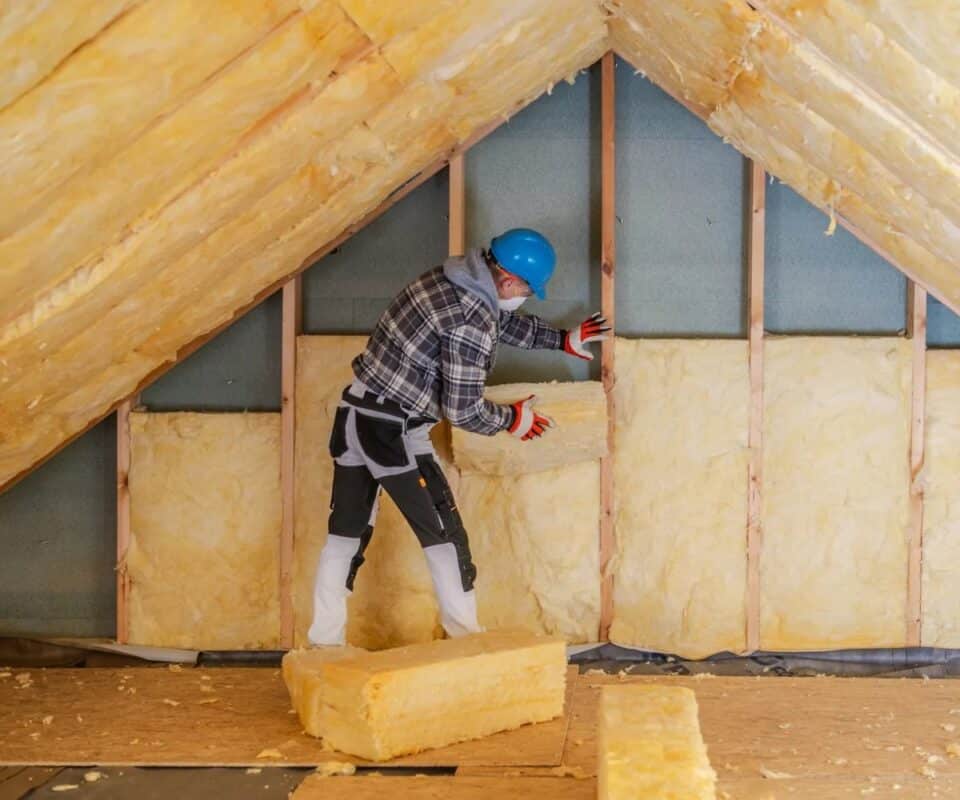 Installing insulation will reduce heat loss in your home. Credit: Shutterstock
The Welsh Government has issued room-specific guidance, cited by Homebuilding: 21°C in living rooms during the day and 18°C in other rooms, maintained for at least nine hours on weekdays and 16 hours on weekends. Keeping temperatures steady, the reasoning goes, breaks the dampness cycle that allows mold to establish.
Efficiency Means More Than a Low Number
Field data from modern heating systems is challenging the old belief that a lower thermostat always cuts energy use. When a home cools too far, the boiler or heat pump must work harder to bring it back up. The result is often short, sharp spikes in consumption rather than steady, efficient operation.
This is why thermostatic radiator valves, or TRVs, have become central to cost-effective heating. A TRV sits on each radiator, senses the surrounding air, and adjusts hot water flow on its own. Rooms that are rarely used stay cooler. Living spaces stay warm. No cold spots form where condensation can gather. The Energy Saving Trust says adding TRVs to a system that already has a programmer and thermostat saves an extra £35 to £40 annually.
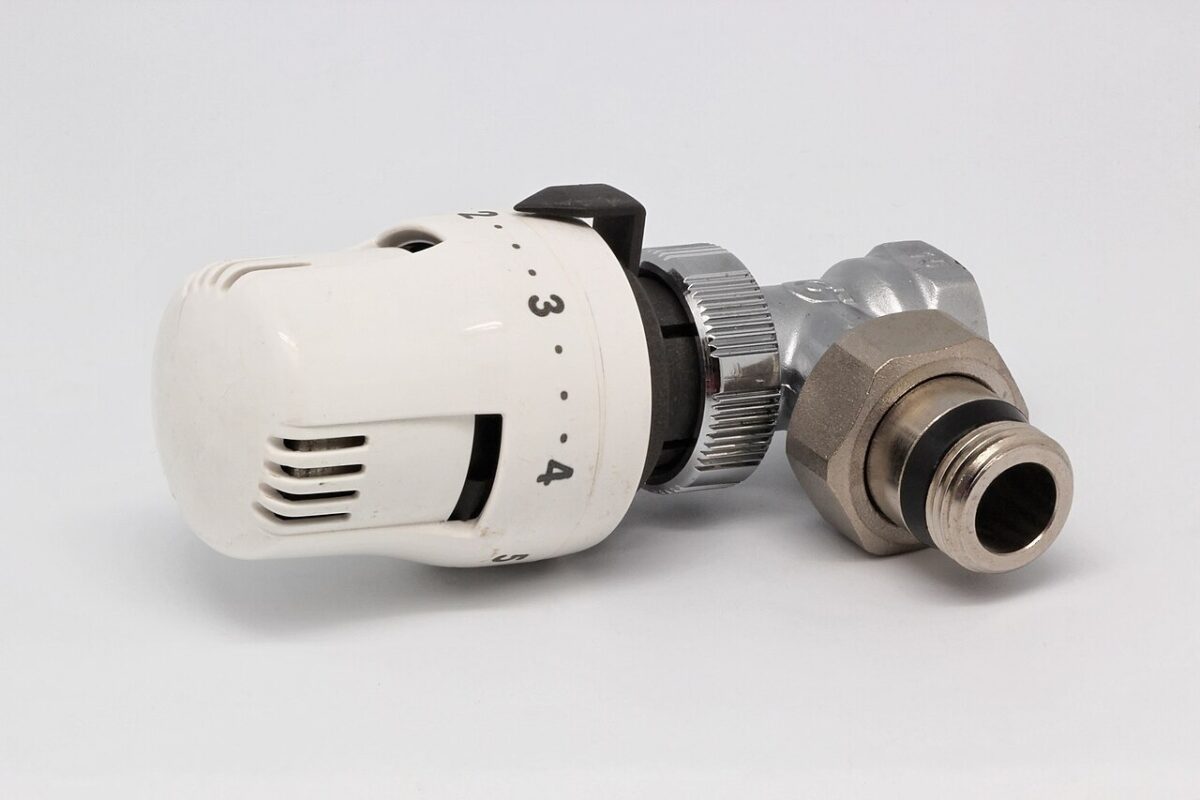 A thermostatic radiator valve (TRV) on position 2 (15–17 °C). Credit: Coyau / Wikimedia Commons
Experts increasingly recommend steady temperatures over fluctuating extremes, particularly in older or poorly ventilated properties. Keeping a home at a constant temperature may consume less energy over time than letting it repeatedly drop and then reheat. The old assumption that efficiency always means turning the dial down is losing ground.
Smart Heating Changes the Calculation
Smart thermostats and zoned systems give households a level of control the old rule never accounted for. Devices like the Tado° smart thermostat and room-specific TRVs let residents set different temperatures for hallways, bedrooms, and living areas. Heat goes only where it is needed and only when it is needed.
Joanna O’Loan, knowledge manager at the Energy Saving Trust, said that TRVs let you “control how much hot water flows through your radiators. This is a great way of making sure that you’re only heating the rooms you use.” Cooler hallways and spare rooms are fine as long as key living spaces stay warm enough to prevent the cold surfaces that draw condensation.
Electronically controlled TRVs have become increasingly common. Many now connect to smartphone apps, adjusting to occupancy patterns or following programmed schedules that vary by room and time of day. A single fixed temperature for an entire house no longer fits the available technology.
What to Do Beyond Adjusting the Thermostat
Temperature alone does not decide whether a home stays healthy. Ventilation bursts, sometimes called “house burping,” mean opening windows and doors for just five to ten minutes a day. Fresh air circulates without chilling the building’s structure. Extractor fans in kitchens and bathrooms pull moisture out at the source. A cheap hygrometer lets any household track indoor humidity and keep it below 60 percent, the level where mold risk climbs.
Draught-proofing helps too. Chloe Barrow, an interior expert at Laura James, told Homebuilding that poorly sealed floors are often missed. “Even a small draught can counteract the effect of ambient heating making your home feel colder than it should in winter.” Filling gaps in floorboards and around doors is a low-cost fix that makes steady indoor temperatures easier to hold.
As smart controls and better home insulation push more households toward higher, steadier temperatures, the old rule is giving way. Comfort and efficiency no longer sit on opposite sides of the thermostat. In most modern homes, the number that makes sense has shifted upward, quietly and without much fanfare.