
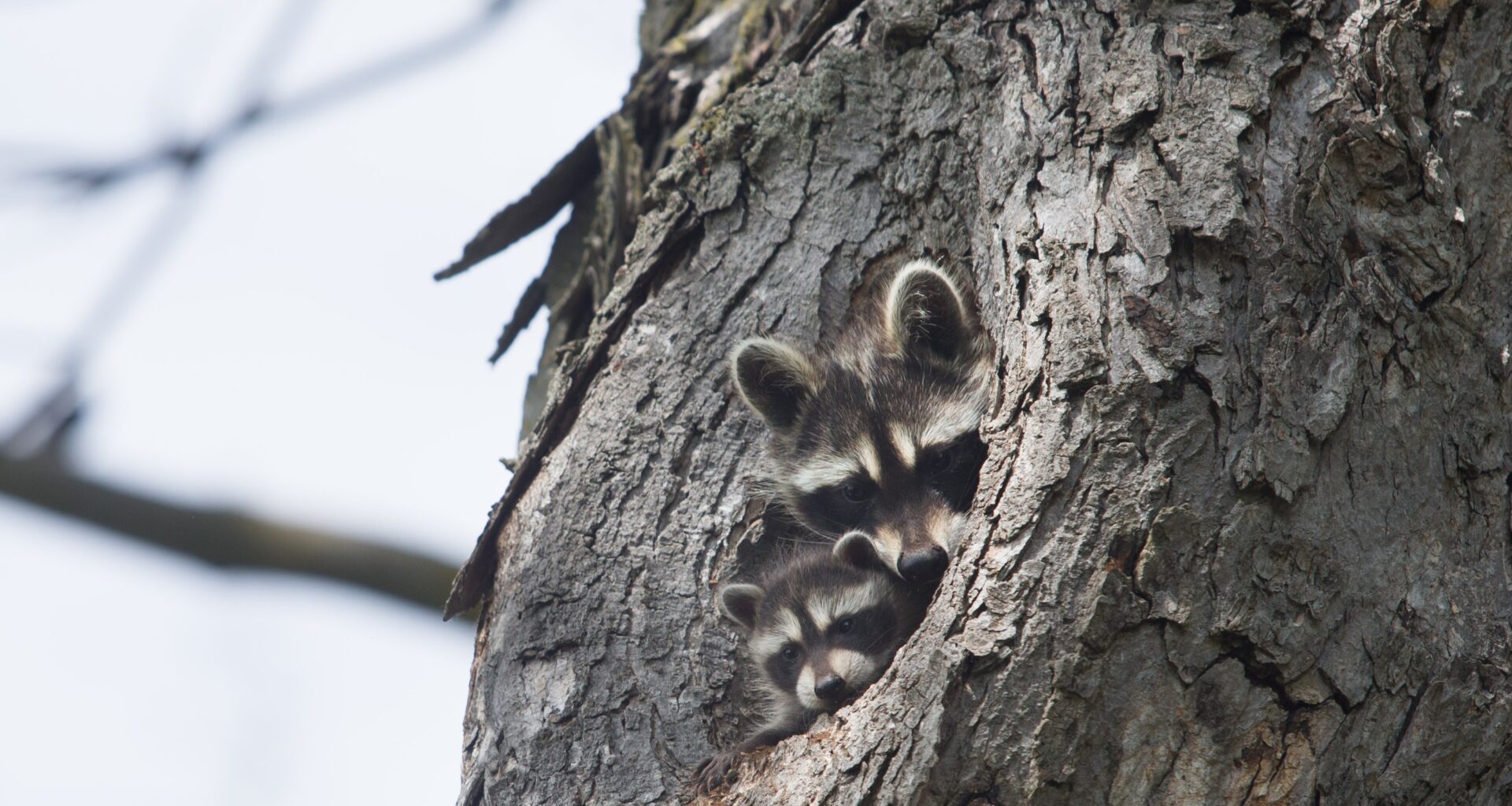
The detection of rabies in a dead animal in the Montérégie region comes amid what one veterinarian describes as a “real explosion” of cases among raccoons in Quebec last year.
Dr. Sarah Annie Guénette, owner of Wizoo veterinary clinics and head veterinarian at the Ecomuseum in Ste-Anne-de-Bellevue, described rabies as “something that has always been known and kept under control” in both veterinary and human medicine, and cases are rare.
But there has been an increased surveillance of potential rabies cases in raccoons near the Quebec-U.S. border over the past three years, she said.
“The question is whether our number of rabies cases will start to increase with climate change,” she said in an interview Wednesday. “And, since 2024, that has definitely been the case, especially in the Eastern Townships and Montérégie regions. That’s when they started seeing cases of raccoon rabies.”
There was one confirmed case of raccoon rabies in 2024, she said.
“And then, in 2025, there was a real explosion of cases — we’re talking about 93 cases of raccoon rabies in Eastern Townships and Montérégie regions.”
Guénette’s comments come as Quebec’s Environment, Climate Change, Fauna and Parks Ministry announced Tuesday that rabies was detected in a dead raccoon in St-Jean-sur-Richelieu. The animal was recovered along the west bank of the Richelieu River in the St-Eugène sector after a citizen reported it.
The ministry also posted a video of where raccoons may be along a stream, saying its teams are “in the field conducting a wildlife vaccination campaign” by distributing bait in the Eastern Townships and Montérégie regions until May 10.
Rabies is a contagious and fatal disease that attacks the nervous system. It can be spread to humans and animals primarily through bites and scratches from an infected animal. The province warns that rabies is one of the “most serious diseases transmissible to humans because it is fatal as soon as general symptoms appear.”
Quebec has reported more than 30 confirmed cases of raccoon rabies to date this year on its website, with the overwhelming majority of them in the Montérégie region and Eastern Townships.
“When wildlife gets a disease, that’s one thing,” Guènette said. “It’s quite another when domestic animals start catching it. It’s even more serious when humans who come into contact with either wildlife or their domestic animals are directly endangered.
“And that’s what we’re starting to see, slowly but surely.”
Exposed to rabies? Don’t wait to get help
With climate change, there are more raccoons in Quebec than before, Guénette explained. Due to the warmer temperatures, they tend to migrate further north, and their hibernation periods may not be as long.
Guénette stressed that “basically all mammals can have rabies, but currently, it’s mainly raccoons that are carriers.” They can have two kinds of the disease: furious and dumb.
This means infected raccoons can either show signs of aggression, or they can be more friendly or out and about during the day, even as nocturnal creatures.
“Any mammal that exhibits abnormal behaviour, that isn’t afraid of humans, is always suspect,” she said.
The recommended course of action is not to touch the animal and to immediately contact a municipality’s animal-control department, she said. The department will help ensure contact with Quebec’s wildlife ministry.
Guénette also noted the importance of prevention, especially among pet owners. Accidents can happen, such as when beloved companions unexpectedly come into contact with infected wildlife. Rabies vaccines run anywhere between $35 to $55 in veterinary clinics, she said.
“Animals that live with humans, whether it’s cats, dogs, rabbits, ferrets, must be vaccinated against rabies,” she said. “This is essential.”
For any person who has come into contact with an animal that is “suspect,” she said, “don’t hesitate and go to the emergency room.”
“Once again, don’t take the chance,” she said. “It’s a disease that is fatal, and it is irreversible if you wait too long.”
Hospitals are equipped to quickly handle potential rabies exposure, she said.
“The problem is when you wait,” she said, adding that even 24 hours can make a difference to a person’s survival.
Humans can also be vaccinated against rabies as a preventive measure, but Guénette noted it’s expensive.
“To get two doses, it’s around $700,” she said. “To get three doses, it’s around $1,000 for the rabies vaccine. But it’s available in private medicine.”
What about in Montreal?
There haven’t been any cases of raccoon rabies in Montreal yet, according to Guénette.
“The beauty of Montreal is that it’s an island,” she said.
“So, it’s already more difficult for cases, let’s say raccoons, which would be contagious, to cross the bridges to get to the island.”
Amid this week’s case in St-Jean-sur-Richelieu, the ministry is urging residents in the Eastern Townships and Montérégie region to report any raccoons, skunks or foxes exhibiting abnormal behaviour to 1-877-346-6763 or online at quebec.ca/rageduratonlaveur. It is also prohibited in about 150 municipalities for citizens to relocate those animals.
It also urges the public not to touch dead animals or approach wild animals even if they appear sick, injured or orphaned.