
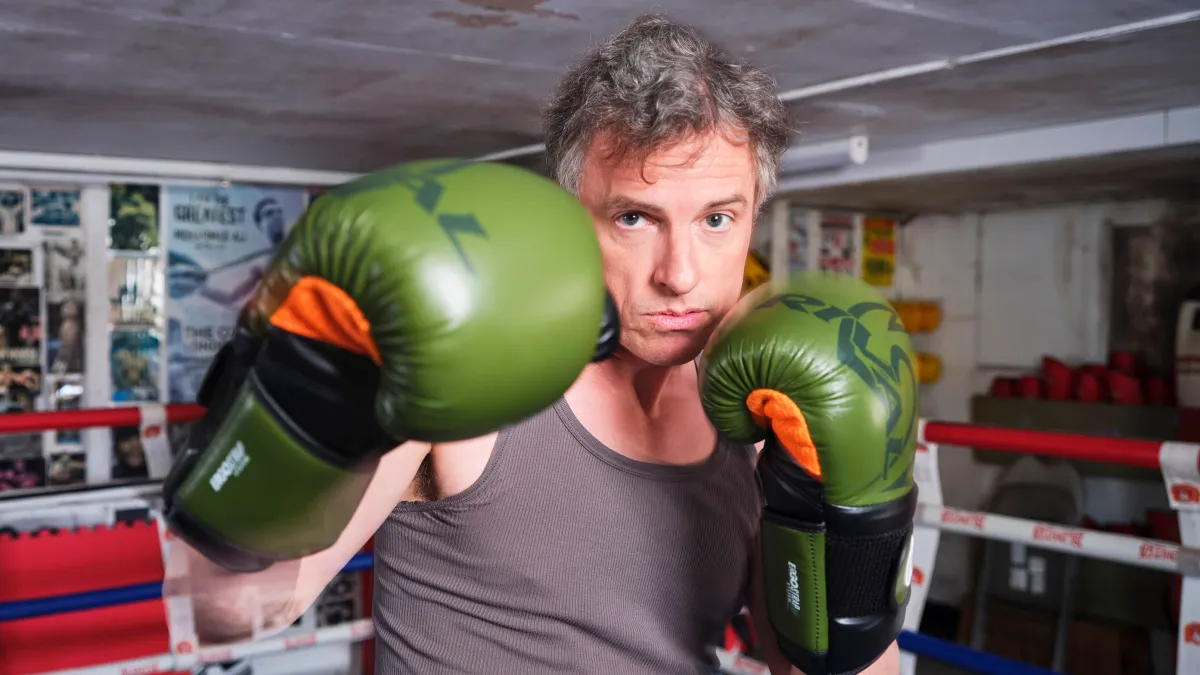
There are probably more sensible things to do with my time than boxing. Golf, for example. Starting a really dedicated pub quiz team. Or — like other men of my vintage — I could dream of starting a microbrewery. Instead, once a week I wrap my hands with tape, put on 16oz gloves, fit a mouthguard and stand in a gym, practising hitting people.
I have always liked boxing. At the age of eight my dad bought a Greatest Fights of Muhammad Ali VHS and what struck me even then was how it looked. It didn’t seem barbaric, like people often describe it. To me, it looked balletic. Muhammad Ali had attitude, confidence, rhythm and balance. At times it felt more like dancing than fighting. Ali would speak poetry to his opponents, dodge a flurry of punches, then counter with something precise and devastating.
Now at the age of 48, I’m giving it a go, which on the face of it seems a bit late. I tried tennis, but my mind drifted on court. Then I moved to five-a-side football with some dad friends, where I too often found myself jogging around on the periphery of the game. But since starting boxing seven months ago, I’ve become obsessed. I read about it, watch instructional videos and once the mouthguard has come out, talk about it with anyone I can.
The first thing you realise when you start is how hard it is. That lesson lands early when you understand that you don’t know how to throw a punch, which feels pretty basic. You have to learn to generate power from the ground, through your hips, into your arms, turning your wrist as you strike. Once you’ve begun to connect glove to pad, you move onto the combinations: jab, jab, cross, hook. Each time you must adjust your body to add power and stay balanced.
Three minutes of pad work can feel like an eternity. Your lungs tighten. Your shoulders burn. Sweat pours. And while all this is happening, you’re expected to think clearly — keep your hands up, move your feet, land cleanly and get your head out of the way before anything comes back. Because in a real fight your opponent isn’t a pad, it’s someone who’s spent their time learning how to do all this back to you. This means you have to feint, change angles, mix shots to the body and head, adjust your rhythm, pivot, slip and roll your way out of trouble. At the start, even the skipping was enough to take the wind out of me.
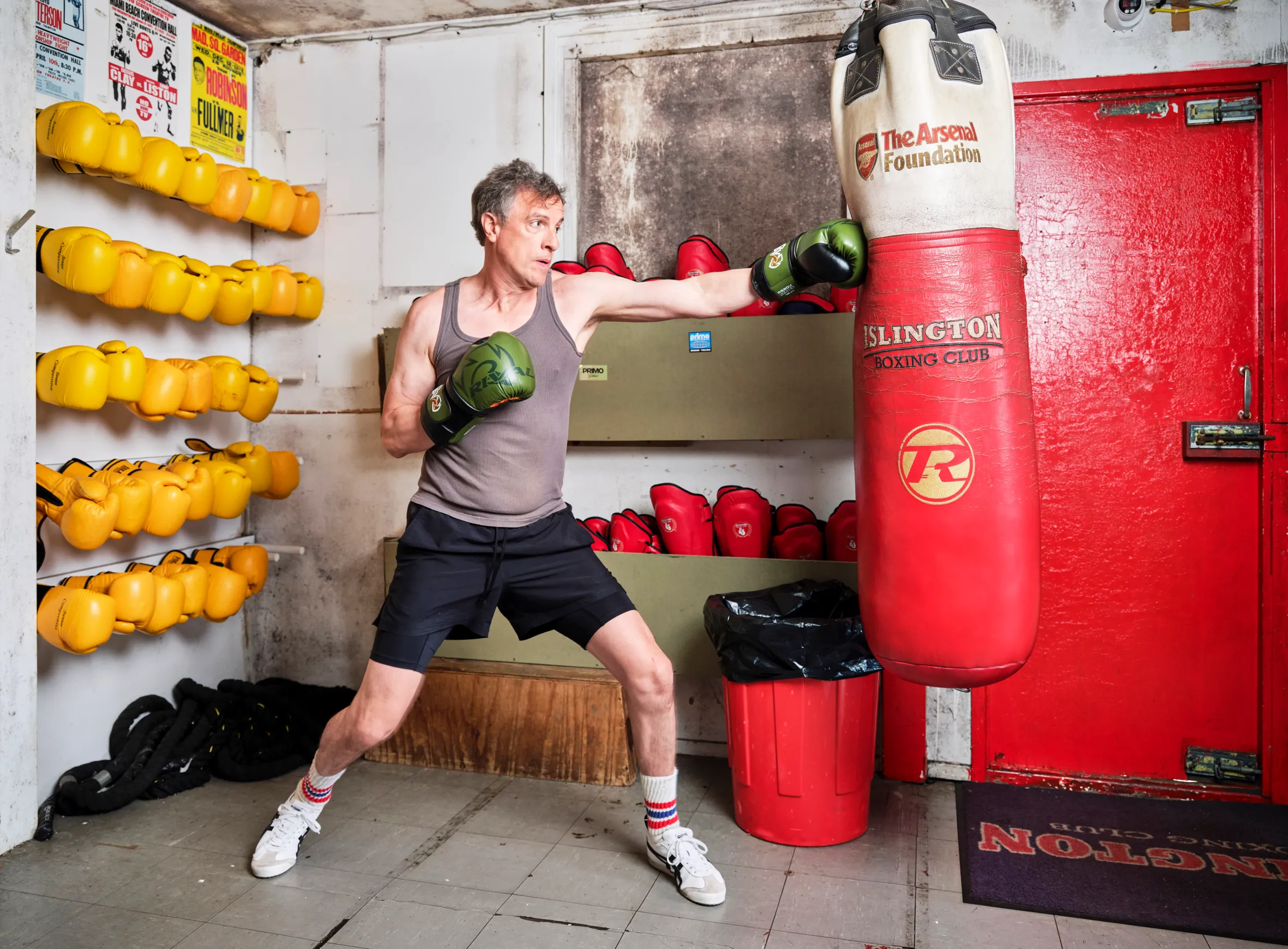 Boxing doesn’t encourage anger in the way people assume. If anything, it punishes itAmit Lennon for the times
My coach, Aron Sweeney, who runs Sweeney’s Boxing in Hackney, says boxing is an art: “People think it’s just two people hitting each other, but it isn’t. It’s closer to music or painting, the way you move, the rhythm, the decisions you make. It’s a way of expressing yourself.”
Sweeney started young. His nan bought him a punchbag when he was five to give his hyperactive mind some focus and it stuck. Boxing changed his life. What he talks about isn’t violence so much as discipline. Consistency. Staying calm under pressure. Being brave. Respecting the person in front of you and eventually yourself.
Some of what I get up to still feels faintly ridiculous. Shadow boxing, for instance, imagining an opponent in front of you and acting out what you’d do if he were real — I struggle to do it in front of others at the gym but I’m keen enough to practise at home when my wife leaves the room. I’ll hear her coming back, sit quickly on the sofa, heart pounding, trying to look as though I’ve been sitting there all along. Is this a late-life affectation that other men express through buying a convertible Porsche or starting a podcast? Maybe.
Trying to explain my attraction to the ring is often met with a shrug.
“It’s very brutal.”
“What if you get hurt?”
With some people it gets lumped in with the worst version of men. Isn’t Andrew Tate a boxer? (Answer: no.) Have I joined the manosphere? (Again, no.) Is this me trying to stave off the “manopause”? (The jury is out on that one.)
But it’s something I’ve always been drawn to. A few years ago I was settling in at home in northeast London, ready to watch a heavyweight title fight when my wife told me she’d invited two friends round. I said I was going to watch it anyway. She suggested we all watch it together. Foolishly I agreed. It didn’t go well.
“Oh God!”
“Why would anyone do that?”
“It’s barbaric!”
I lasted about a minute before asking them to leave. To some, it doesn’t look any different from Friday night violence outside a flat roof pub. But that’s not how it feels to me.
I’m new to sparring, but it’s where everything you’ve learnt is supposed to come together. You graduate from a world of inanimate pads and bags to one where the target moves and tries to hit you back. It’s like going from a tiny village primary school to borstal.
Most of what you’ve learnt on the pads disappears. You’re not performing a drill anymore — you’re reacting, trying to stay composed and use your technique. In my first sparring session I caught my opponent with a right hand. It landed cleanly enough to shake him. For a second I was horrified. I went very English and started apologising. “God, sorry! I’m so sorry!” He looked at me, told me he didn’t care and threw a few punches at my torso.
As Mike Tyson said: “Everyone has a plan until they get punched in the mouth.” Once you’ve been hit a few times yourself, something definitely changes. The anticipation so far for me is worse than the reality. The fear carries more weight than the thing itself.
Churchill said there was nothing more exhilarating than being shot at [with no result]. It’s an extreme version of the same idea but I understand what he meant. The possibility of impact sharpens everything. You’re alert. You’re present. There isn’t space for anything else.
You have to get past yourself. The hesitation, the instinct to step back and push through it, physically and mentally. That’s part of the appeal. In the gym, no one cares what you do outside of it. They care whether you turn up, whether you try, whether you improve.
It’s also where you begin to understand something else. Aggression, anger, even violence, exists somewhere in all of us. For some it’s close to the surface; for others it sits further down, rarely tested. Boxing brings you into contact with it. Not in a chaotic way, but in a controlled one. Over time, you get more comfortable with that feeling. Not the violence exactly, but the presence of it. It becomes something you manage rather than something you either act on or pretend isn’t there.
Boxing doesn’t encourage anger in the way people assume. If anything, it punishes it. The quickest way to get hurt is to lose your head — to swing wildly, to let emotion take over. As my coach told me, it’s a thinking man’s game. At 48 there are not many environments left where you are allowed to be a beginner, to be bad at something, to feel out of your depth.
Boxing removes all of that. In the gym I am not a writer. I am a man in a vest with oversized gloves, trying to remember to breathe. After a session I feel stronger, more capable, braver. Slightly proud. Boxing sharpens you. It demands presence. You are either there fully or you get socked in the head. Control, discipline, staying calm under pressure, thinking while tired, not reacting impulsively — these are not bad things to learn.
All this is why I’m signing my 11-year-old son up too. Not because I want him to become a fighter but because I want him to understand his limits and the satisfaction of extending them. And — if needed — to feel confident he can defend himself.
Boxing offers something rare. A clear, unambiguous experience. You either do it or you don’t. You either stay present or you drift. You either learn or you repeat the same mistakes. At 48 I think that’s a lesson I’m ready for.