

Listen to this article
Estimated 2 minutes
The audio version of this article is generated by AI-based technology. Mispronunciations can occur. We are working with our partners to continually review and improve the results.
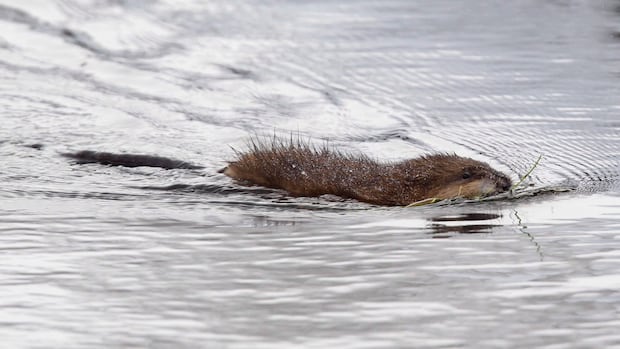
The Northwest Territories Species at Risk Committee (SARC) is declaring muskrats as a species of “special concern” for the first time, saying “persistent drought conditions” are endangering the animals’ ecosystems across the territory.
“Muskrat population trends provide insight into the health of freshwater habitats,” a Wednesday release from SARC reads. Those habitats, the release notes, have been increasingly threatened by warming due to climate change and “artificial flow regulation” — like dams and flood mitigation.
“Although common muskrat remains widely distributed throughout the N.W.T., knowledge holders have observed declines in abundance, in particular in the Mackenzie Delta, and have expressed concerns about the species and the threats it may be facing,” the release reads.
In response, the committee is recommending “respectful and responsible harvest” and long-range monitoring to protect the remaining population.
It also recommends promoting research and insights from Indigenous knowledge holders to raise awareness about the decline in muskrat populations.
The release encourages members of the public to share sightings on iNaturalist.ca or by emailing wildlifeobs@gov.nt.ca.
Wood bison remain ‘threatened’
The release also updated the status of wood bison in the territory, which are still considered “threatened” ten years on from their first assessment in 2016.
The release notes the herd is small, at around 2,760 bison outside Wood Buffalo National Park, and numbers have declined over the last 15 years.
“Communities in the South Slave region and northern Alberta have concerns about population declines and disease,” the release reads.
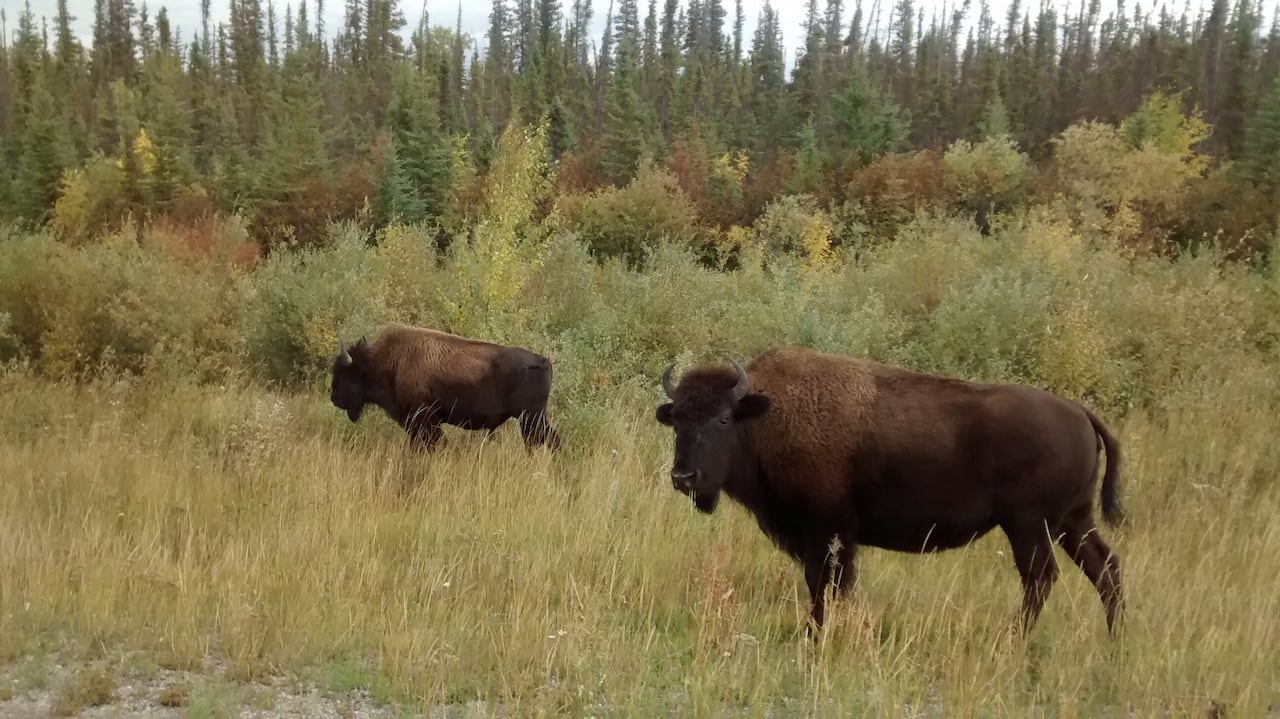 A file photo of wood bison in the N.W.T. The species remains ‘threatened’ according to the N.W.T. SARC, ten years on from its initial assessment. (Katherine Barton/CBC)
The committee says the relevant authorities should “improve coordination and sharing of information on wood bison population surveys and outcomes,” and adopt new road safety measures to reduce collisions with the animals.
The N.W.T. SARC offers regular assessments of certain species deemed to be at risk of disappearing from the territory, and issues reports and recommendations on how to ensure the species’ survival.
The committee is made up of Indigenous and non-Indigenous scientists, wildlife specialists and knowledge keepers who are jointly appointed by the federal and territorial governments and representatives of the territory ’s four wildlife co-management boards.