
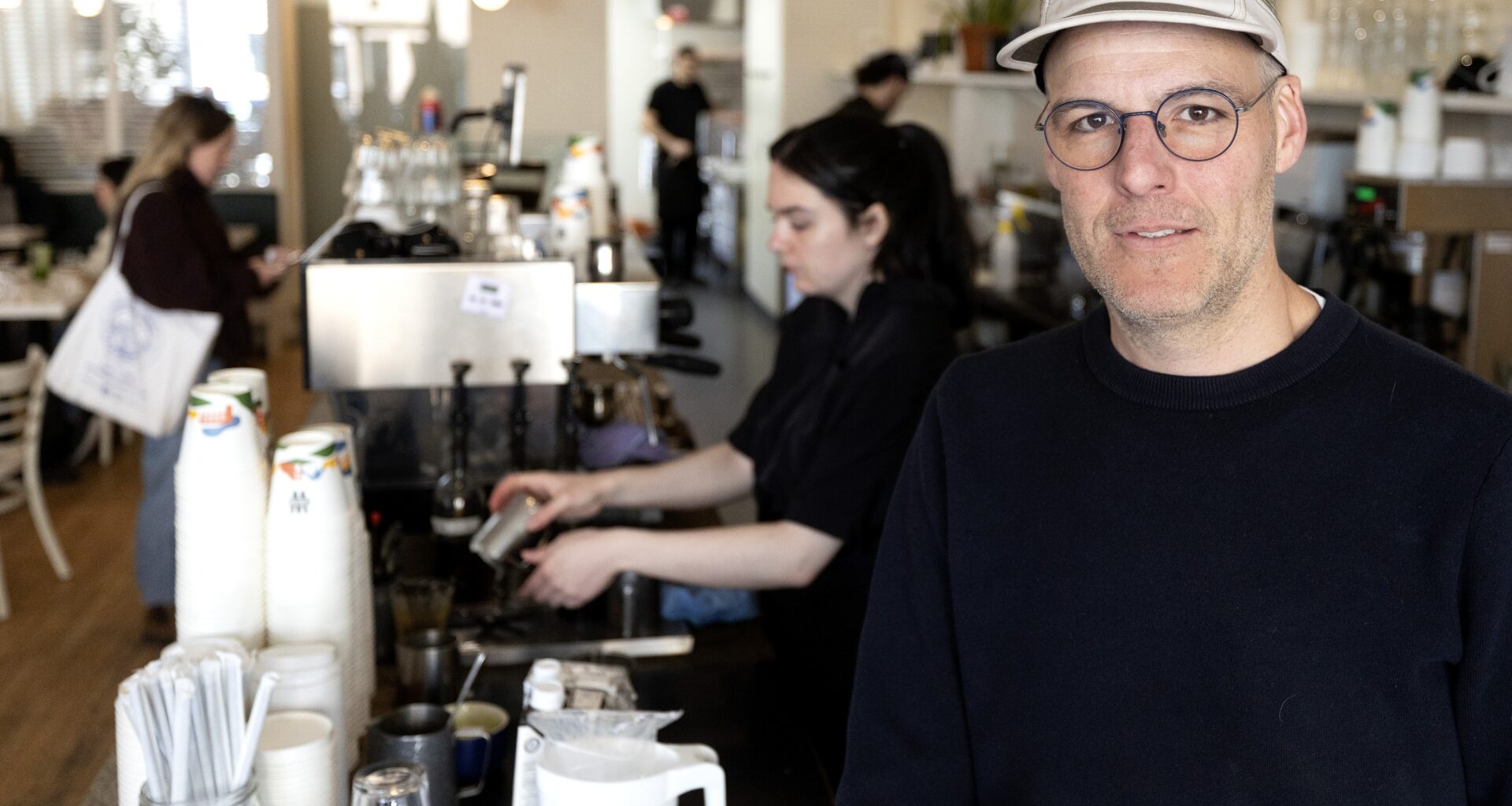
Standing outside his bustling Wellington St. café on Thursday, Simon Defoy launched a heartfelt plea for Quebec to regulate commercial leases before more businesses like his are priced out.
Defoy, the owner of Station W, announced this week he’s closing the café next month after fighting a 60 per cent rent increase before his landlord chose to instead sign a lease with someone else.
“It’s not only businesses that are at stake, but the survival of independent commerce and entrepreneurship,” Defoy said. “The beating heart of our neighbourhoods, our villages, our small towns.”
Unlike residential leases, commercial leases in Quebec aren’t governed by regulations or a tribunal. A growing number of Montreal businesses have spoken out against the situation in recent years, pushing back against rent hikes fuelled by speculation.
Defoy said he opened his café nearly 13 years ago and has seen Wellington St. evolve and develop — it was named the coolest street in the world in 2022 — and witnessed the pressure it’s put on business owners along the strip.
Since announcing the café is closing, Defoy said he’s already heard from several others facing similar circumstances and fearing they won’t be able to absorb their next rent increase.
“Without legislation, it sort of gives everyone free rein,” he said. “And, unfortunately, when there is too much abuse, you have no choice but to legislate — and I think we’ve reached that point.”
The local business development group, the SDC Wellington, said the café’s closing highlights how even successful, deeply rooted businesses are at risk of disappearing without regulatory oversight.
General manager Patrick Mainville said he supports the calls for regulation, noting his organization often works with new businesses to explain how commercial leases are negotiated and the potential pitfalls.
“We need to open up the conversation,” Mainville said. “We want there to be a dialogue, an exchange on how we can better manage commercial leases and protect business owners.”
Verdun borough mayor Céline-Audrey Beauregard said she was shocked by the café’s closing and noted it was one of the pillars that helped build Wellington St. into what it is today.
Beauregard spoke of new players purchasing commercial spaces and driving up rent prices, and the gentrification seen in the borough. She described Station W’s closing as a “red flag” she hopes will serve as a wake-up call.
“It’s a clear warning sign that concrete action is absolutely necessary, because otherwise, we’re going to go downhill,” she said. “And once you start going downhill, it goes fast and it’s very hard to get back.”
Beauregard said she only has so much power as a municipal politician, but pointed to efforts to help entrepreneurs acquire commercial spaces to shield them from the issue.
She vowed to keep pushing the issue and work on solutions.
“I’m going to look at what’s being done elsewhere to see how people are coping with the pressure,” she said. “And how we can develop tools at the municipal level to play our part.”
The question of regulating commercial leases has been brought to the provincial government before.
In 2023, Québec solidaire suggested the creation of a standard commercial lease, similar to those already in existence for residential leases, to make it more difficult to include abusive clauses.
The party has also campaigned for the creation of a province-wide register of commercial leases.
The party’s Alejandra Zaga Mendez, who represents the Verdun riding and has pressed for the change, reacted to the café’s closing on social media.
She described commercial lease negotiations as the “Wild West.”
“It’s unfair, but it’s completely legal because there are no regulations in Quebec governing the negotiation of commercial leases,” she said in a video. “Basically, a landlord can do whatever they want.”
The Gazette’s efforts to reach Defoy’s landlord were unsuccessful Thursday.
Editor’s Picks