
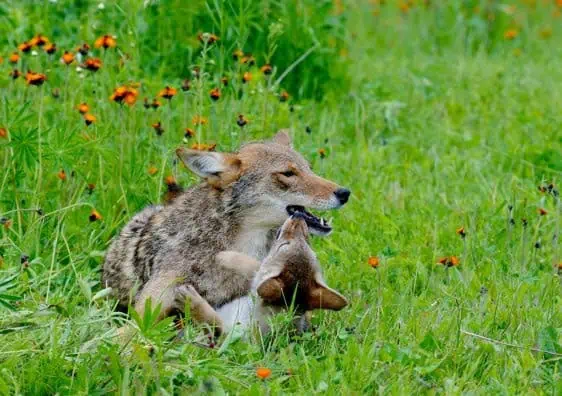
An adult Coyote and pup are seen playing in a grassy field in this file photo provided by the City of Brampton. (Photo: Shutterstock)
More urban wildlife is on the move across Brampton, and you can help keep pets and residents safe by tracking sightings on the city’s interactive map.
Brampton and the surrounding area is home to many wildlife species, including urban coyotes and foxes.
And with coyote pupping season lasting from April to June and July, the city is reminding residents to keep safety in mind and use a tracking map to stay informed about when coyotes are in the area.
Most coyote encounters happen when the animals are looking for food, a mate, or protecting their pups. And because of their similarities with domestic dogs, coyotes could treat your pets as either a threat or food.
READ MORE: Coyote found in Brampton backyard gets second chance at life in the wild
They like to make dens in rural areas and ravines, valley lands and wooded areas in large cities. And while coyotes tend to avoid contact with humans, living near urban centres can cause them to become bolder as they get used to their surroundings.
You’re more likely to see coyotes out and about in Brampton at this time of year as they protect their pups from danger, including other coyotes. The city has tips on how to be coyote-cautious during mating season.
What to do if you encounter a coyote:
Stay calm: It might feel difficult, but if you’re in the community and are approached by a coyote, remain calm
Do not run away: Running away from a coyote may encourage them to follow you
Make yourself loud and large: If a coyote continues to approach you, make gestures and use objects to startle the coyote into running away – do not chase or touch the animal
Call 9-1-1: Seek help if scaring the animal fails to avert danger.
Here are some tips to help safely share the city with coyotes:
Dispose of waste properly and avoid littering.
Do not leave pet food bowls or water bowls outdoors.
Do not feed wildlife.
Remove clutter from your yard.
Keep cats indoors.
Be respectful of their habitats and exercise caution if a coyote is seen.
Do not approach coyotes.
Keep pets on leashes.
Always supervise your pets outdoors, even in your backyard.
The city uses aversion conditioning, also known as humane hazing, to reinforce a fear of being close to people and communities in wildlife. Aversion conditioning can also be practiced by residents if they encounter a coyote “by making themselves look large by raising their arms and making loud noises,” Brampton Animal Services says.
The city’s interactive Coyote Sighting Map can also help you stay informed about coyotes in the area and help prevent coyote encounters. Residents and visitors are encouraged to use this tool to stay safe when planning activities in nature and to report coyote sightings.
To view the Coyote Sighting Map, click here.
INsauga’s Editorial Standards and Policies
Last 30 Days: 50,723 Votes
All Time: 1,331,119 Votes
1367 VOTES
Are you excited for the Toronto Tempo WNBA team?
WIN A $100 GIFT CARD
Subscribe to INsauga’s daily email newsletter for a chance to win a $100 Amazon gift card.