

Listen to this article
Estimated 5 minutes
The audio version of this article is generated by AI-based technology. Mispronunciations can occur. We are working with our partners to continually review and improve the results.
Calgary Transit is considering a new fare structure that could include Uber-like surge pricing with higher fares at peak times of day or charging customers more to travel farther across the city.
Fares tied to time of day could mean a ticket costs more during morning rush hour, for example, according to Calgary Transit director Sharon Fleming.
That could encourage people to ride outside of peak times and help free up capacity, she said.
The potential fare structure changes were presented to the city’s infrastructure and planning committee Thursday.
Fleming told the committee that Calgary Transit has not yet decided if this is the route it wants to pursue. She acknowledged that it could have the adverse effect of discouraging some transit commuters and putting more cars on the road during rush hour.
The agency will consider its options, consult with transit riders and return to city council early next year with a strategy for approval.
“We’ll be engaging with Calgarians to determine what the appetite is for a variety of different fare structures. And hopefully we get to the solution that makes most Calgarians happy,” Fleming said.
How much the higher fares could cost has yet to be determined.
Tap on, tap off?
Also on the table is the possibility of tiered fares based on distance, meaning the farther a rider travels, the more they pay.
That could work via a tap on, tap off system, something seen in other transportation systems like the GO Train in the Greater Toronto Area. Riders tap their card when they board and tap again as they get off. If they forget to tap off, they are charged the max amount for the trip.
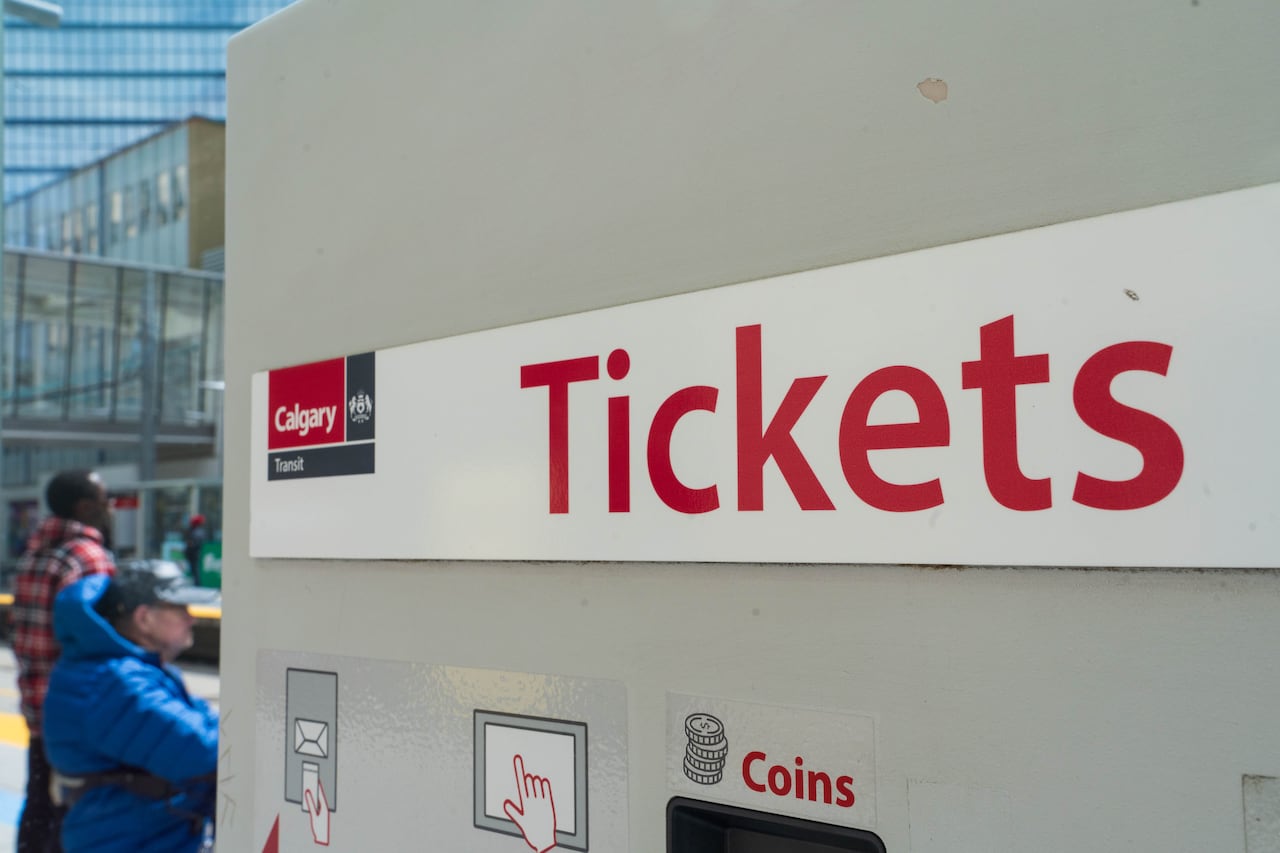 Fewer riders are paying for tickets in cash, according to Calgary Transit. Starting next year, the ability to tap on using a debit or credit card will be rolled out. (Ose Irete/CBC)
Fleming said there are pros and cons to the idea. While some councillors expressed concerns that those in the suburbs could end up paying more, Fleming said some of those riders might travel primarily closer to home.
But Coun. Mike Jamieson, who represents Calgarians in the deep south, said he’s fundamentally against the idea.
“If you’re riding from the suburbs or from the outskirts, you’re going to be disproportionately negatively affected by this type of a system,” he said.
Coun. Andre Chabot said it could be a way to charge customers more equitably for the service they are using.
“If I have to drive my car and I have to go 1,000 miles versus having to drive 100 miles, then obviously I’m going to pay more to go 1,000 miles,” said Chabot.
If a tap on, tap off system is brought to council and approved, Fleming says validator machines would need to be installed at the back of buses, which would likely take about a year.
Calgarians will soon have the ability to tap on with their debit or credit cards when they board, a system already available in cities like Edmonton, Vancouver and Toronto. Fleming says the option will start to be rolled out next year.
Route Ahead falling behind
The potential new fare structures were presented to the committee as part of Calgary Transit’s progress update on its Route Ahead plan, a 30-year roadmap aimed at improving service reliability in Calgary.
But as the city deals with a growing list of infrastructure needs, the status update shows funding is lagging, and the plan is falling behind.
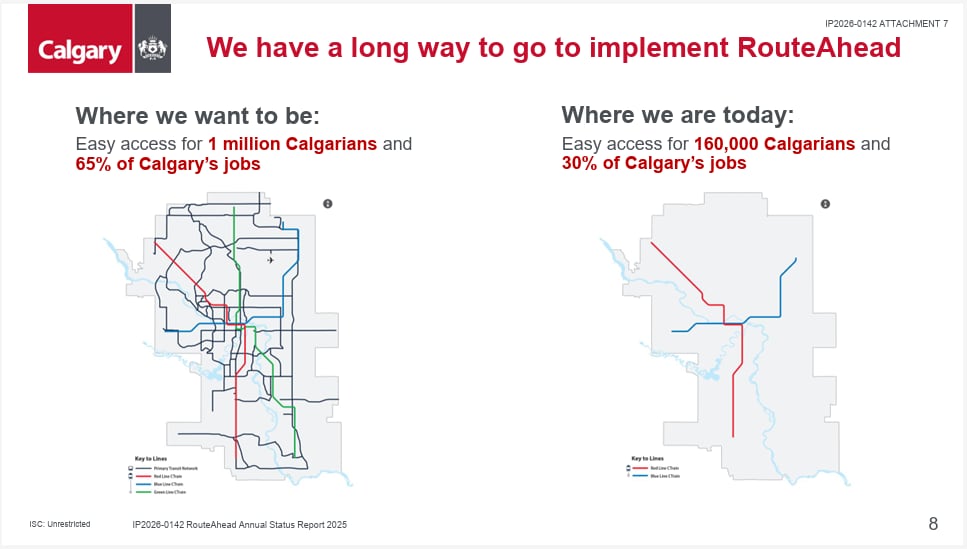 The city’s Route Ahead plan has the goal of service every 10 minutes for the majority of the day across the primary network. Currently, only the Red and Blue CTrain lines are meeting that. (Calgary Transit)
“Calgary has grown quickly. We haven’t seen the investment keep up with the level of our population and with the growth of our geography,” Fleming said.
In order to get back on track, Calgary Transit says it needs $2 billion in new funding to maintain its fleet of buses and buy new ones, and build a new storage facility.
That ask will go to council in the fall during the next round of budget talks.
Council to vote on free fare zone’s future
The infrastructure and planning committee voted 7-4 on Thursday in favour of administration’s recommendation to remove the city’s 2.5-km free fare zone on Aug. 1. A final decision on the decades-old program’s future will now go to city council for a vote.
Council already voted to keep the program alive in a narrow 8-7 decision last fall. But earlier this year, Coun. Andrew Yule and Coun. John Pantazopoulos sponsored a motion calling for a review of the program.
LISTEN | Calgary’s Ward 6 councillor on the city’s review of the free fare zone:
Calgary Eyeopener9:51Is abandoning Calgary Transit’s Free Fare Zone a good idea for the city?
City staffers are recommending ending the free ride through parts of downtown, with the money saved to be put back into transit safety. Ward 6 Councillor, John Pantazopoulos, initiated a review of the Free Fare Zone, and joined us to explain why.
Administration’s report recommended council reinvest what it projects could be up to $5 million in additional revenue to improve transit safety and support local events and services for vulnerable people. It argued removing the zone could improve the perception of public safety on transit.
But the report noted there is strong support for the program among downtown residents, businesses and non-profits.