
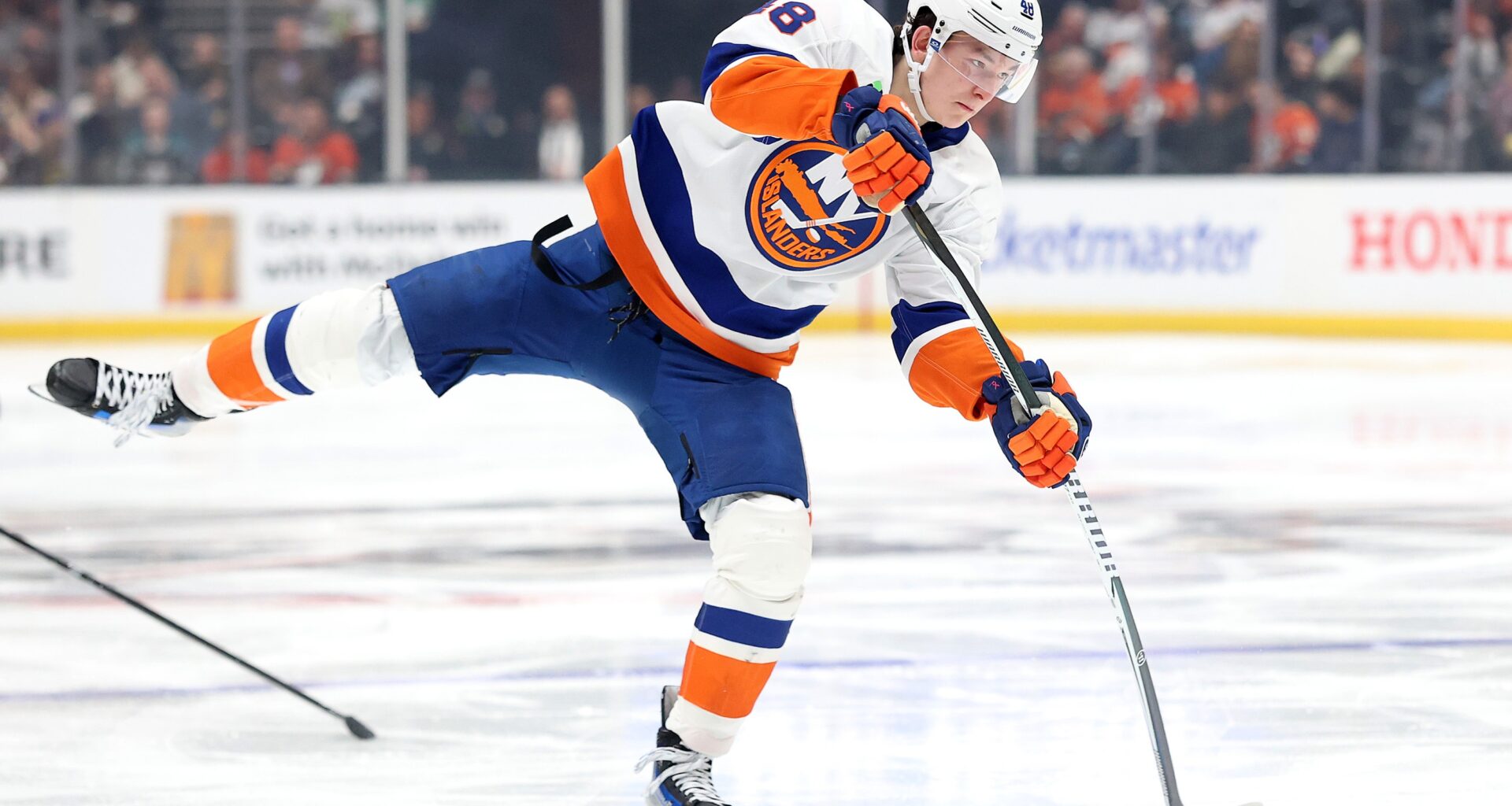
If it were possible to get a snapshot of this vast country following the NHL draft lottery Tuesday, the reaction would have been one monumental eye-roll from Newfoundland to Nanaimo — minus southern Ontario.
Followed by an avalanche of pithy comments: “Yeah, right!” “As if!” “This is bull!” “Bettman’s at it again!” Or simply: “Fix!!!” followed by as many exclamation points as you would care to add. The Maple Leafs winning the lottery was not a mathematical impossibility. After a 30-point drop from one season to the next, Toronto had the fifth-best chance of landing the top pick and (most likely) a surly, rather entitled chap named Gavin McKenna. But only a year earlier, the Islanders won the Matthew Schaefer lottery and got a better player with the 10th-best odds of drafting first.
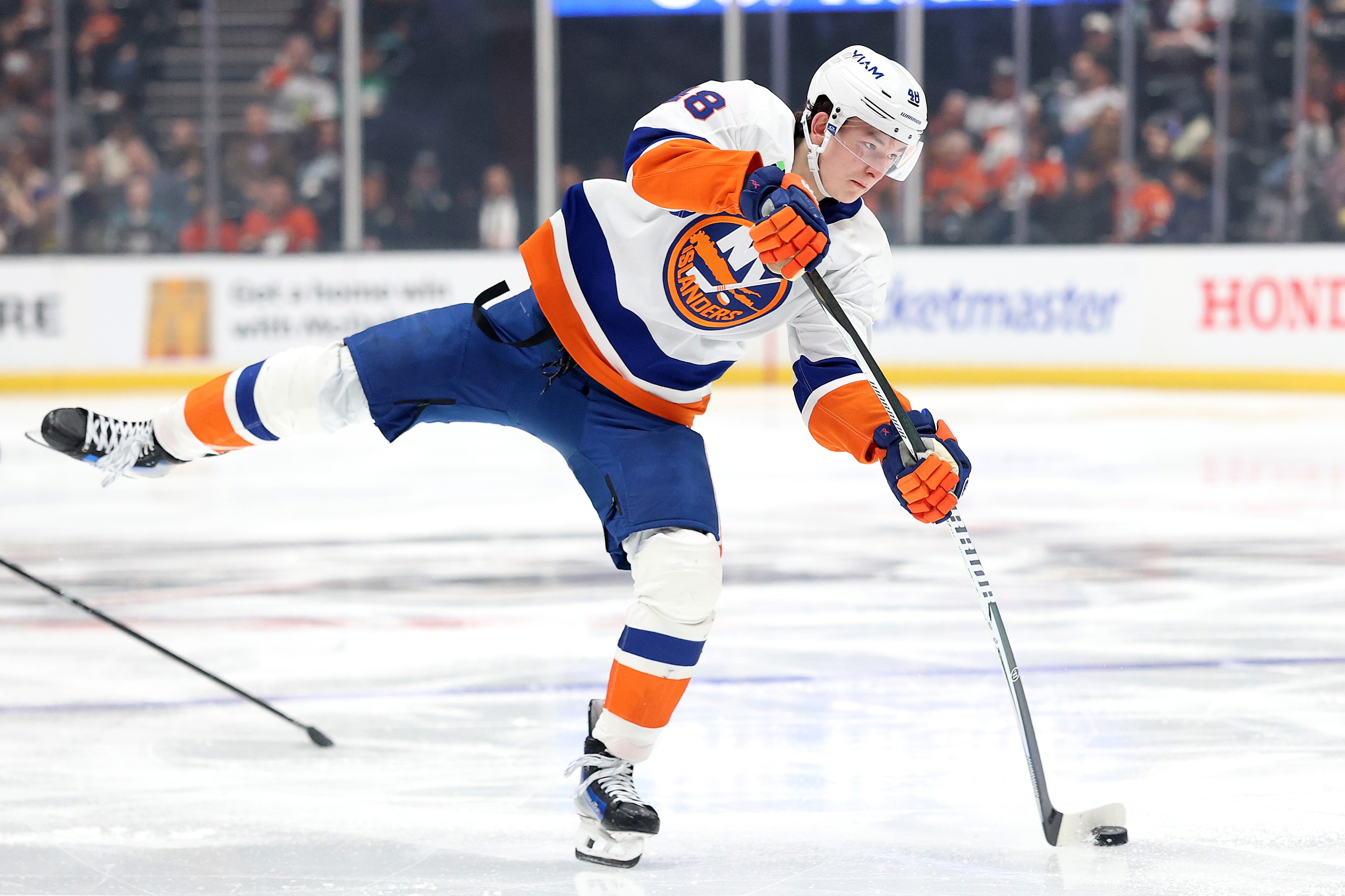 Despite having only 10th-best odds of drafting first in 2025, the New York Islanders hit the jackpot and selected Matthew Schaefer with the No. 1 pick. Sean M. Haffey / Getty Images
This does not, incidentally, affect the Canadiens in any way. Their rebuild is unfolding as it should, and even if they had a shot at the young man, I think they would take a hard pass on McKenna. But fans of the Canucks and Flames feel jobbed, as well they might, the Canucks in particular. They finished dead last in the league with 58 points, 20 fewer than the Leafs. The Canucks had an 18.5 per cent chance of winning, followed by the Blackhawks at 13.5 per cent, the Rangers at 11.5 per cent and the Flames at 9.5 per cent.
Yet it was the Maple Leafs, with only an 8.5 per cent chance of winning the top pick, who won the lottery for the second time in a decade. But why the suspicion that something is awry? It’s all in the optics. It simply looks wrong. In an era when we’re all drowning in a tsunami of AI-driven misinformation, anything seems possible.
If you want to understand why Toronto’s lottery win has created such a stink, simply follow the money. The crux of the problem is the contract extension between the NHL and Rogers. It’s a whopper: Rights to broadcast the NHL in Canada through the 2037-38 season for a cool $11 billion. Those rights are held by Maple Leaf Sports & Entertainment, 75 per cent of which is owned by Rogers Communications Inc. MLSE, in turn, owns the Maple Leafs, Blue Jays, Raptors and Toronto FC — a vast sports monopoly by any standard.
The extension with Rogers was a stealth bomber of a deal, cooked up without a glimmer of public notice. When Sportsnet first wrested the NHL rights from the CBC, it was at least the subject of a prolonged public debate. This time, it was a pitch no one saw coming.
On April 2, 2025, Rogers and the NHL announced that their original deal was extended a dozen years into the future, beginning with the 2026-27 season. Fans never had a chance to object; it was a done deal.
“For more than a decade,” Gary Bettman proclaimed when the deal was announced, “Rogers has done an incredible job of conveying what NHL hockey, our players and our teams mean to hockey fans and their communities from coast to coast. … The NHL and Rogers have a shared commitment to best serving Canadian fans. …”
During the several centuries he has served as commissioner of the NHL, Bettman has perfected the art of mouthing half-truths with a straight face — but this was a steaming pile of horse patootie. Sportsnet’s broadcasts have been inferior from Day 1 and have never improved, while the contracts have created a crazy quilt of broadcast situations from coast to coast, frustrating fans who find themselves chasing their favourite team from network to streaming service to network.
But the issue isn’t the quality of the broadcasts or the availability of certain games. The conflict of interest is built into the contract when the NHL’s largest single broadcast “partner” also owns the team that happened to win the lottery — again.
Even if you believe that the lottery was on the up-and-up (and I will concede that it most probably was) the blatant conflict of interest remains. It’s a situation the NHL should have foreseen and prevented, simply by not allowing broadcast partners to own even a sliver of any franchise.
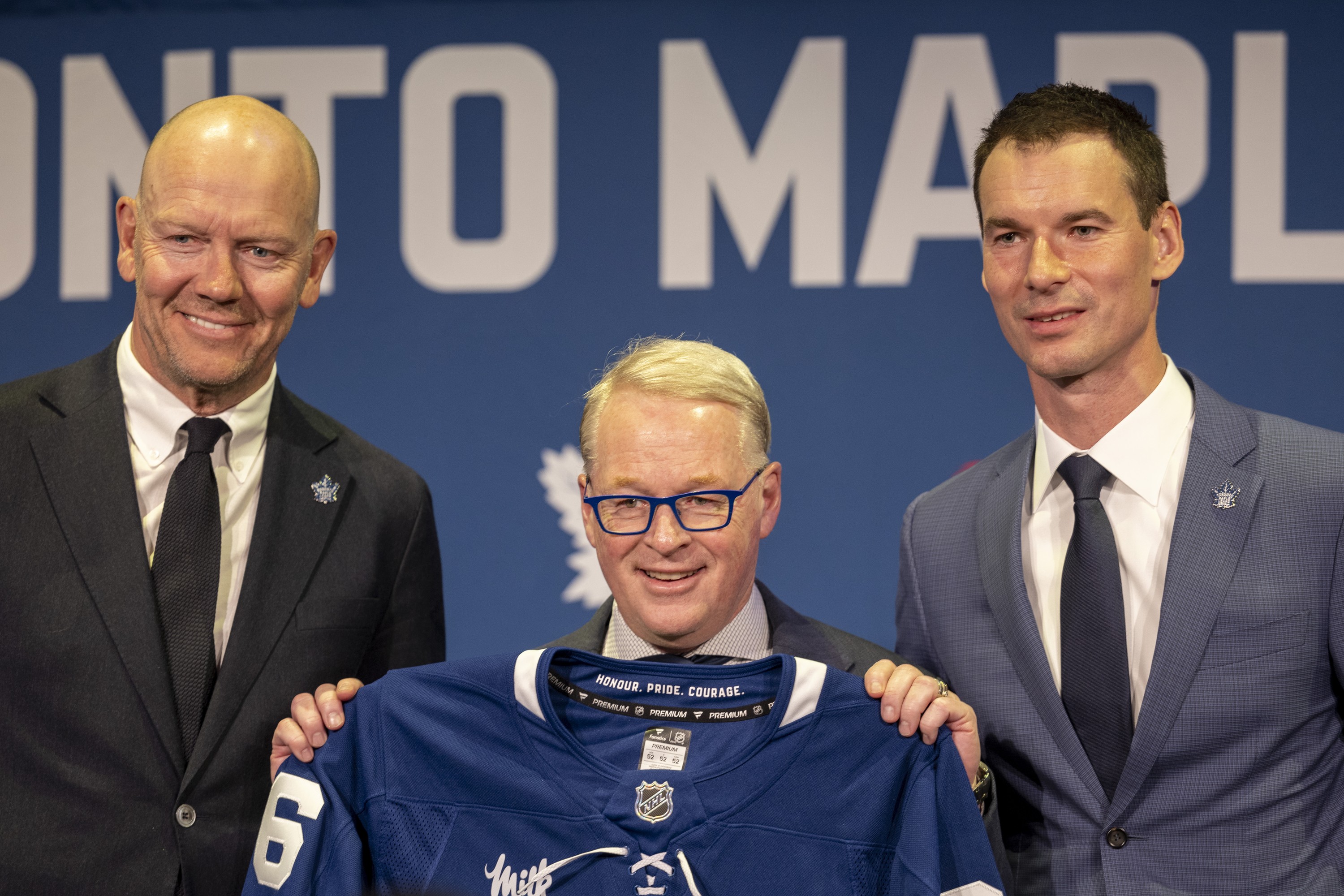 MLSE president and CEO Keith Pelley is flanked by Maple Leafs executive adviser Mats Sundin, left, and general manager John Chayka during a news conference in Toronto on Monday. Ernest Doroszuk / Postmedia
Why? Because we live in ticklish times. For every sports league, credibility is everything. That’s why the leagues are so hysterical about pursuing players who bet on games, while simultaneously pushing gambling interests every 15 seconds through every broadcast. Once your integrity is shot, you’re the WWE.
With boy genius John Chayka and the spectacularly inept Keith Pelley running the franchise, there’s little danger the Leafs will build a dynasty out of this draft pick. They’ll go on stumbling and fumbling and bumbling, Canada’s longest-running soap opera, while better organizations build the right way.
Neither will the league force Rogers to divest itself of its ownership of the Leafs. Bettman is deaf to conflicts of interest when it suits him.
The solution? Drop the lottery. It doesn’t really prevent tanking. It’s unfair to teams like Vancouver that genuinely need the help, unfair also when good teams harvest a top pick off one rotten season. Besides — a draft lottery is gambling on sports, isn’t it?
Editor’s Picks