
Breadcrumb Trail Links
Anyone may sign up for MyCareSteps through referral from a primary care provider, a hospital-to-home referral after discharge, or by self-referral.
Published May 07, 2026 • Last updated 1 day ago • 5 minute read
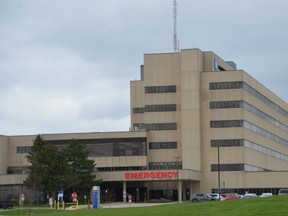 Brightshores Health System’s Owen Sound hospital shown in this file photo. Brightshores is evaluating a year-long health care navigation pilot project which seeks to help smooth the way for people through the health care system. Photo by Rob Gowan /Postmedia NetworkArticle content
A one-year pilot project has begun in Grey-Bruce to make navigating the health care system easier for patients by assigning them their own care co-ordinator.
Advertisement 2
This advertisement has not loaded yet, but your article continues below.
Article content
Serefin Health is piloting its “MyCareSteps” project in Grey-Bruce until next March 31 at no charge, in partnership with Brightshores Health System. It’s hoped to improve health outcomes while relieving pressure on hospitals and family physicians.
Article content
Recommended Videos
Article content
The pilot involves an assigned nurse navigator who stays with the patient and will try to smooth the way for them through the complicated health system.
Patients with complex or ongoing care needs, particularly during transitions between care settings, were accepted into the pilot program when it started April 1. The project is interested particularly in reaching people recently discharged from hospital.
“As those patients transition home, sometimes there are services that can be provided to them in the community that they aren’t always aware of or have access too,” said Rebecca Brookham, who leads a Brightshores team that will evaluate the project.
“And without some of those resources, their risk of re-admission increases,” said Brookham, director of research and innovation at Brightshores.

Sun Times Extra
Thanks for signing up!
Article content
Advertisement 3
This advertisement has not loaded yet, but your article continues below.
Article content
The service is open to all Grey-Bruce residents, part-time residents such as cottagers, the estimated 23,000 locally without a family doctor or even those who have a doctor they haven’t seen in a long time.
People living in Grey-Bruce can register to be part of MyCareSteps through referral from a primary care provider, a hospital-to-home referral after discharge, or by self-referral at www.mycaresteps.ca/greybruce.
People experiencing a health issue or supporting a loved one with their health would benefit from MyCareSteps, Brookham said.
“It’s going to help support these people because trying to co-ordinate the appointments, understand the care plans, figure out what services are even available to me locally, can be really overwhelming,” Brookham said.
A dedicated nurse care co-ordinator helps the resident navigate the health care system and support their personalized care plans — so helps them connect to the services and supports that they need along the way” and prepare for appointments, she said.
Advertisement 4
This advertisement has not loaded yet, but your article continues below.
Article content
If patients consent, the navigator may access their medical records, might speak with the patient’s care providers and could help patients connect with services. It’s up to patients what they share. The service is intended to complement physician and other care.
There’s no limit on the number of times a patient may call their nurse navigator, Brookham said.
“There will also be prompts for the care co-ordinator to reach back to the patient or the individual if they know they have an upcoming appointment, they haven’t heard from them in a while, they might call and check in or schedule an upcoming follow-up with them.”
Brookham said from a system perspective, it’s hoped if care is better managed outside the doctor’s office and hospital but still within the community, doctors might be freed up to spend more time on patient care, and people would make fewer hospital visits.
The navigator could advise someone if they’d benefit by seeing a dietician, as an example, that doesn’t need to come through the patient’s family doctor. This helps free up a bit of the doctor’s time, she said. But people would continue to consult their doctor.
Advertisement 5
This advertisement has not loaded yet, but your article continues below.
Article content
Brookham said this pilot is trying to improve the “clunky” transitions between their doctor and other care providers. A doctor may not know what’s happening with their patient once seen by another provider because they don’t all share the same electronic medical records system.
Access to care, including to specialists, Grey-Bruce and in other rural areas is another challenge. But Brookham said the nurse navigator will know the area and know about you, find local resources, or the next closest or virtual options.
Brookham said what’s learned from this project will help refine the program, better support patients and demonstrate how this model could be applied across vast rural areas “and adapt it and share it with other communities who can take this on as well.
“We’re all struggling from a health system capacity standpoint, so this may be a beautiful example of how we can support our patients through this co-ordinated care.”
Outcomes will be measured and the lessons learned will inform future expansion of the program, said a Serefin Health release, which Brightshores distributed this week. Brightshores’ evaluation will be done to “understand its impact on patient experience, care co-ordination and provider workflows and to inform future models.”
Advertisement 6
This advertisement has not loaded yet, but your article continues below.
Article content
Healthcare Excellence Canada, an independent not-for-profit charity funded primarily by Health Canada, has given $10,000 to the Brightshores Office of Research and Innovation to support evaluation of Serefin’s pilot project.
Grey Bruce Ontario Health team is helping recruit patients from primary care and other community sources. Sara Harvey, of Serefin, is the project lead and is providing the nurse co-ordination services.
 The Serefin Health pilot project leads from Brightshores, the Grey Bruce Ontario Health Team and Serefin. Photo by SUPPLIED /THE SUN TIMES/POSTMEDIA NETWORK
Brookham said she sees great potential in this navigation model and Serefin sees the business potential. Her office has established a relationship with Serefin for the past year and a half, Brookham said. “I can genuinely say I am very excited. I’m born and raised in Grey County so bringing this opportunity to our community for me personally is very exciting,” she said.
“So I want to see them tested out and our team will maintain objectivity, and we are going to do our evaluation and understand what works about it, what doesn’t work about it and what can we tweak,” she said. “I expect this is going to snowball,” as people tell family and friends about it.
Advertisement 7
This advertisement has not loaded yet, but your article continues below.
Article content
Serefin Health president Skip Schwartz wrote in an April 27 online post that health care systems should be organized for patients as well designed cities are for visitors, where they’re helped to see where they need to go.
“Cities, campuses, and buildings do this through infrastructure, signage, and flow that make navigation as predictable and as safe as possible,” he wrote.
“Health care often falls short of this standard. People are left to co-ordinate between providers, interpret next steps, and manage transitions across services that are not designed to work together. The issue is not a lack of services, but a lack of connection between them.
“Care co-ordination addresses this gap by strengthening transitions, maintaining continuity, and providing a consistent point of guidance. The result is a system that is easier to move through, with less friction and greater confidence for those navigating it.”
He cites Canadian Institute for Health Information research which found a “significant proportion of hospital re-admissions in Canada are linked to challenges in discharge planning and follow-up care.”
His post cites the Journal of General Internal Medicine which published findings showing “structured co-ordination improves adherence to care plans, reduces hospital readmissions, and enhances patient experience.”
Article content
Share this article in your social network