
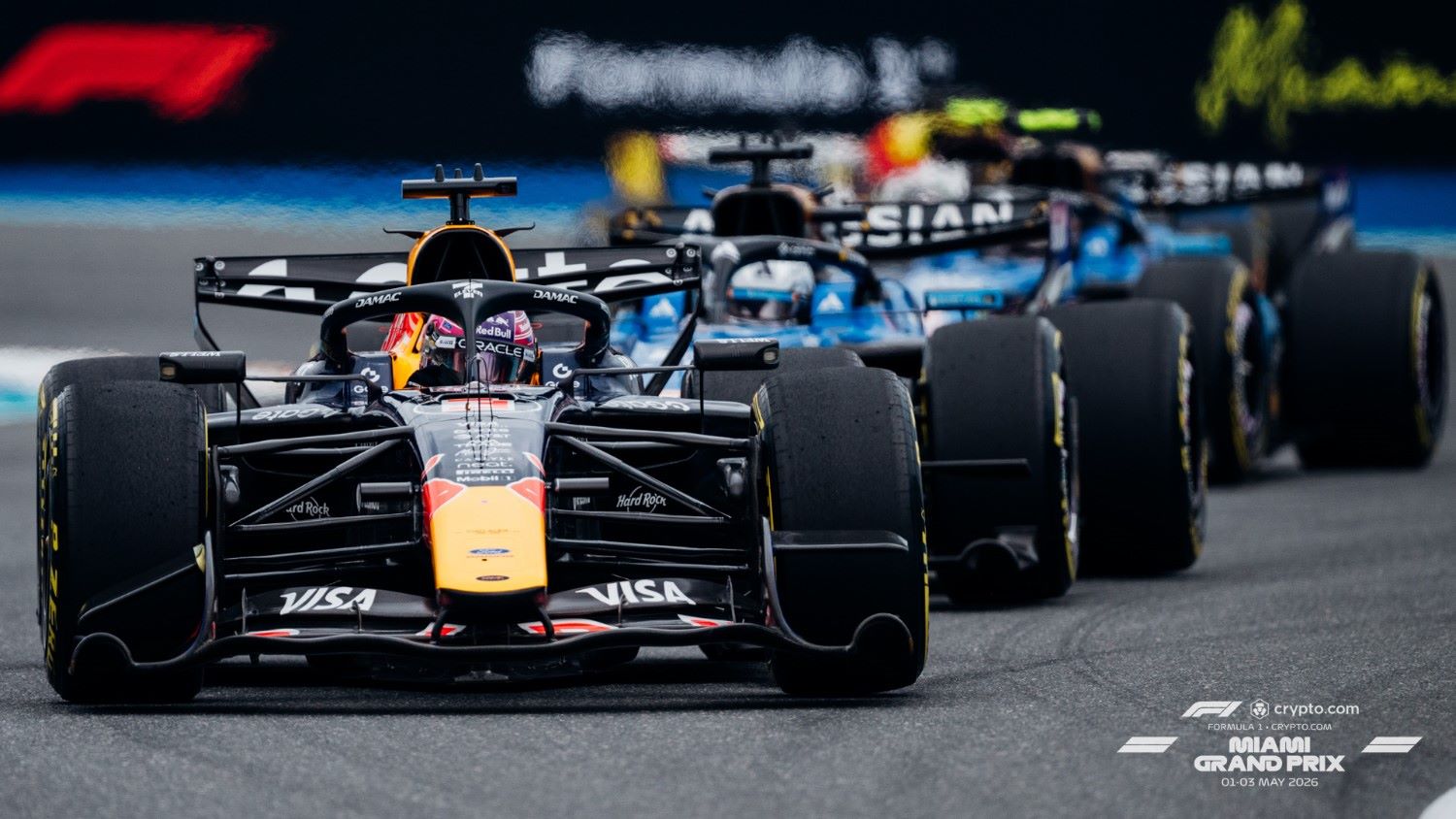
In a landmark online meeting on Friday, May 8, 2026, the FIA, Formula 1 teams, power unit manufacturers, and championship bosses reached agreement in principle on the first major evolutionary tweaks to the groundbreaking 2026 regulations — with the biggest changes landing in 2027. But did they go far enough?
–by Mark Cipolloni–
The headline move? Ditching the 55/45 split between internal combustion engine (ICE) and electric power in favor of a more combustion-dominant package that promises to make cars faster, safer, and far more intuitive to drive.
The 2026 regulations were designed to create smaller, lighter, more agile cars powered by highly electrified, sustainable-fuel power units — a bold step toward road relevance and net-zero goals. But early racing in 2026 quickly exposed drawbacks. Drivers complained about an unnatural style that rewarded heavy energy harvesting in high-speed corners and forced cars to slow dramatically before braking zones to recharge batteries. The result was inconsistent power delivery, tricky closing speeds between cars, and safety concerns—issues dramatically highlighted by incidents like Oliver Bearman’s Suzuka crash while avoiding a slower rival in energy-starved mode.
After multiple stakeholder meetings during an unplanned five-week break, the sport’s decision-makers acted decisively. Starting in 2027, the power unit balance will tilt noticeably toward the ICE. Internal combustion engine output will rise by approximately 50 kW (roughly 67 bhp) through an increased fuel-flow allowance. At the same time, Energy Recovery System (ERS) deployment power will drop by around 50 kW, taking the maximum electric boost from 350 kW down to 300 kW. The net effect moves the power split closer to 60/40 in favor of the combustion engine.
A 5% shift toward ICE is a step in the right direction, but is it really enough? A 65/35 split would have made far more sense. Make the battery smaller and lighter – a dead load the car must carry the entire race and in qualifying.
FIA officials described the package as one that will “make competition safer, fairer, and more intuitive for drivers and teams.” Teams and manufacturers welcomed the clarity, noting that the changes address the core complaint: energy starvation in key areas of the track. Some hardware modifications will be required, including potentially larger fuel tanks and chassis adjustments.
The agreement builds directly on immediate tweaks already introduced at the Miami Grand Prix earlier in the season. Those measures — increasing the “super clipping” limit for energy recovery and reducing qualifying harvesting from 8 MJ to 7 MJ — were reviewed positively during Friday’s call. Officials confirmed they improved competition without creating new safety issues, paving the way for further fine-tuning, including better start procedures, wet-weather protocols, and visual signaling aids that could appear as early as the Canadian Grand Prix.
While chassis and aerodynamic regulations remain unchanged for now, the power-unit focus reflects a collaborative spirit that has defined the post-2026 era. “Today’s proposals were discussed against the backdrop of this spirit of collaboration,” the FIA noted. Further technical working groups will now refine the details before power-unit manufacturers cast their formal vote, followed by F1 Commission approval and an e-vote by the World Motor Sport Council.
For fans, the message is clear: the sport is listening. The 2027 adjustments aim to restore the raw, flat-out racing feel that made Formula 1 legendary while preserving the sustainability gains of the 2026 framework. Drivers should soon find themselves pushing harder for longer, with fewer moments of sudden power loss or tactical energy juggling.
As one insider put it after the meeting, the goal is simple—let the cars breathe, let the drivers attack, and let the racing do the talking. The 2027 season can’t come soon enough.
Related Article: Formula 1 News: F1 set for rule vote as Indy star slams ‘artificial’ Frankenstein cars