

Listen to this article
Estimated 3 minutes
The audio version of this article is generated by AI-based technology. Mispronunciations can occur. We are working with our partners to continually review and improve the results.
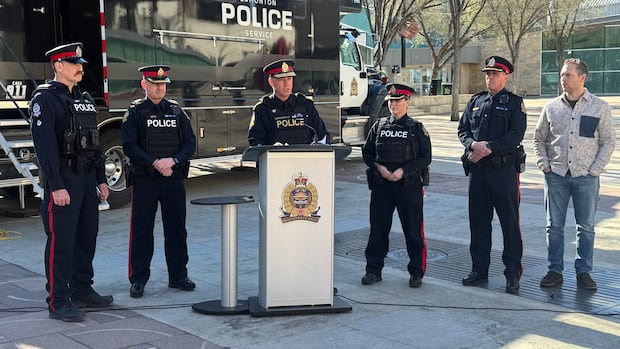
Edmonton Police Service says it will be upping its presence in certain areas flagged as hotspots for crime and disorder.
Police Chief Warren Driechel said in a news conference Friday that open drug use and public disorder have become normalized — and now officers will be taking a less lenient approach.
“Over the last few years our city, like many others, has moved towards accepting things we should never have accepted,” he said.
“That cycle ends now and we will no longer be tolerant of what is happening on our streets or in our city.”
Driechel said that disorder erodes community pride, hurts businesses and undermines trust in institutions.
EPS has selected parts of the city such as Churchill Square, as spots to concentrate this work, calling them “crime treatment zones.”
He noted police are generally looking to clamp down on more serious offences.
He said police have already had success with a similar model, pointing to beat teams focused on Chinatown and McCauley.
Another area of focus is transit, where police are working to better integrate with city peace officers. As an example, Driechel said police have just recently received access to the city transit security footage systems.
“We can now monitor events as they occur. We can respond a little bit better.”
Last month, the Downtown Revitalization Coalition called for better co-ordination between the two agencies.
Driechel spoke about how policing alone cannot solve these problems, highlighting the high numbers of opioid deaths in Edmonton. He said social service providers, community organizations and elected officials are needed to create lasting change.
Tim Pasma, senior director of Hope Mission, said he is supportive of what police are doing, and appreciated police’s recognition of the need to collaborate with other agencies.
“We can’t just enforce our way out of the problem. We do need to have other options available for people,” Pasma said.
“But we also recognize, especially where we operate, we want to see a safe environment for the people we serve as well.”
Quinn Phillips with the Edmonton Downtown Business Association said police have been responsive to their concerns highlighting certain hotspots.
But she said more could be done on transit.
“Some of our major employers, we have heard from them that their employees are still a little bit nervous on transit if they’re not getting on the train right after work.”
“That is still definitely something that we want to see continue to improve.”