
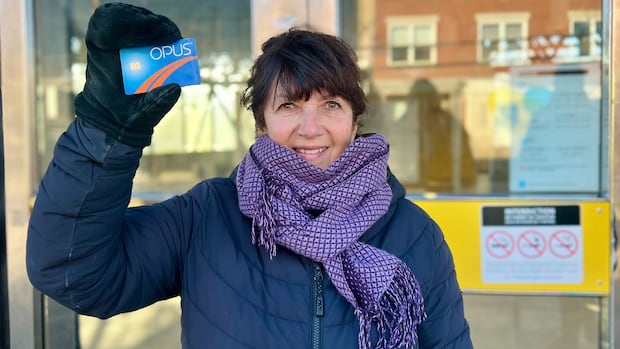
This story is a collaboration between Concordia University’s journalism department and CBC Montreal.
For Doris Longpré, 69, public transportation is a lifesaver when it comes to getting around Montreal.
The semi-retired senior explores the city when she isn’t working from home.
“This free service has changed things in my life, and it also makes me more active,” Longpré said on a recent outing downtown.
She used to take public transit only three or four times a month — until it was made free. Now, from doctor’s appointments to outings at the movies and botanical garden, it puts her on the move.
“I even go for walks in other neighbourhoods,” said Longpré.
Montreal has offered free fares for seniors since 2023, while Laval has done so since 2014.
Given the success of the policy, community groups are asking for similar help for low-income individuals and vulnerable groups.
Benefits outweigh cost, groups say
While the social benefits are clear for seniors like Longpré, maintaining the program requires a significant financial commitment from cities already struggling to maintain public transit service.
In Montreal, the program carries a pricetag of roughly $40 million a year, according to an emailed statement from Rosiane Tessier, a spokesperson for the city’s executive committee.
The program in Laval, known as Horizon 65, costs about $2 million annually, according to Denis Fafard, director of the city’s mobility office. Fafard said the city has no plans to cut the senior fares.
“The financing of public transit is an issue; as such, we have to face it. But we have no intention of cutting a program like Horizon 65,” he said in an interview, citing the high participation numbers as the reason to keep the program going.
Those working with seniors also see the benefits.
“It’s very helpful. It gives them the autonomy to go on their own for those that are able,” said Nina Gentile, communication and outreach coordinator for Almage, a Montreal senior centre.
One-quarter of seniors don’t drive, according to Statistics Canada. For them, public transportation becomes the main way to get around, according to the Institute for Research on Aging.
“During the STM strike, we had fewer people coming in, and obviously that’s because they weren’t able to access the bus,” said Gentile from Almage, referring to the STM strikes that affected service in the fall of 2025.
WATCH | Why free public transit has been a win for some seniors:
Why free public transit has been a game-changer for Montreal seniors
Since 2023, Montrealers aged 65 and over have been able to ride public transit for free. Many believe that this measure has helped combat social isolation and improve the daily lives of seniors.An election promise turned reality
Free public transit for seniors in Montreal was first an election promise in 2021 and introduced under former mayor Valérie Plante. Since then, seniors only need to pay $15 for their physical Opus card. The card includes their photo and expires every seven years.
In the first year of the program, a little more than 50 per cent of seniors reclaimed their card, according to Rosiane Tessier. And it’s more popular than ever: seniors made 22.5 million trips using Opus cards between July 2024 and June 2025. That’s 700,000 more trips than the previous year, a nearly three per cent increase.
Laval’s more than a decade-old program has been a huge success, too, according to Fafard.
In the program’s first year, seniors took 550,000 trips on Laval public transit. By 2024, that number had doubled, to more than 1.1 million, in a city known for its car-centred urban planning, something Mayor Stéphane Boyer has been wanting to change.
“For us, who want to increase public transit, this is a great clientele that is responding well, thanks to this program,” said Fafard.
The free senior Opus card in Montreal only covers Zone A, corresponding to the island of Montreal. Zone B includes Laval and Longueuil, while Zone C includes some further north and south suburbs like Deux-Montagnes or Chambly.
Each region has its own form of either free or reduced fare for seniors. They aren’t interchangeable, but for the residents of each specific zone. A Montrealer can’t visit a friend in Longueuil for free, for example: they must buy a Zone B ticket.
“I would love to see the Opus card free for seniors, no matter what zone you’re in,” said Carole Smith, 71, who regularly goes to Laval to visit friends. “That would be the only place where I could see an improvement.”
The only alternative right now would be to buy reduced senior fares for the target zones.
Sarah Veilleux-Doyon, city councillor for Mercier-Hochelaga-Maisonneuve and vice-chair of the transportation and public works committee, explained that since each city covers the cost of the program, it can’t be expanded beyond their territory.
“These are initiatives that cities have implemented for their residents and within their own budgets,” said Veilleux-Doyon.
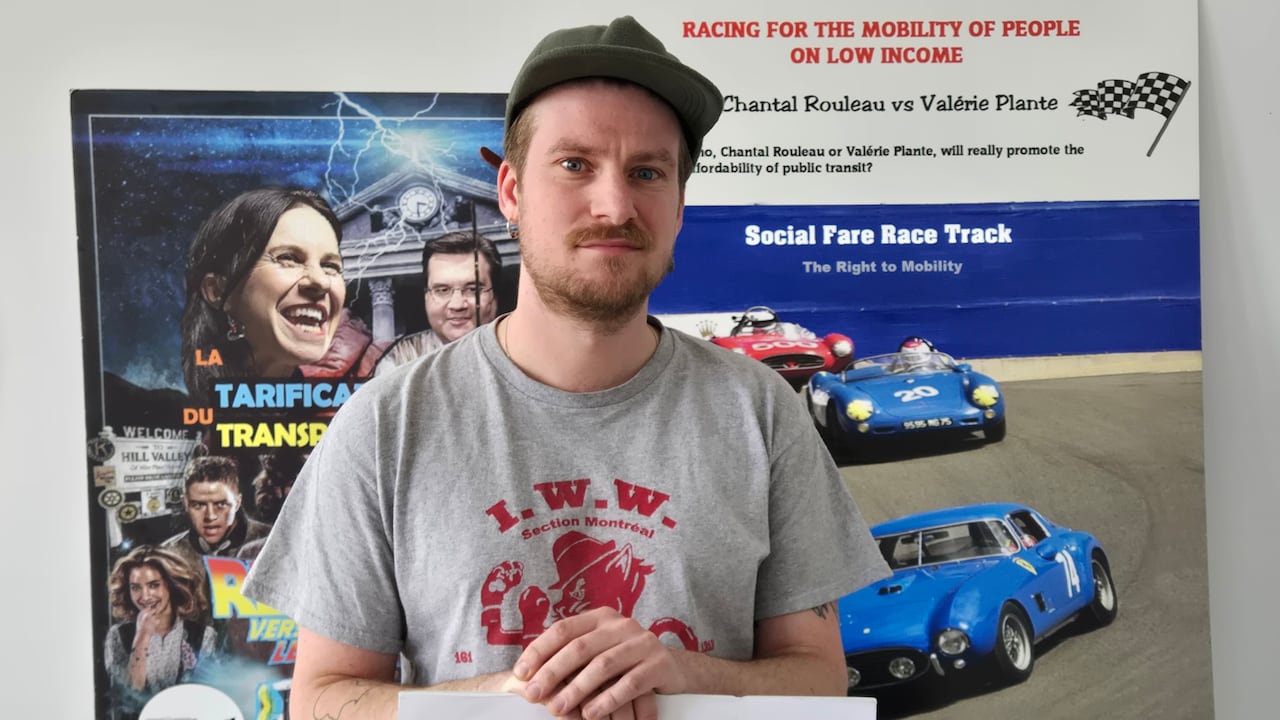 Nicolas Lemieux from the Welfare Rights Committee of South-West Montreal. (Gabriel Watson)Calls for a social fare expansion
The reduction of fares for low-income people has been a long-standing demand for the Welfare Rights Committee of South-West Montreal (WRC), a local community group.
“It has to be indexed with the cost of living because a budget is not just what you buy, but what else you have to buy,” said Nicolas Lemieux, a community organizer at WRC.
The WRC would like to see reduced prices for individual tickets, something offered in both Gatineau and Quebec City. Their ultimate goal is to see a sliding scale system similar to the one in Calgary.
Many members of the WRC are eager to become eligible for senior fares while they continue to advocate for social fares.
“Some of them say, ‘Finally, now that I’m 65, I finally feel like a Montrealer. Like I finally feel like I belong to Montreal,’ which is just a great thing,” said Lemieux.
An expansion of social fares was not included in Montreal’s latest budget. The mayor’s office did not return a request for comment about the issue.
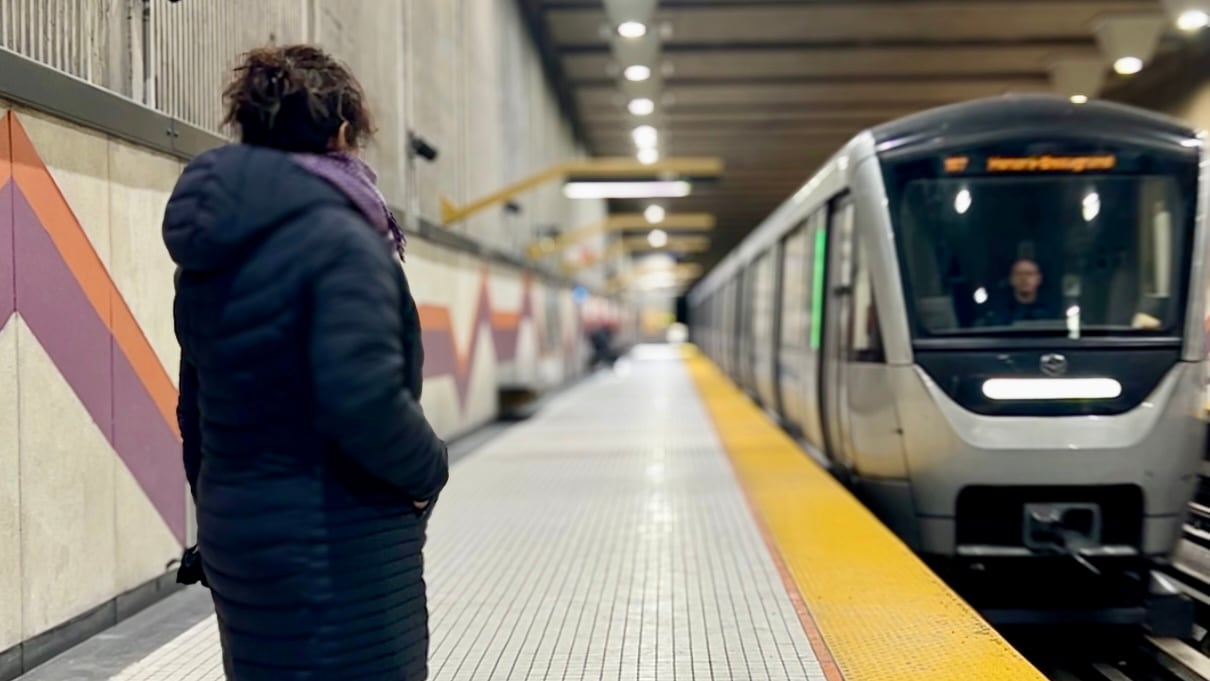 Doris Longpré at Verdun Metro station, on the way to the cinema. Longpré says the ability to move around the city for free has changed her life. (Valentine Delort)
Projet Montréal and Transition Montréal approve of social fares for low-income individuals. Both parties said in their electoral program that they would propose a monthly pass at the same rate as students, $62.75.
Right now, the regular monthly fare is $104.50. Veilleux-Doyon, who is a member of the opposition Projet Montréal, said expanding access would cost the city an additional $40 million per year.
“It should be noted that in Montreal’s current economy, earning less than $30,000 a year is not enough to live comfortably, considering the cost of housing, food, and transportation,” she said.
Longpré welcomes the idea of social fares, noting it would benefit neighbours who are also on tight budgets. For her not paying the same price as those aged 18 to 64 makes a major difference.
“You know, that’s about a hundred dollars a month. That’s a lot, it’s significant. I would even say that it makes groceries seem less expensive,” said Longpré.
For her, it is also about her autonomy. She lives an active life. Outside of being a freelance proofreader, she plays clarinet with an orchestra and is a member of her housing cooperative’s board of directors.
“To feel that you are active in society, that you have a role to play, that you are part of something, that you belong to society: That helps a lot.”
Zach Jutras recently graduated from the journalism graduate diploma at Concordia University, where he interned at the CBC Montreal as a researcher for the afternoon radio show Let’s Go! He currently volunteers at CJLO 1690AM and CUTV as a journalist.
Gabriel Watson studied political science and history at Concordia University and recently completed a graduate diploma in Journalism, along with an internship at The Journal Alter. In his free time, he enjoys walking his dog Mimi and working toward his fitness goals.
Originally from France, Valentine Delort obtained a bachelor’s degree in Communication at Concordia University and pursued further studies in Visual Journalism at the same institution. She interned at The Suburban newspaper and she has a strong interest in documentary filmmaking.