
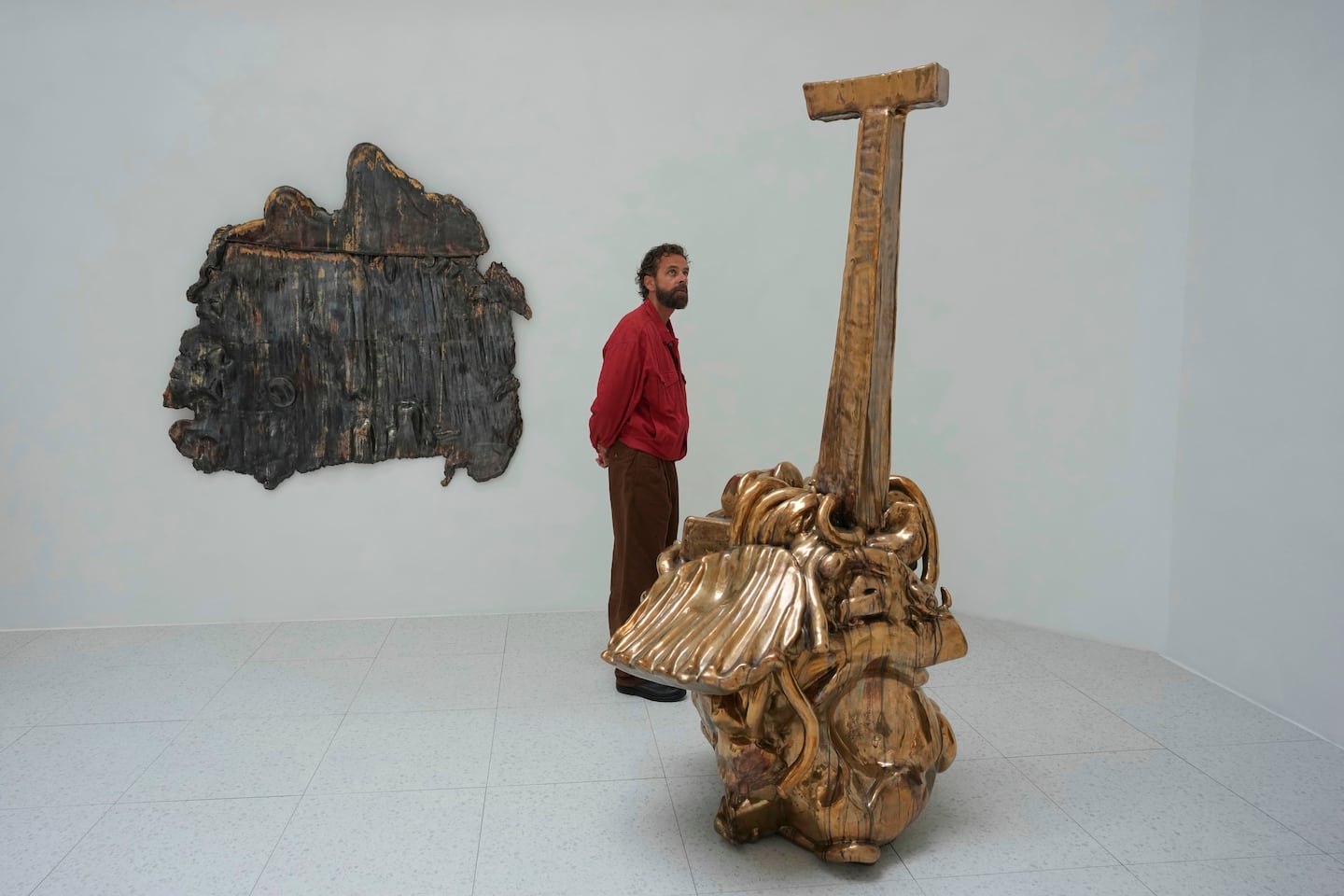
Well, scratch that. The US’s official representative, Mexico-based American artist Alma Allen, may well have been chosen partly because his anodyne work slips easily under the radar of an administration hostile to most forms of culture that don’t obsequiously celebrate its priorities. But in a moment when the Unites States looks more and more like a war-mongering rogue state, even the most understated gesture on the world stage is an inevitable flashpoint. And in Venice, there will be no avoiding the glare of unwanted attention now.
More than 70 prominent artists from all over the world signed an open letter to the Biennale recently, demanding that the United States be excluded from the event this year, along with Israel and Russia, which is returning to the Biennale this year after being banned since its 2022 invasion of Ukraine. Their reasoning? That the Biennale is giving a platform to “governments that are actively committing war crimes, atrocities, and genocide.” Last week, the biennale’s five-person jury, which decides on awards for outstanding projects, resigned amid the furor.
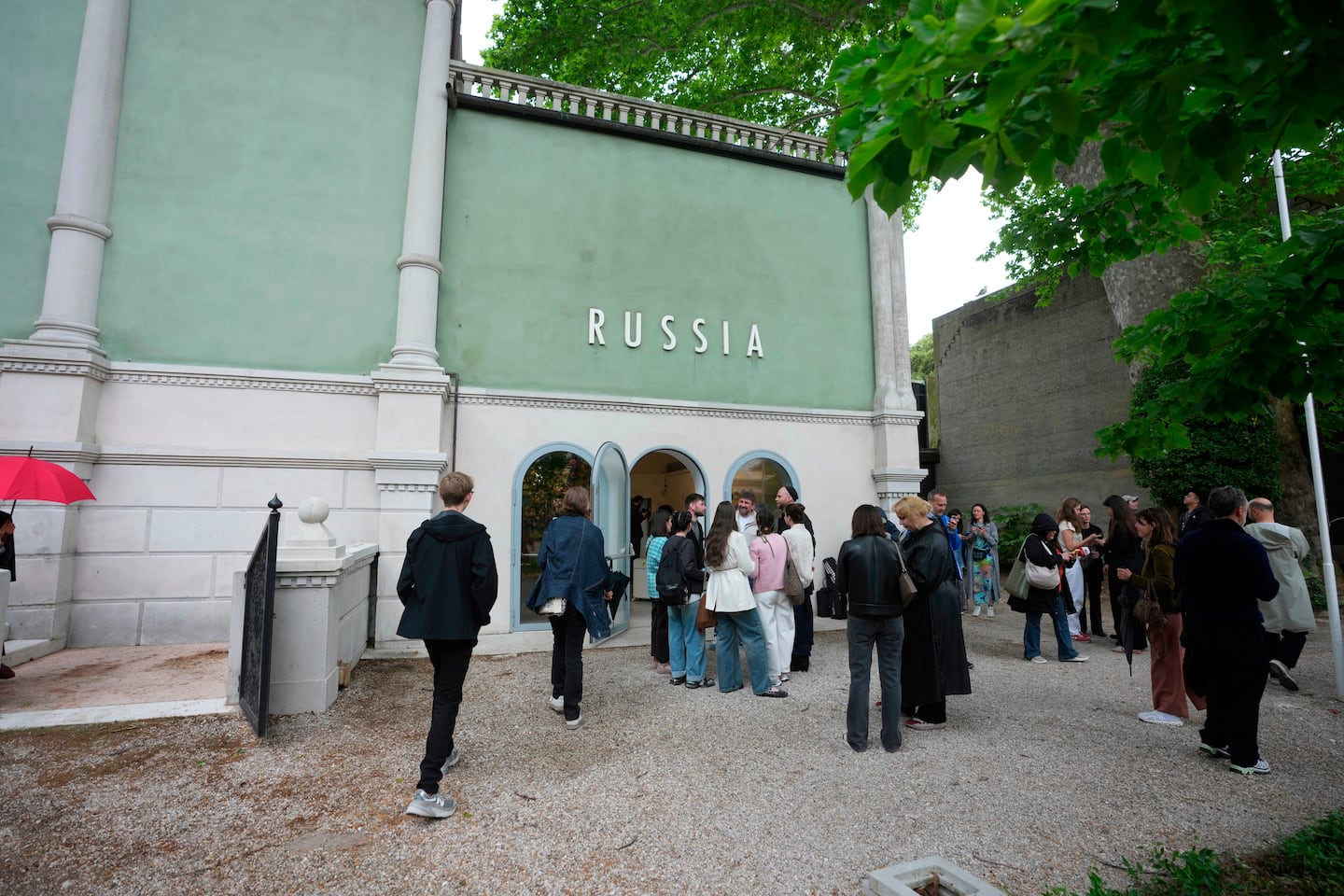 Visitors stand outside the Russia pavilion at the 2026 Venice Biennale, Tuesday, May 5, 2026. Russia has been permitted to participate in the Biennale for the first time since its invasion of Ukraine in 2022.Luca Bruno/Associated Press
Put bluntly, the international cultural community now sees the US as a pariah state. The Venice Biennale is an art exhibition, but it’s also one of the world’s preeminent stages for cultural diplomacy. For more than a year, the Trump administration has been insulting its allies, threatening to take their territories by force, hobbling their trade with tariffs, and now crippling the global economy with its war on Iran, with no end in site. In the global microcosm set to take place in Venice’s Giardini Publicca, the US pavilion will draw a ton of attention, as it always does; but this time it will be for all the wrong reasons.
It’s hard to grasp how precipitous a fall this is. For decades, the United States has been a cultural leader. In Venice, ambitious, provocative projects that challenged perceptions of the country itself were the norm in the American pavilion. In 2022, Simone Leigh buried the Jeffersonian US pavilion in a thick veil of raffia, a dried grass used to roof huts in tribal African villages in a material expression of the country’s legacy of enslavement; in 2024, Jeffrey Gibson, who is Choctaw-Cherokee, used the biennale platform to champion Native American culture.
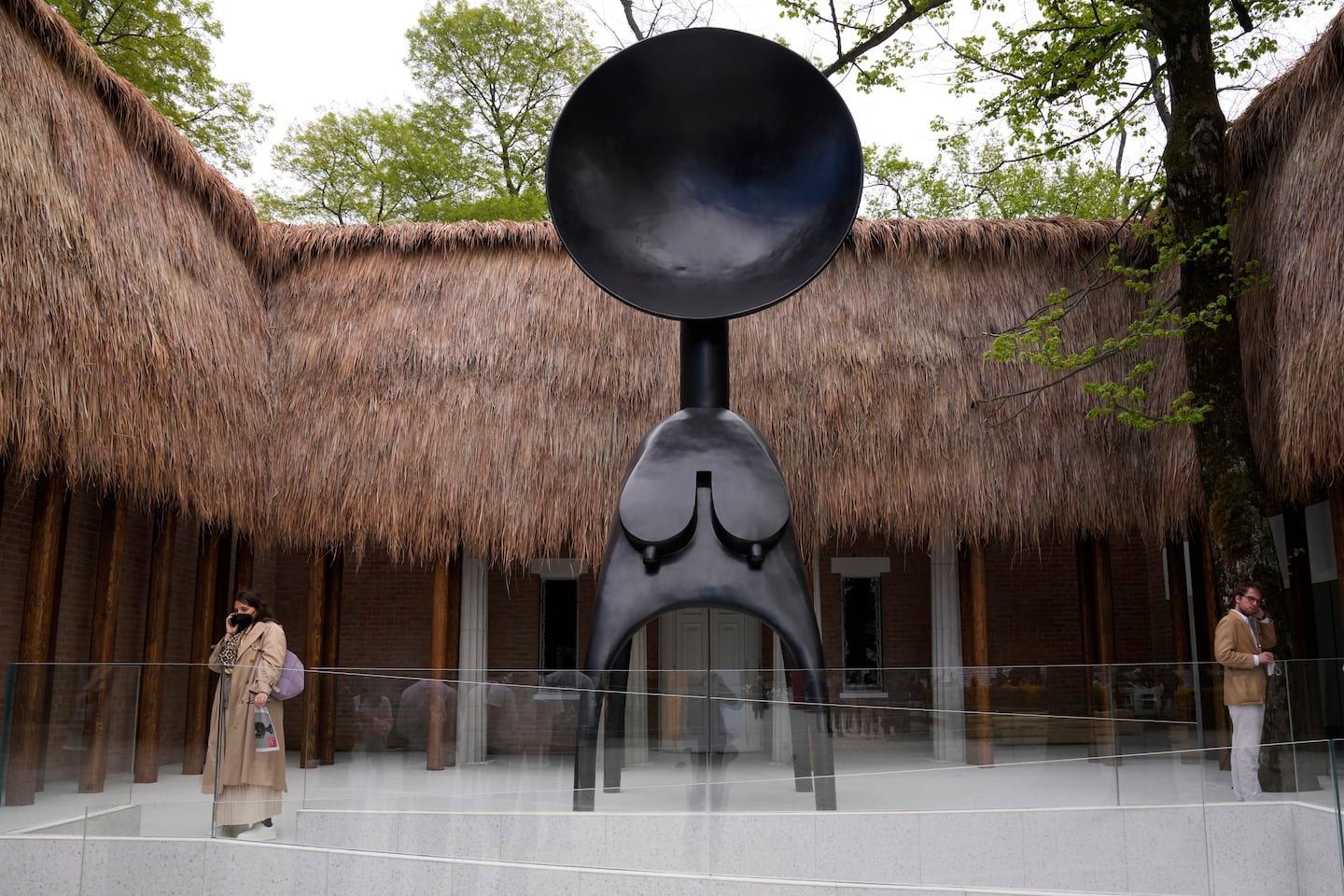 Simone Leigh’s “Satellite” sculpture outside the United States pavilion during the 59th Biennale of Arts exhibition in Venice, Italy, in 2022.Antonio Calanni/Associated Press
Given the animus of the current administration to the darker elements of the American story, Allen’s oblique, abstract sculptural works are a predictable dodge — and maybe a best-case scenario, given how bad it could have been.
Consider: Biennale commissions are usually awarded at least a year in advance by the State Department, and an established museum, with its experienced professional staff, typically stewards the process. For the Leigh project in 2022, it was Boston’s ICA.
This time, the State Department didn’t appoint a commissioner until late 2025, months before the Biennale.
The commissioner it picked, Jenny Parido, had no previous experience in the art world and owned a luxury pet food store in Tampa, Fla. (She apparently won the job through connections made participating in dog charity events at Mar-a-Lago, the president’s Florida golf club, according to The New York Times.)
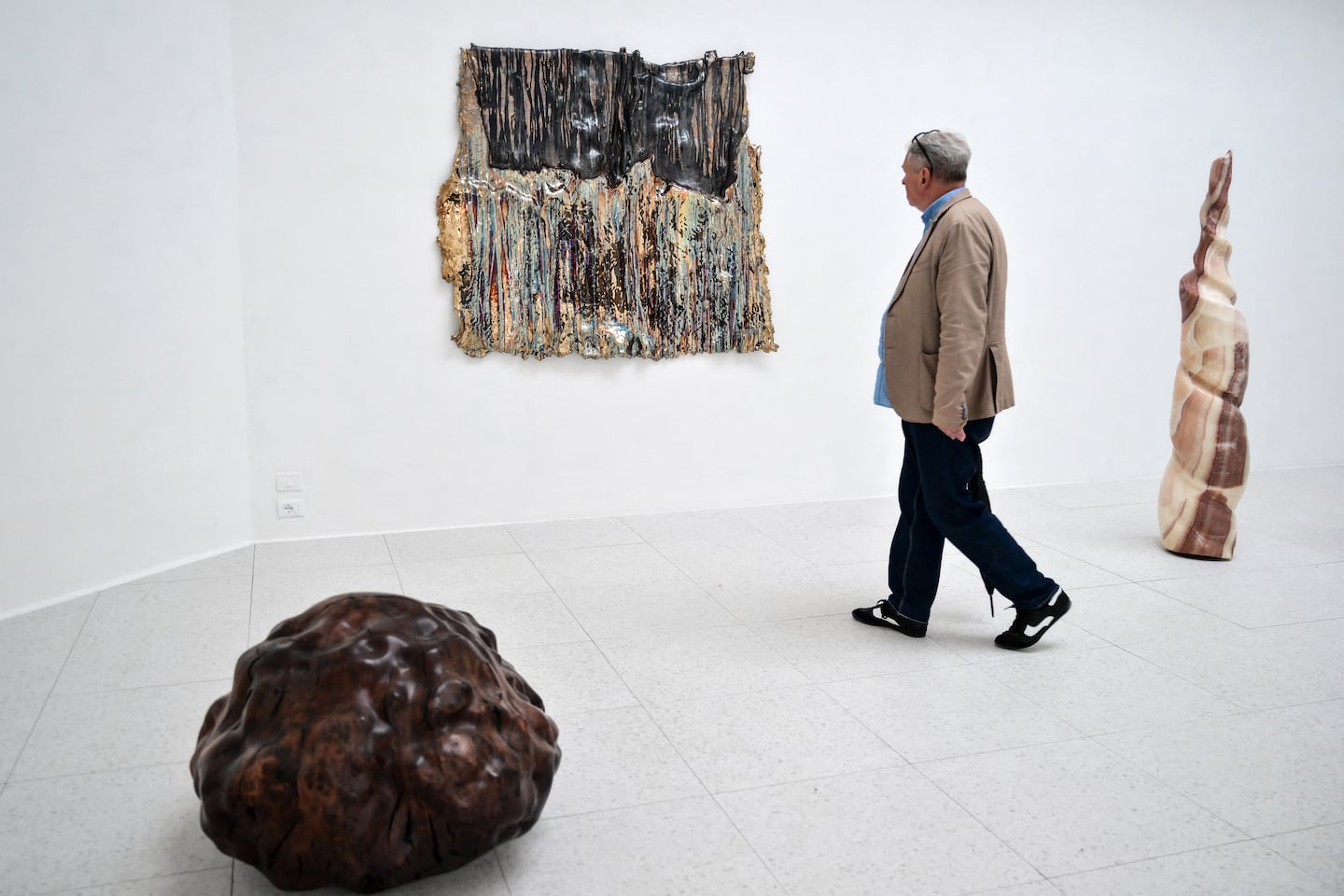 An array of “Not Yet Titled Works” by US artist Alma Allen in the United States Pavilion during the pre-opening press view of the 61st Venice Art Biennale in Venice on May 5. 99 countries are participating in the 61st International Art Exhibition of La Biennale di Venezia (2026) which runs from May 9 to November 22, 2026. MARCO BERTORELLO/AFP via Getty Images
She incorporated a brand-new nonprofit, American Arts Conservancy, and turned to Jeffrey Uslip, a former museum curator who lost his job at the Bass Museum of Art in 2016 after an exhibition he curated faced accusations of racism. According to The New York Times, Uslip approached several well-known artists for the Venice commission, only to be rejected time and again. He finally found a taker in Allen, who told the Times that neither Parido nor Uslip had ever visited his studio, and offered little guidance as he prepared a dozen or so pieces to be shown as the US’s official entry.
You can’t blame Allen for taking the gig. Little-known though clearly capable — his mysterious sculptural pieces in ceramic, stone, and metal have the polish of an expert hand — Allen seized a once-in-a-lifetime opportunity to be seen on a grand scale. And he’s trying his best to decouple from the regime that sent him. In a statement, Allen describes his project as “a symbol of collective optimism and self-realization.”
Truly, it could have been worse. But as opening day approaches, his inoffensive, semi-abstract sculpture is morphing into an avatar for an aggrieved world’s anger at an American government running roughshod over the established world order. Flying quietly under the radar seems an unlikely best-case now. How bad can it get? We’re about to find out.
Murray Whyte can be reached at murray.whyte@globe.com. Follow him @TheMurrayWhyte.