

Moving to Prince Edward Island shouldn’t be a hard sell — think world-class beaches, fresh lobster and Cows ice cream.
But despite the Island’s global appeal, the province is struggling to attract enough family doctors to help more than 34,000 people who are currently waiting on the patient registry to be assigned to a primary care provider.
Enter the physician recruiter, a specialized professional who pitches the benefits of life in P.E.I. to doctors in other parts of Canada and internationally.
These recruiters might just be the key to solving the province’s family doctor drought.
LISTEN: Physician recruiters have changed their pitch. Here’s how:
Last week, around 95 recruiters attended the Canadian Society of Physician Recruitment’s (CaSPR) annual conference in Charlottetown. This year’s event focused on innovation and helping recruiters use practical tools to improve efficiency, reach and retention.
The pitch physician recruiters make about life in their communities can make all the difference to incoming doctors.
“No one tells a story like the recruiters that live and breathe that community,” said Dominick Desjardins, outgoing chair of CaSPR and director of workforce recruitment at Health P.E.I.
“It’s about the life you’re building. We don’t only recruit a physician but we recruit the family.… A physician that does not feel part of that community is not going to be retained.”
Desjardins said newly hired doctors want to prioritize a better and healthier work-life balance than previous generations, meaning recruiters often have to work harder to fill the gaps left behind when a physician retires.
 Even though Island life should be an easy sell when it comes to recruiting doctors to work here, the province’s patient registry is still moving in the wrong direction. (Tourism Industry Association of Prince Edward Island)
Back in February, three family doctors on the Island announced they were closing their practices, leaving around 4,500 patients without a physician.
The announcements also exposed a deepening rift between Health P.E.I. and the physicians who work in the province’s health-care system. Dr. Krista Cassell, the president of the Medical Society of P.E.I., said at the time that Island doctors are “regularly pushed to their full scope of practice” and are “constantly being asked to do more with less.”
Health P.E.I. had previously set a goal to reduce the patient registry to fewer than 5,000 people by 2027.
But the numbers are still moving in the wrong direction.
In April of this year, 2,960 Islanders had been assigned a primary care provider while 5,069 new names had been added to the waitlist. As of April 30, there were 34,621 people who remain on the list for a new family doctor or nurse practitioner, according to the patient registry website.
WATCH | What does it take to convince a health-care professional to move to P.E.I?: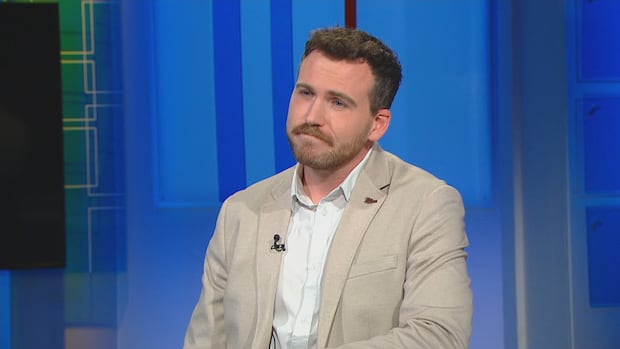
What does it take to convince a health-care professional to move to P.E.I.?
Health P.E.I. says it has improved the way it recruits doctors and other health-care professionals to come and work in this province. CBC News: Compass host Louise Martin sat down with the agency’s director of workforce recruitment, Dominick Desjardins, to find out what goes into enticing people to the Island.
Although Desjardins leads workforce recruitment for Health P.E.I., he stressed that recruiters work collaboratively across Canada, often referring candidates to health authorities in other regions.
“There are third-party recruitment firms that will find a candidate, will sell them, sell them, sell them and settle them. But once they’re settled they can walk away,” Desjardins said.
“We recognize that maybe an urban centre is what you’re looking for, so maybe a rural community in P.E.I., you might not stay there.”
‘We’re consistently on the clock’
Andrea McCorkell, a physician recruiter in White Rock, B.C., said she asks for help from and shares potential candidates with other recruiters across the country.
“Bringing a physician to the province or to Canada anywhere is good,” she said.
McCorkell said she’s seen an increase in applications from doctors in the United States, given that country’s increasingly turbulent political climate. She said White Rock also welcomes a particularly high number of candidates from the U.K.
This year’s conference in Charlottetown also emphasized the importance of recruiting to a family as a whole rather than an individual doctor.
“What does your husband like to do? Your partner? Your kids? What do you as a family like to do?” she said. “Then I cater this story and the pitch to what the family needs.”
 Health P.E.I. had previously set a goal to reduce the patient registry to fewer than 5,000 people by 2027. (Julien Lecacheur/Radio-Canada)
McCorkell said the recruitment process can take as long as 18 months, and that some recruiters start engaging with potential future physicians before they graduate from high school.
She said smoother, faster immigration processes would help speed up hiring new doctors. McCorkell is also an advocate for a pan-Canadian licensure that allows physicians to freely practise in any Canadian province.
Some physicians in P.E.I. are also eligible to work in New Brunswick, Newfoundland and Labrador and Nova Scotia.
Doctors in Atlantic Canada who want to practice in other provinces outside this region would need to apply for additional licences.
Although artificial intelligence is now available to assist with some recruitment tasks, Desjardins believes that the job will never be fully replaced.
“Communities don’t realize that we’re not only recruiters, but we’re immigration consultations or marketing experts. We’re babysitters when the physician comes to site visit, we watch their kids for them,” he said.
“We’re a little bit of everything, and we’re consistently on the clock.”