
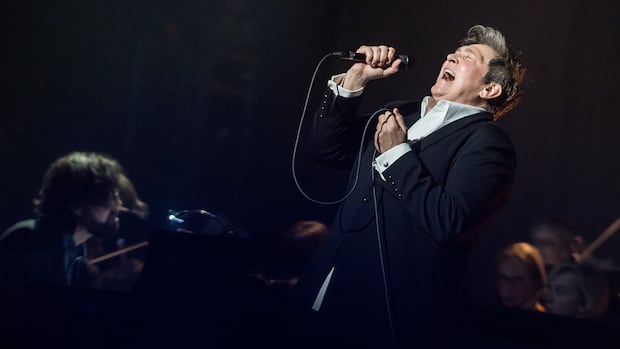
Today, k.d. lang is a household name. She’s won a pile of awards, including four Grammys and six Junos. She’s appeared in films and television. She sang an unforgettable, breathtaking version of Leonard Cohen’s Hallelujah at the Vancouver 2010 Winter Olympic Games opening ceremony.
She’s a Canadian music legend.
But every legend has to start somewhere.
At the beginning of her career, lang moved from her hometown of Edmonton to Vancouver to write and record music.
She performed three times at Expo 86 — as her career was taking off in myriad ways.
lang shared her memories from Expo 86 and beyond with CBC’s Gloria Macarenko on On The Coast.
WATCH | k.d. lang shares memories from the past 40 years: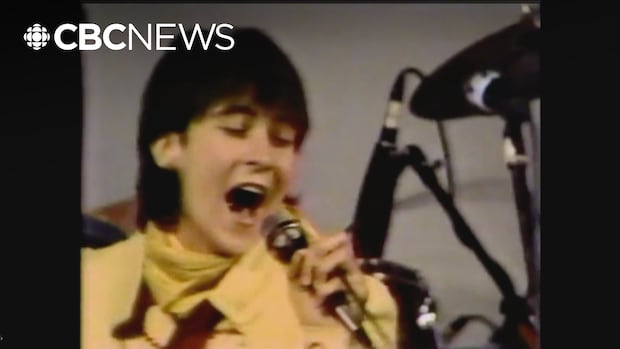
k.d. lang remembers Expo 86 performance 40 years later
In 1986, up-and-coming artist k.d. lang and the Reclines played at Expo 86 in Vancouver. Lang, who had just won the Juno Award for most promising female vocalist, recalls the performance and the whirlwind years that followed — including her performance with Roy Orbison and her subsequent performance at the 2010 Winter Olympics.
This interview has been edited for length and clarity.
What do you remember about your performances at Expo?
We had returned from London from recording Angel with a Lariat and I think I was pretty jet lagged. I remember the stage being very, very big. I remember being excited.
Vancouver has always been sort of this amazing lucky vortex for me, with Expo 86 and with the Olympics and with the Railway Club and the Savoy. I mean, Vancouver has just been a place of great good fortune for me.
You mentioned Angel with a Lariat — you’d just released that to critical acclaim. You signed a record deal not long after Expo 86 with an American label. How would you describe that time in your career?
Honestly, I think why I can’t remember anything is because it was moving so rapidly. It was just flying by. Thank goodness I was young and energetic because the pace of it was just overwhelming.
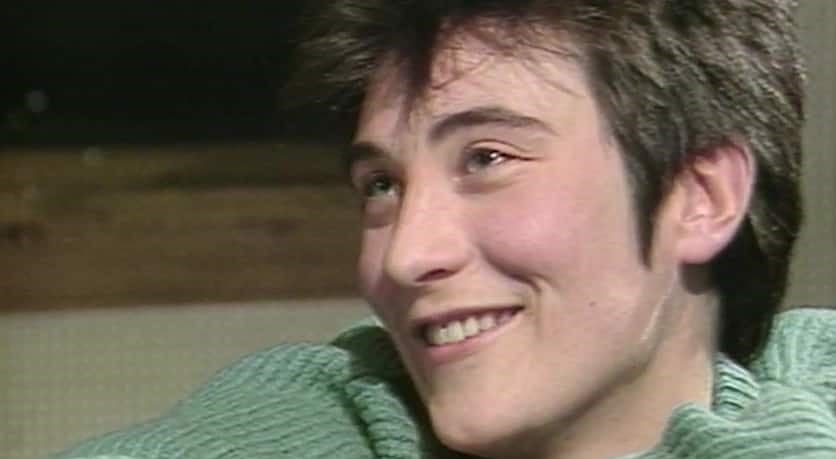 The CBC’s Peter Gzowski profiled Alberta-born singer k.d. lang for the show Gzowski & Co. in 1985. (Gzowski & Co./CBC Archives)
Did you get a chance to enjoy the fair at all in 1986?
I don’t remember having the time to go to the actual fair.
I’d like to hear more about this amazing lucky vortex that Vancouver was in your career. What has the city meant for you?
I moved rather early from Edmonton to Vancouver when my career started to take off and Ben Mink also moved to Vancouver and that’s where we did a lot of writing and a lot of recording. Again, the Railway Club and the Savoy were of utmost importance to the launch of my career.
What about the fans from Vancouver that were with you from the beginning?
They’re still there. It just feels like family. It really does. It actually was encapsulated by, they saw me at the shows, but they leave me alone. I’ve always felt really supported and just in the flow of Vancouver. It just feels a lot like home to me.
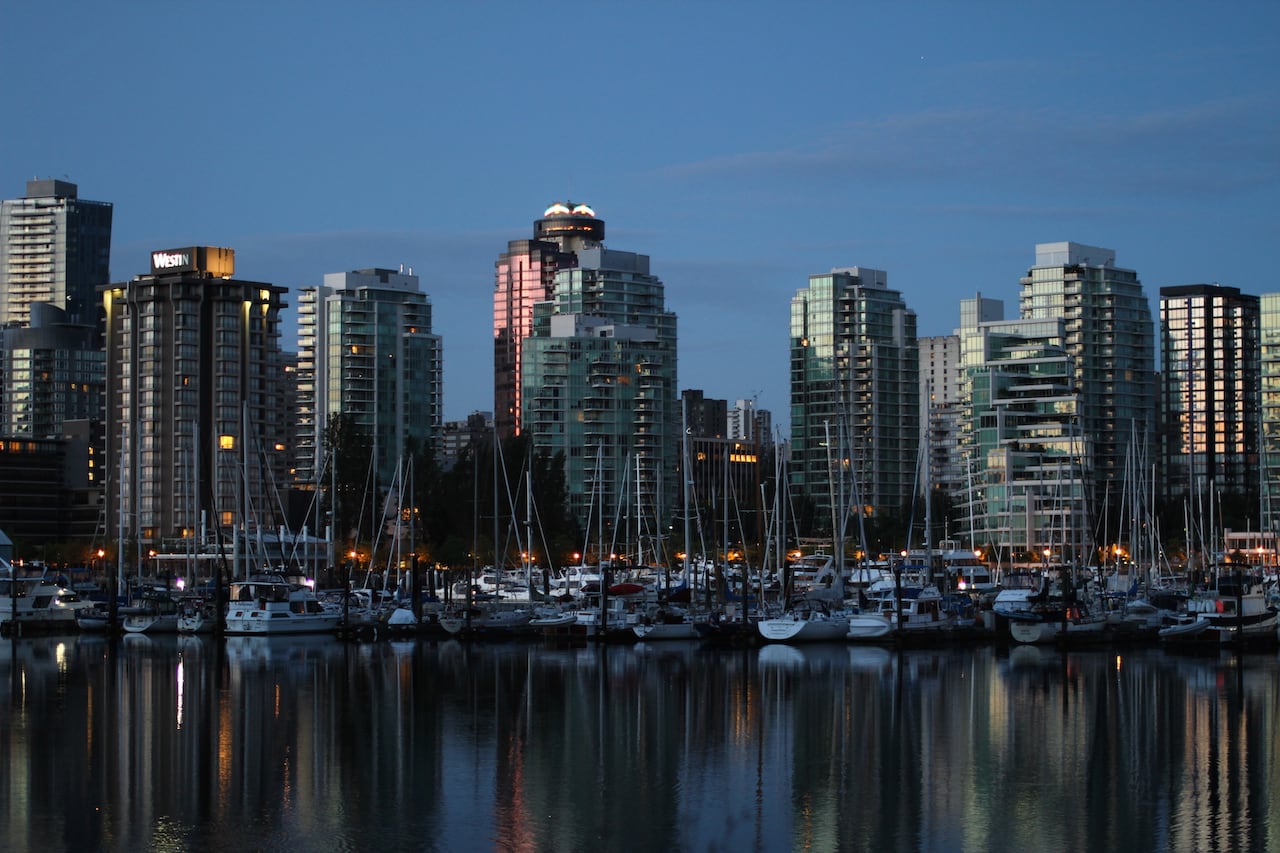 k.d. lang describes Vancouver as a ‘lucky vortex’ for her career. (Rafferty Baker/CBC)
Shortly after Expo 86, you get a call from Roy Orbison and he asked you to record Crying with him. What memories does that bring back to you?
I mean the song is so big and Roy was so beautiful. Roy was just so gentle and generous and silent and was such a great, early influence to me in terms of how to carry yourself in professional situations and environments. We actually rehearsed for the first time in a studio in Vancouver. I can’t remember what studio it was, but we rehearsed in Vancouver. We were sharing the same mic and we leaned in for this one section and Roy’s cheek touched my cheek and it was electrifying, not in a sexual way, obviously, but just in this incredibly spiritual, powerful way. And to hear that voice resonating right beside me was earth-shaking.
The success of Crying launched a lot of opportunities for me. I went to Los Angeles and was a part of the Black and White Night video, which historically has a lot of gravity to it and was a great success and an amazing experience for me with Tom Waits and T Bone Burnett and Bonnie Raitt and so many amazing people. I got into a nice flow with people because of that experience.
What would you say are some of the highlights of your 40 years?
Obviously the, the duets that I managed to get myself into — the Roy Orbison duet and without a doubt the Tony Bennett duets. Chaka Khan was an amazing experience. The Loretta Lynn, Kitty Wells and Brenda Lee experience was amazing. Chrissie Hynde was amazing.
I think probably one of the pinnacles was getting to know Leonard Cohen and to be bestowed with that song, Hallelujah, in a way and having sung it at the Vancouver Olympics. It just probably is the peak, the plateau of all of it.
What was that like for you?
I was held in a trailer for about eight hours because of the security at the Olympics, just like nerve central, so nervous. I just couldn’t settle down. When they finally, finally started walking me through the tunnels, there was this massive structure of scaffolding holding the stage up. It was like this maze of scaffolding and tunnels. Then I went into this little elevator shaft that took me up to the main stage and put me in place during a commercial break.
I was just praying to settle down. I got up there and all of a sudden everything decompressed for me, everything opened up and the song came and I was so present. I remember being so present on like six different levels of consciousness at the time I sang that song. It was an experience that just completely shifted my performance mode from that moment forward.
WATCH | k.d. lang performs at the 2010 Olympics:
I was just riding this incredible wave of presence and then it was over. And then it took me months to sort of recover from that experience because it took me months to mentally wrap my head around those six minutes, and then it’s over. It does feel like an Olympic performance, what I imagine the athletes go through, because all the years of preparation and then that one moment where you have to distil all the pain and all the glory into one moment, and then there it is. It’s over.
To what extent was that a spiritual experience?
It was most definitely a spiritual experience. My Tibetan lama, my teacher, had passed away about three months before that performance and I was unaware that the audience was going to be holding up those little candles. It was an offering to him. It was an offering to the luge athlete who had passed away the day before. It was an offering to Canada. It wasn’t about me. It was just this beautiful culmination and, and synergy between the song, between the nation, between the world, between the audience and me and my teacher. It was a big, big, big, big moment.
What is exciting in your life today?
I’m writing some music, there’s some things that are happening that I can’t really talk about just yet. But I’m continuing on now into some sort of creative mode, but at a much more moderate pace, being 64, which is lovely, I have to say. There’s some freedom. Age brings beautiful freedom, for sure.