
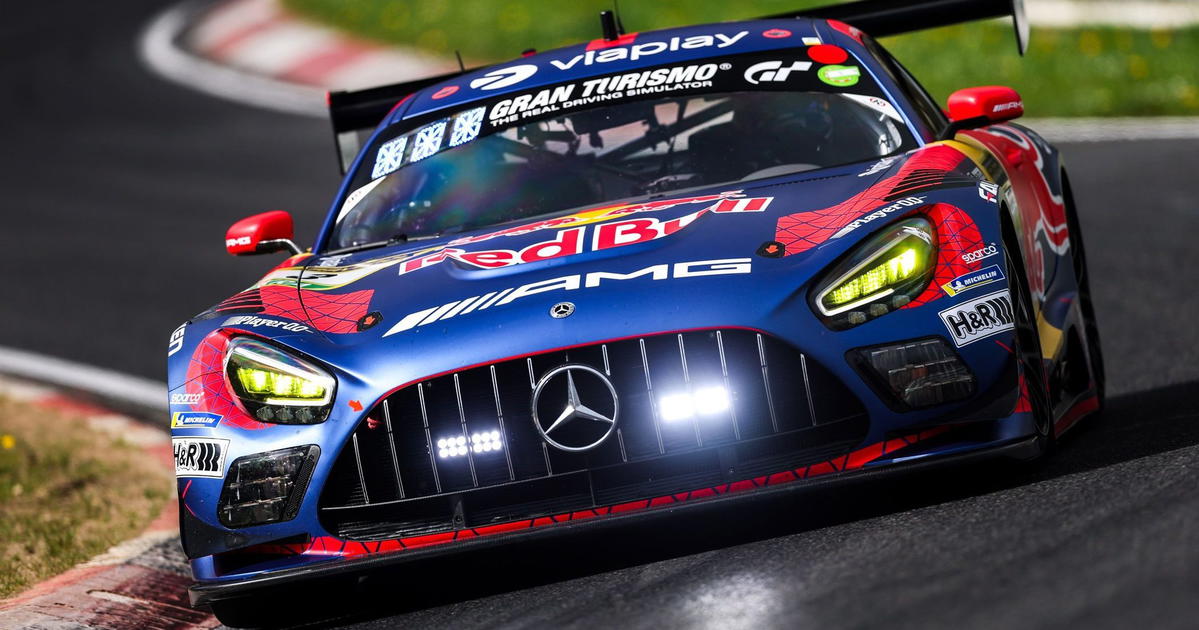
Max Verstappen will be forced through the complete qualifying gauntlet for the Nurburgring 24 Hours, missing out on the exemptions reserved for the most successful teams from earlier NLS races and April’s qualifying rounds.
The four-time world champion’s team finds itself among those starting from scratch, partly due to their disqualification during the NLS2 race and technical troubles in the second qualifier event.
While Verstappen faces the long route, there is Dutch representation among the five teams already guaranteed a place in the final qualifying session.
Thierry Vermeulen, Verstappen’s protégé, secured his spot in Top Qualifying 3 after claiming pole for the second qualifier race last month, guaranteeing him at least 12th on the grid.
Missing the exemption does not eliminate Verstappen’s pole position chances, but it does make the path considerably more complex.
The 24-hour race schedule reveals six separate qualifying sessions, each serving a distinct purpose within the intricate qualification structure.
View the details of all the qualifying sessions in the table below. Article continues after that.
Navigating the class divide
Understanding the qualification format requires grasping the distinction between 23 different classes. Verstappen competes in the SP9 category, where serious qualifying only begins on Friday. The same applies to teams in SP-PRO, SP-X and AT1 classes.
These elite categories determine starting positions during Top Qualifying sessions. The first three qualifying rounds (Q1, Q2, Q3) serve merely as glorified practice for these teams. Their times are recorded and classified, but carry no consequences for the weekend ahead.
For the remaining 112 teams across other classes, these three sessions hold genuine significance. They will distribute grid positions 50 through 161 across the three rounds, with each team’s fastest time determining their Saturday starting spot. No matter their pace, these teams cannot advance to the Top Qualifying sessions.
Q1 and Q3 remain optional for SP9, SP-PRO, SP-X and AT1 teams, but Q2 carries mandatory participation. This evening session runs in darkness across the German Eifel region, and every driver must complete at least one lap to remain eligible for the race. Skipping Q2 means immediate exclusion.
Q1 runs on Thursday at 13:15 for two hours. Q2 follows on Thursday at 20:00, lasting 3.5 hours. Q3 begins Friday at 12:00, concluding at 13:05 (all times local).
Article continues below the image.
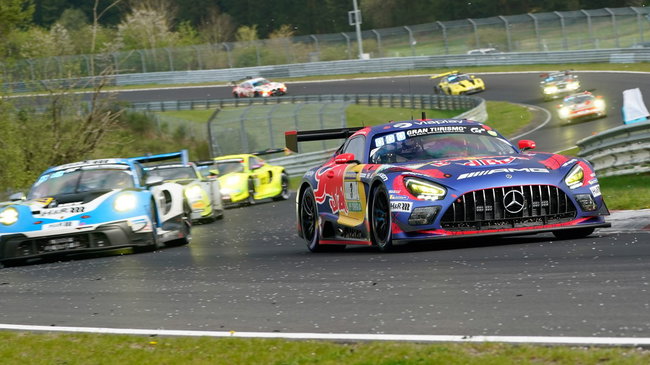
© Gruppe C Photography
Top Qualifying
Friday centres entirely on Top Qualifying, where 49 teams from the premier classes fight for starting positions. These sessions mirror Formula 1’s elimination format, progressively cutting the field after each round.
Five exempted teams enter directly at TQ3, leaving 44 teams, including Verstappen’s #3 Winward Racing entry, to contest TQ1.
Starting at 10:15, drivers get 30 minutes to set their fastest possible lap time, effectively allowing two flying attempts. The 20 quickest teams advance to TQ2, while the remaining 24 learn their final grid positions between P26 and P49.
TQ2 introduces driver rotation requirements for SP9-PRO teams. If Verstappen tackles TQ1, he cannot participate in TQ2. Again, drivers receive 30 minutes for their qualifying runs, with only the seven fastest advancing to TQ3. The rest secure positions P13 through P25.
TQ3 features the 12 surviving teams battling for pole position across a one-hour session. Teams launch individually with brief intervals, eliminating traffic concerns.
Each driver receives two flying laps to establish their ultimate pace. The session winner claims the prestigious Glickenhaus Trophy and pole position for Saturday’s race start.