
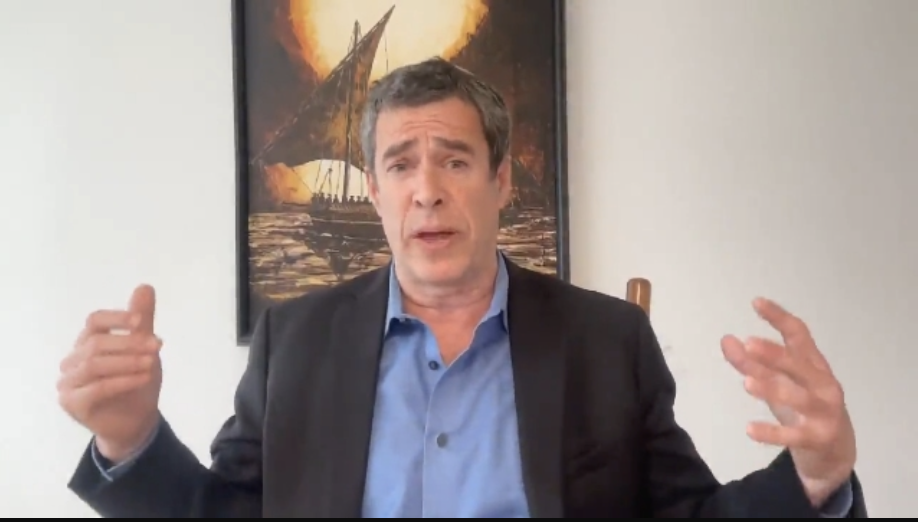
A little over two years ago, on April 15, 2024, David Sachs of Ottawa’s Jewish Federation was leaving an interfaith event near Parliament Hill. He was wearing a kippah. Outside the government building, anti-Israel protesters were waiting.
In his victim impact statement last week, Sachs told the sentencing hearing for his convicted attacker, Deana Sherif, that he feared for his life during those “absolutely horrific” moments when he was swarmed, hit on the head, screamed at with anti-Israel insults, then followed for four blocks as he tried to escape, all while his assailant’s dangerously loud electronic whistle blasted near his ears.
Ottawa police arrested Sherif a few days later and charged her with eight offences, including resisting a police officer and two hate-motivated charges. Some of the charges stemmed from another confrontation she had that same day involving Conservative MP Brad Vis of British Columbia, who was trying to go the gym.
In February, Sherif was convicted on just two of the original charges. The Crown did not concentrate on the hate-motivated allegations at trial, even though the judge agreed some of the shouted insults were antisemitic, but found Sherif herself was not the person making them.
On May 6, the judge sentenced her to the 17 months she had already spent in custody, plus one year probation, a peace bond, and a decade-long ban on using the loud whistle or possessing other weapons.
On today’s episode of The CJN’s North Star podcast, David Sachs explains why he believes the convictions were significant—but also why he feels the outcome fell short without hate-related findings. We also hear from University of Ottawa antisemitism adviser Jonathan Calof, who warns anti-Jewish hatred in Canada is no longer confined to street protests, but is becoming institutionalized.
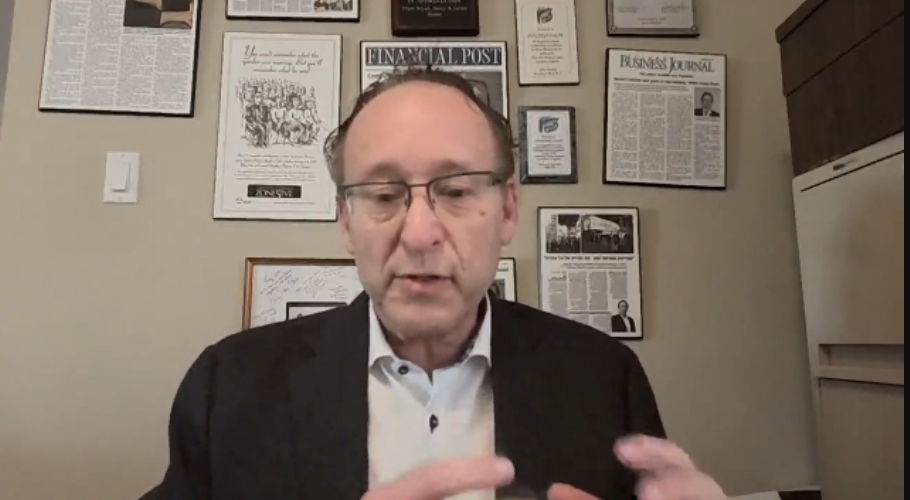 Jonathan Calof, the special anitsemitism adviser for Ottawa University, says anti-Jewish hatred in Canada is no longer confined to street protests, but is becoming institutionalized. (The CJN photo)
Related links
How twice-convicted Ottawa protester Deana Sherif played a role in organizing and promoting this year’s 2026 Al-Quds Day protest rally in Toronto, in The CJN .Learn more about Prof. Jonathan Calof, the special adviser on antisemitism appointed by Ottawa University in early 2025,Read David Sachs’ comments after an Ottawa man pleaded guilty in Feb. 2025 to sending hateful messages to local physician Dr. Nili Kaplan-Myrth in Feb. 2025, in The CJN.Transcript:
David Sachs:
“There were 14 of them on me.”
“I thought I could be stabbed at any moment”
Ellin Bessner:
That’s Ottawa Jewish community leader David Sachs, describing the moment two years ago when he was swarmed by screaming, masked anti-Israel protesters after he left an iftar dinner at a government building across from Parliament Hill in April 2024.
Last week, an Ottawa judge sentenced Deana Sherif, 49, to 17 months in prison time already served. She’s one of the city’s most prominent anti-Israel protesters. The judge credited the time she had been behind bars before the sentence.
Sherif also received one year probation, a peace bond ordering her to stay away from her victim, a ban on using her dangerously loud electronic referee-style whistle — or similar noisemakers — and an order to provide a DNA sample.
In February, an Ottawa jury convicted Sherif in connection with the chaotic confrontation involving David Sachs, and also that same day with a Conservative MP from British Columbia, Brad Vis, who was simply trying to go to a nearby gym.
Unlike Vis, Sachs was wearing a kippah. Visibly Jewish.
Ottawa police originally laid eight charges, including two hate-motivated ones. Sachs is disappointed the Crown ultimately chose not to pursue those hate circumstances during the four-month trial.
Still, he says, the conviction for criminal harassment against him, and assault with a weapon for the other victim, plus the time Sherif spent in custody, brings some measure of accountability, even if the final sentence falls short.
David Sachs:
It’s satisfying that she received serious jail time for her actions and that should give some measure of satisfaction to the Jewish community in that we are seeing real and severe repercussions. That said, we really need our Crowns to begin appending the hate charges where they’re appropriate, even when they feel they might be difficult. That is a part of the case and it shouldn’t be just considered a bonus if it’s a slam dunk. It matters to us! And obviously we would see a heavier charge if the hate-motivation was found to be in place.
Ellin Bessner:
I’m Ellin Bessner, and this is what Jewish Canada sounds like for Monday, May 11, 2026.
Welcome to North Star, the flagship podcast of The Canadian Jewish News, made possible through the generous support of the Ira Gluskin and Maxine Granovsky Gluskin Charitable Foundation.
Just ahead on today’s show, you’ll hear from David Sachs — and from Jonathan Calof — the University of Ottawa’s special adviser on antisemitism — who warns anti-Jewish hatred in Canada is no longer confined to street protests, but is becoming institutionalized.
But first, some background about Deana Sherif:
She’s long been active on Canada’s protest circuit — from ANTIFA (anti-Fascist) demonstrations, to the Freedom Convoy in 2022. More recently at protests against Israel’s military campaign in Gaza following the Oct. 7 Hamas attacks.
Sherif hasn’t just protested in Ottawa.
She’s also appeared at demonstrations in the Toronto area, including outside synagogues.
Earlier this year, when Ontario unsuccessfully sought a court injunction to block Toronto’s annual Al-Quds Day rally, government lawyers named Sherif 10 times as one of the event’s promoters, and said she shared a social media post praising the recent attack on that Detroit, Michigan synagogue, when the brother of some Hezbollah fighters drove his truck containing firearms and gasoline into the building.
Her defence lawyer argued Sherif deserved only an absolute discharge because she’s been in a jail so long, separated from her young daughter, and because quote “the ongoing genocide in Gaza” could explain “a lapse in judgment.”
But the judge rejected that and so she will now have a criminal record.
He described Sherif’s pursuit of Sachs as a four-minute episode of what he called “absolutely horrific” and “persecutory assaultive behaviour” that would terrify anyone, even though he said the evidence did not prove Sherif herself uttered the antisemitic insults shouted by others in the crowd.
David Sachs and Jonathan Calof join me now from Ottawa.
Welcome both of you to the Canadian Jewish News North Star Podcast.
Jonathan Calof
Glad to be here, Ellin.
David Sachs
Thanks for checking in with us.
Ellin Bessner
Look, David, I want to bring you on first. Can you share what’s happened to you and why this, why you’re in the news now?
David Sachs
Sure. It was two years ago in 2024. I have been invited for several years to a Muslim community iftar dinner on Parliament Hill that is quite a big event and brings a lot of community leaders and politicians together. On this occasion, there were some protesters in front and they were likely there because the Prime Minister was there or the mayor was there and they were screaming about at them for being pro-genocide.
And when I went in, they weren’t making much trouble. They were setting up in front on Wellington Street in Parliament Hill. We had a wonderful time at the dinner on the theme of “love for all, hate for none”. And when it came time to leave, several of my Jewish colleagues were telling me they were going to leave by the back door because they were worried about the presence of these protesters in front. And I had left a harmonica with security at the front, so I had to go out the front. I know that I was the only one leaving the front wearing a kippah and being identifiably Jewish. So I left.
Ellin Bessner
Wait, can I interrupt you for a minute? Why weren’t they letting you in with a harmonica? Did they think that was a weapon or something?
David Sachs
Yes. Yeah. Although ironic as a noise weapon.
When I left, I immediately had someone in a mask in my face. And I remember making a comment about that being a good look for him.
And just as I had the words out of my mouth, there were 14 of them on me. I tried to walk through this crowd. They were on my body, screaming, mainly in masks, screaming at me, calling me the worst possible things. And there was someone with a drum. who was banging it on my head and behind me and pushing me.
When I turned to shove him, that was when a police officer came down. Now, there were three police officers that I can recall on the steps. The room was full of police inside for context. OPS, OPP, RCMP. And one of these parliamentary protective services officers came down and went next to me on one arm, but did nothing to break up the gang. And as we began walking away, seven or so of them stayed with us as we left the building. And the one with the drum was behind me, hitting me with it and banging on the head. And the criminal, Deana Sherif, had her noise weapon in my face, this electric whistle that was very high powered, very high pitched. And they were, you know, screaming slurs at me. And we walked for three or four blocks. And in the video, it was four minutes of this harassment that they followed me. And I said repeatedly to the police officer, “You know, what does it take for you to make an arrest?” And he said repeatedly, “I’m not going to make an arrest. I’m just here to get you to safety.”
And as a result of that, most of the group could not be identified because they were masked. And so in the CCTV footage that they were able to use to find the one that was charged, she was the only one out of that group who wasn’t wearing a mask. So she was the only one, and she was well known to police. So she was charged, I think, within a few days.
Ellin Bessner
She was convicted. Found guilty of what charge against you? Because there was another person that was involved, a member of parliament got harassed, but it’s sort of a joint combination of charges.
David Sachs
And in the case of the MP, she was found guilty of assault with a weapon for this noise device, which sets a very important precedent for us. In my case, and I can’t get into the mind of the jury, I can only assume that based on the video, it was a silent video, so they couldn’t actually hear the noise thing, although they could see it in my face. So she was found guilty of criminal harassment and intimidation, but not guilty on assault with a weapon. Although it was very clear that whereas the MP was assaulted with this weapon for 9 seconds, I was assaulted with this weapon for four minutes.
Ellin Bessner
Can you share the physical and mental impact that being the target of that hateful, horrible incident has had on your life?
David Sachs
Sure. First, just in that moment, because of my work representing the Jewish community regarding antisemitism, I was immediately thinking of that. And of course, I’m aware of the dangers. So as I’m walking for the whole four minutes, I thought I could be stabbed at any moment, every step step of the way. I mean, I’m surrounded by people with masks with, and they’re just enraged. And the thought that came to mind, first of all, was what if I was with my kids? Then there would have been violence and something would have, would have occurred. But the main thing…
Ellin Bessner
You would have fought back, right?
David Sachs
Well, I would have, something would… Yeah, defended your child, exactly. But what I really was thinking about was this is intolerable for my community. I would say with regards to how it affected me in the long term, I’ve had a lot of chronic stress because of the kind of work that I do. And this really added to what I was dealing with. And that’s something that affected me mentally and physically. I’ve had a number of illnesses or other syndromes that have come in the last couple of years out of this. stress that I was diagnosed with shortly after this meeting. So this was definitely a contributing factor to what has been a difficult couple of years.
Ellin Bessner
I’m very sorry that you have to deal with this. I guess our listeners, it’s fair to say, because you mentioned it during your victim impact statement, that you went on leave, you went on medical leave from work. It’s important that they know. How does this fit into the pattern that you have both seen? I’ll bring you both in. Where does this fit in terms of escalation?
Jonathan Calof
So the concept of the escalation, when you talk about the university, It’s taking a different form. I mean, the October, and I think David’s dates were really critical. That was the era in Ottawa of these mass protests and these mass surroundings. It has become more what we call institutionalized antisemitism more than anything else. Equally bad, not as physical, but very terrorizing.
Ellin Bessner
Give me some examples. I know, for example, some students in the residence reported lots of graffiti that was very hurtful to them.
Jonathan Calof
So, and that’s actually an example of a U of O win, and a loss at the same time.
So the incident you’re referring to: several males broke into residence and put graffiti on the door of a Jewish student. They have been a arrested. Security was on it quickly. Ottawa Police Service was on it quickly. But more importantly, probably within about 30 minutes of the incident happening, because of the system we set up, Jewish students were with the individual to give her support. Residence was on the line with me, how can we deal with this? And the president of the university was on the line with the student, how can we help you? That was followed up by an email to all university students describing as much as she could about the incident without enough to damage the case, saying antisemitism will not be tolerated.
This is one of the first times we’ve seen this sort of thing happen in Canada. There was no kickback. It was accepted on campus that, yeah, this was an appropriate message for the president. And there’s a lot that has come as a result of that, but the incident occurred. That was in the fall of 2025.
Ellin Bessner
Four months ago, five months ago.
Jonathan Calof
We have had a student go into class, shaking people’s hands, and another student said to him, “I’m not shaking your hand, you’re a genocidal, baby killing”, you know, the list goes on.
That student got in touch with me shortly thereafter, And there was quick action taken. Security, once again, got involved. Professor asked me, “How can I help the student? What can I do?” Friends, again, were on him, and this is where the linkage is created.
And if you want to know a whole community response, David is part of my team, but the Federation is with me, Hillel is with me, Chabad is with me.
So when I get word of an incident, the first thing in my mind is get support for that student or faculty member. And we’re getting support around that. My institution is saying, “What went wrong and what can we do to prevent it in the future?”
And so there has been a motion brought forward, for example, to strengthen institution neutrality. We’re looking at, can we stop a speaker from coming in if, a priori, we know that what they are going to talk about could cause harm. And that was because there was an incident before my time where Al Jazeera was going across the country. And one of the speakers, and I will not forget this, it broke my heart, was a photographer on October 7th, posting pictures on his Facebook site. of the wonderful freedom fighters as they were on their gliders. And I got pissed!
And I said, and everybody agrees with me all the way up the ladder, “How did this happen that this sort of an individual was allowed to talk to our students?”
And because of the support of leadership and our ex-Special Envoy tweeted about it last year, I’m in a position where I can help.
But the incidences are coming.
My students are feeling better about being Jewish, and I’m having monthly events. I pay for the bagels and the drinks, and then the professors come in. But they don’t want to let anybody know they’re Jewish. That’s the part that’s changed in the last year. They are hiding. They’re afraid.
I was at a Jewish Medical Association of Ontario Shabbat dinner on Friday night, and the medical students were saying, “Things are going great”
Well, why are they going great?
“We’re not letting anybody know. So as long as we keep our head down, we’re good.”
And then a few days earlier, I was at the Movement Against Anti-zionism event in Toronto, which was looking at this new strategy for anti-Zionism. And I sat with Grade 7, 8, and 9 teachers. And the new word is because of what’s going on in terms of the institutionalization of antisemitism, If you have a child that cannot get into the Jewish school because it’s too crowded, your next best place to put them is the Catholic school system.
And I’m sitting here going, “When was the last time in our history when we said, ‘Let’s hide our kids with the Catholics?’”
So that’s what I mean by institutionalization is it’s become so prevalent and so normalized. It’s normalized that these teachers at my table told me about Grade 7 and 8 students hurling insults at them: “You’re Jewish. I’ve been told you’re going to be frying in Hell because you’re Jewish. You’re Jewish. Well, I think you should go back to Poland so Hitler can complete the job.”
So we’re seeing more and more isolationism, ostracizing, it’s considered acceptable. We’re seeing, I’m calling it abuse of podium. And at least at our university, we’re taking steps to create a stronger community. So much so that we had a Shabbat dinner four weeks ago before the end of the term, over 120 showed up. We didn’t need extra security. There was no threat. And a third of the room, and this is a thing that’s getting neat, were not Jewish. And the message to my students was, “You’re not alone. There’s a lot of people out there and it’s growing in terms of that are starting to support you and say, we are here for you.”
Ellin Bessner
And that’s giving me hope. That’s really giving me some hope, John.
Coming up, why Ottawa’s new bubble zone bylaw is being welcomed, but why they say it still won’t stop the hate.
Ellin Bessner:
And just recently, the Ottawa City Council passed the bubble legislation, or vulnerable infrastructure law. Is the community happy that this is now in place?
David Sachs
I was actually a part of a team that, and this is really important to make this distinction, is that this was not an effort spearheaded by the Jewish Federation, but it was actually an effort spearheaded by the municipal government and our municipal leaders. So it was also in April, I would say, of 2024. So I think also that has been a two-year effort. And it was really pushed hard by a couple of our councillors who are wonderful allies, Councillor David Hill and Councillor Hubley, as well as the Mayor’s office.
We responded very constructively to counter arguments, for example, from the Canadian Civil Liberties Association, and they got it and they understood the concerns. And we were able to get those on the far left who may have been sympathetic with the causes that target Jews, but they also understood the importance of people being able to go about their daily lives without harassment. And they’ve seen this kind of targeted harassment against other vulnerable communities. So we were able to get many of those across the political spectrum. And in the end, we had an overwhelming consensus on–
Ellin Bessner
What was the vote? Do you know offhand? what the final vote was?
David Sachs
It was 20 to 4.
Ellin Bessner
That’s pretty good.
David Sachs
Yeah.
Ellin Bessner
Do you think this is going to make things better, the things we’ve reported about, which are harassing outside the seniors residence and, you know, outside the Jewish day schools and what have you?
David Sachs
First of all, it isn’t like that was something that was happening every day at our schools, but it happening once was enough to realize the impact that it had of the daycare having to be closed and parents having to receive a call saying, your children may not be safe, you need to come and pick them up.
And I was in the lobby of the Jewish Community Center while that was happening, and there were senior citizens there who couldn’t leave, and police were telling them this is unsafe to leave. So we learned a lot from that event, and it was something like, okay, this happened once, we don’t really need an encore, we don’t want this to happen again.
So now I think what it really does is give our community sense of peace of mind about this one fear that we all feel of having to cross a mob of these angry protesters, the same exact kind who swarmed and attacked me. And we don’t have to worry about crossing them to take our kids to daycare, to take our kids to school, to go visit the, the nursing home or other facilities.
So I think it’s as much of a mental and an emotional change as it is one on the ground, which was more preventative so that we wouldn’t see the kind of things that they’ve seen in Toronto and other locations. Montreal, Winnipeg. Haven’t been commonplace in Ottawa. We don’t need them to be commonplace.
Ellin Bessner
Who had somebody that literally got stabbed in a Loblaws. Bubble legislation will not prevent that.
David Sachs
Right, exactly. So there’s much.
Ellin Bessner
You had two teenagers that were going to blow up the big rally on Parliament Hill, December 4th, I think it was, 2023. Bubble legislation would not prevent that.
David Sachs
So let’s talk about, if you could click on that concept for one second though, because… Actually, that was one of the proposed targets, but it could have been any of the institutions. It had not been decided yet. And we can’t say that a bubble wouldn’t have prevented it because it might have been done under the guise of a protest or under, under the cover.
But you’re quite right. There are other things that are far outside this. Our problems are not restricted to what we can fix with a bubble zone. But I think importantly, what this showed is that we have allies in in City Hall. We have allies among city staff who want to do the right thing and want to work with our community. So that gives us hope for the other areas, which of course there are enormous risks and that there are embedded hate and as Jonathan points it, institutionalized issues. So the problem is much, much bigger than this. Ottawa is not immune, certainly.
Jonathan Calof
No, but Ellin, I think what’s critical with what David’s saying and what I’m saying is that Ottawa seems to have done something rather unique in the medium to larger size cities that I want others to learn from. It’s been an all hands on deck where the community as a whole has participated. David reached out to many people, including myself, to assist in the efforts to do this.
But probably number one is that there is leadership at the University of Ottawa. leadership at the City of Ottawa who are saying, “we need to do something about it”. And so what that does collectively for our community, even though we’re in pain, we thought they all forgot about us. We thought they didn’t care. Okay. This is a powerful message for us.
But again, the starting point is if your leadership does not care, your chances of doing something positive, like David was just able to pull off, really go down rather dramatically.
I am hearing, pardon the expression, shit that is really, really bad. I’ve got crying students, I’ve got crying faculty, I’ve got death threats. The list goes on. And I got people from other universities calling me with the same stories. Please, can you help me? I’ve gone down to Queens because they needed to be down there. I had just had a meeting with Guelph. I’ve got the support of parliamentarians. I’ve got support of senators. I’m working with police. And Ellin, one of the other things that I love about this role, they’re allowing me to talk to the people that are doing what you and I would call the stupid shit.
So I’m looking at them in the eye, asking them why they did it, what they saw, what they felt. If we don’t understand what’s driving the other side, how are we supposed to come up with reasonable responses? And this is where the anti-Zionism movement has to be hit on. There are many Canadians who believe that Israel as a Jewish state is not important to us. And so if they hit the Israel stuff, we’re not hurting the Jewish students. There are students who are so angry, and I’ve talked to some of the medical students on the other side, who are so furious about what they’re calling to the genocide, that they’ve lost all reason. But what we do is we sit down, we have mediated sessions, we have discussions.
If they’re all the way here, there’s no pulling them back. If they’re over here, we’re able to do something. The fact that I have been in the Disputed Territories, and I’ve met with Palestinians throughout the Arab Middle East, puts me in a rather unique position to say, Hey, I got friends here. I was crying as well. And I know what’s going on.
And it’s by having this base at Ottawa U that I can do that. And at that point, I’ll be able to figure out whether there’s hope for us.
Ellin Bessner
Can you sort of paint a picture for our listeners who aren’t in Ottawa, but also outside? Where do you think antisemitism is at and the main sort of next challenge that the city may face?
David Sachs
I think that we have made headway in Ottawa that maybe they haven’t made in other spaces with institutions, with political leaders. This work has always broken down into two two streams and one is current and security based and putting in place processes or following the process which are in place to protect our Jewish students or our Jewish employees in the workplace or our Jewish citizens on the street.
And the other part is educational. And that is that this part is never going to help in the long term and it’s not going to solve a problem. It might make us safer in the moment, but it doesn’t stop hate. Can we stop hate? Can we make a difference there? I don’t know. We’re trying to.
I am very pleased that for the most part, we have cooperative civic leadership in Ottawa. So we have at least a chance to try that I don’t think that they have in a lot of communities in Canada. So hopefully we’ll be able to show some successes for our effort in Ottawa that can be emulated elsewhere.
Ellin Bessner
It seems like the RCMP, CSIS, and Ottawa police, there’s more arrests or at least more court things that have happened to prevent mass attacks.
David Sachs
I would say actually the opposite. I think that having CSIS be our last defence is a terrible place to be. Catching one group there and one group there doesn’t make us feel safer. It makes us feel much less safe because we know they’re not going to catch all of them. And it makes us feel like it’s a matter of time before something gets through. So it’s wonderful that they are paying attention and devoting resources to this, but we’ve got to solve the underlying problem and not just rely on someone being stopped before they put all the ingredients of the bomb together.
Jonathan Calof
Yeah, my professors and students and the community members I talk to feel the system has let them down. The police don’t care. That’s back to feeling alone. They don’t understand why exactly, what David just said. how is it you can have three police officers with you and no arrests are being made and he’s being harassed?
Why did we have an Ottawa elderly man leave the JCC and there’s a protest outside and his mirror gets ripped off with the policeman standing there ? We have far too many incidences where the question is being asked “Where were they? Why weren’t they active?” to get excited over three or four arrests that are being made.
And once again we’re seeing an increase in an anger towards our community.
Ellin Bessner
Very depressing conversation, I have to say, but also inspiring to hear some of the hope that you’re working on, both of you. Thank you so much for explaining it here so well on The CJN’s North Star.
Jonathan Calof:
Thank you, Ellen.
David Sachs
Thanks for all you do.
Ellin Bessner:
And that’s what Jewish Canada sounded like for this episode of North Star, brought to you by the Ira Gluskin and Maxine Granovsky Gluskin Charitable Foundation.
We reached out to Conservative MP Brad Vis for comment, and also to Deana Sherif’s lawyer to ask whether they are appealing. We haven’t heard back yet.
Sherif has since posted online that she will still be allowed to attend protests — just not while using the piercing whistle involved in this case, or a squeaky watermelon toy she used in August – of that same year..while she was out on bail. She is appealing that separate conviction.
Our show is produced by Zachary Judah Kauffman and Izzie Helenchilde, with Michael Fraiman as executive producer and Alicia Richler as editorial director.
You can also watch our podcast interviews on The CJN’s YouTube channel.
Thanks for listening.
Credits
Host and writer: Ellin Bessner ( @ebessner )Production team: Zachary Kauffman (senior producer), Izzie Helenchilde (producer), Michael Fraiman (executive producer), Alicia Richler (editorial director)Music: Bret Higgins
Support our show