
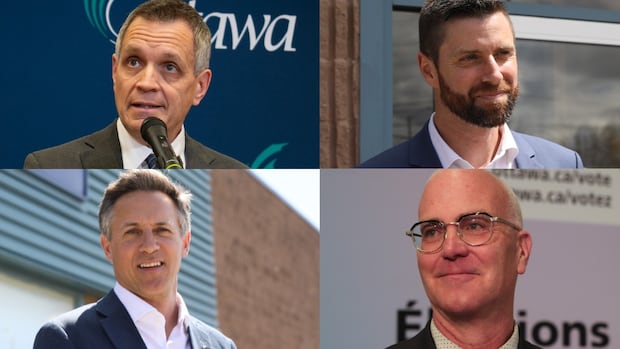
Mayor Mark Sutcliffe says the “real campaign” for his job won’t begin for months.
His challengers clearly have a different view.
Federal and provincial campaigns typically last just a few weeks. Ottawa’s 2022 race for mayor didn’t really get off the ground until well into the summer. But almost six months before the Oct. 26 municipal election, well-organized campaigns to unseat Sutcliffe have already taken shape and his opponents are rolling out major announcements at a steady clip.
Jeff Leiper, Neil Saravanamuttoo and Alex Lawson all showed up at the election office on May 1, the first day they could submit nomination papers, to officially begin their mayoral runs.
The energy behind their campaigns was already on display that day.
Leiper was there when the office opened, more than six hours before his appointment. Lawson showed up with an entourage of heavyweight players who’ve worked on national campaigns — showcasing, maybe even flexing, the depth of political organization on his team.
Leiper released a big chunk of his electoral platform that same day, while Saravanamuttoo followed on Monday with two announcements on transit and transparency.
Both men have already held launch events to pump up their volunteers, while Lawson has scheduled a “Rally for Ottawa” for May 23. But he hasn’t waited to make announcements, putting out a five-point housing and homelessness plan.
Compare that to 2022, when Catherine McKenney waited until June to hold their launch event. And while Sutcliffe registered to run that June, his launch event followed months later, in September.
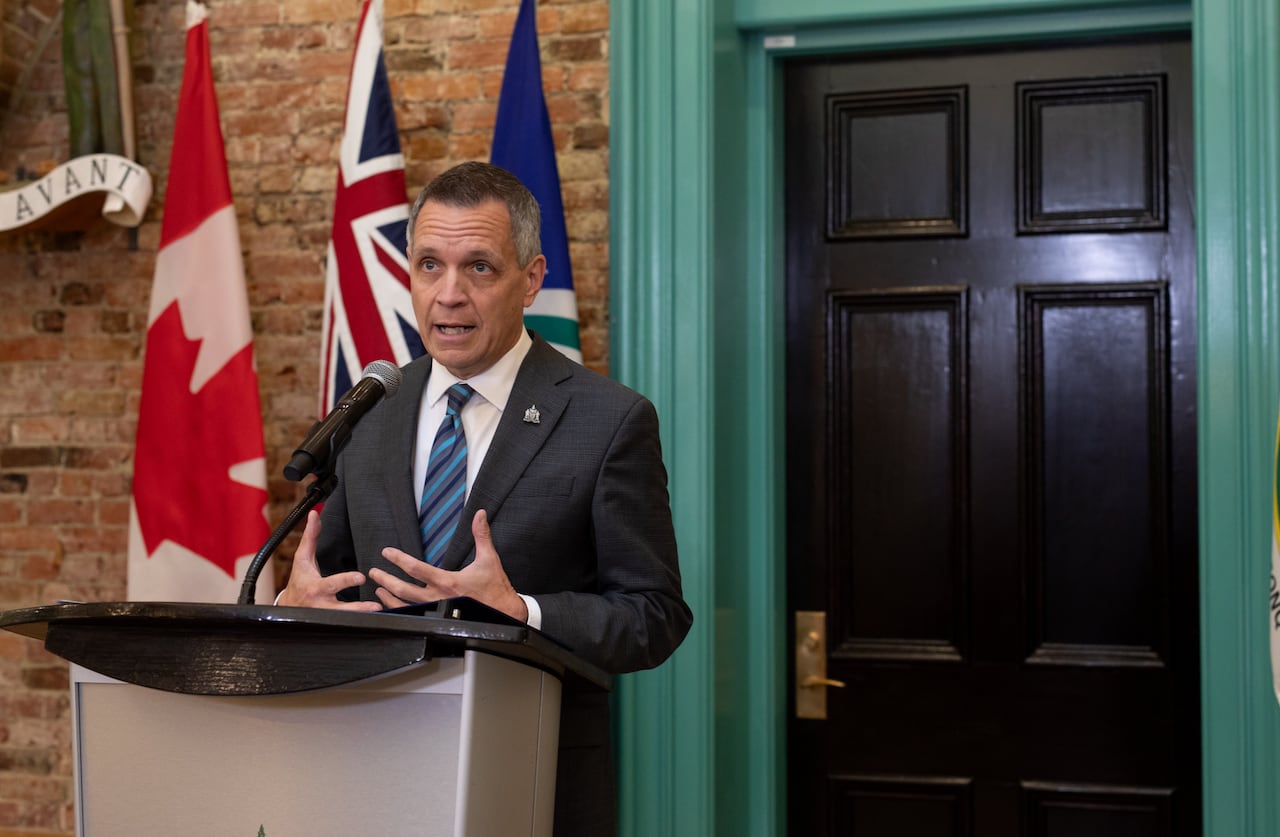 Mayor Mark Sutcliffe at the mayor’s office in city hall. (Arthur White-Crummey/CBC)’No balloons’ at the mayor’s office
This time around, Sutcliffe seems to be sticking to that schedule. Though he’s repeatedly said he plans to run for re-election, he still hasn’t filed his nomination papers to officially enter the race.
That’s created a strange dynamic. Last Monday, Lawson and Sutcliffe both made announcements on homelessness. But while Lawson was clearly campaigning, Sutcliffe insisted he wasn’t.
“I don’t know why you would consider this a campaign-style event,” he said. “You know, there’s no balloons.”
It was an event much like a long list of others he’s held at city hall in recent months, from unveiling an action plan for the ByWard Market to talking up efforts to build cricket pitches. This time, Sutcliffe announced a “champion’s table” on youth homelessness, posed with a giant cheque from a mayor’s charity ball fundraiser and promised to raise even more money for at-risk youth by running a marathon.
Some of the other campaigns are bristling at what they see as an unequal playing field, since they have to cover costs for their events out of limited campaign funds and can’t use city communications staff.
Saravanamuttoo accused the mayor of “blurring the lines” between campaign activities and his mayoral duties. He noted that Sutcliffe is still placing advertisements with his picture in community newspapers and saying he’s working “to make life safer, more reliable and more affordable.”
Those same words — safe, reliable, affordable — were part of his pitch to voters in the 2022 campaign.
Sutcliffe’s office confirmed that the ads are paid out of the mayor’s office budget, but called it a legitimate expense under council policy and “consistent with the advertising done by elected officials at all levels of government while they are in office.”
Indeed, numerous advertisements for MPs, MPPs and city councillors feature in those same community newspapers.
But the Lawson campaign is also pushing back, arguing that Sutcliffe’s “action plans” sound a lot like platform planks.
“He has all the resources of his office and none of the rules of a candidate,” said Emrys Graefe, Lawson’s campaign manager.
So what are the rules?
The City of Ottawa prohibits members of council from using city property or staff time to promote or oppose someone’s candidacy for elected office.
But Sutcliffe says his events have a different purpose. Under the Municipal Act, he is the CEO of Ottawa, and his job description makes him its leading spokesman. He’s getting out the word about city programs, according to that argument, not asking for anybody’s vote.
“I’m just doing my job as mayor,” he said. “I have six months left as mayor in this term of council. I don’t think the people of Ottawa elected me to serve them for three and a half years and then start worrying about the next term.”
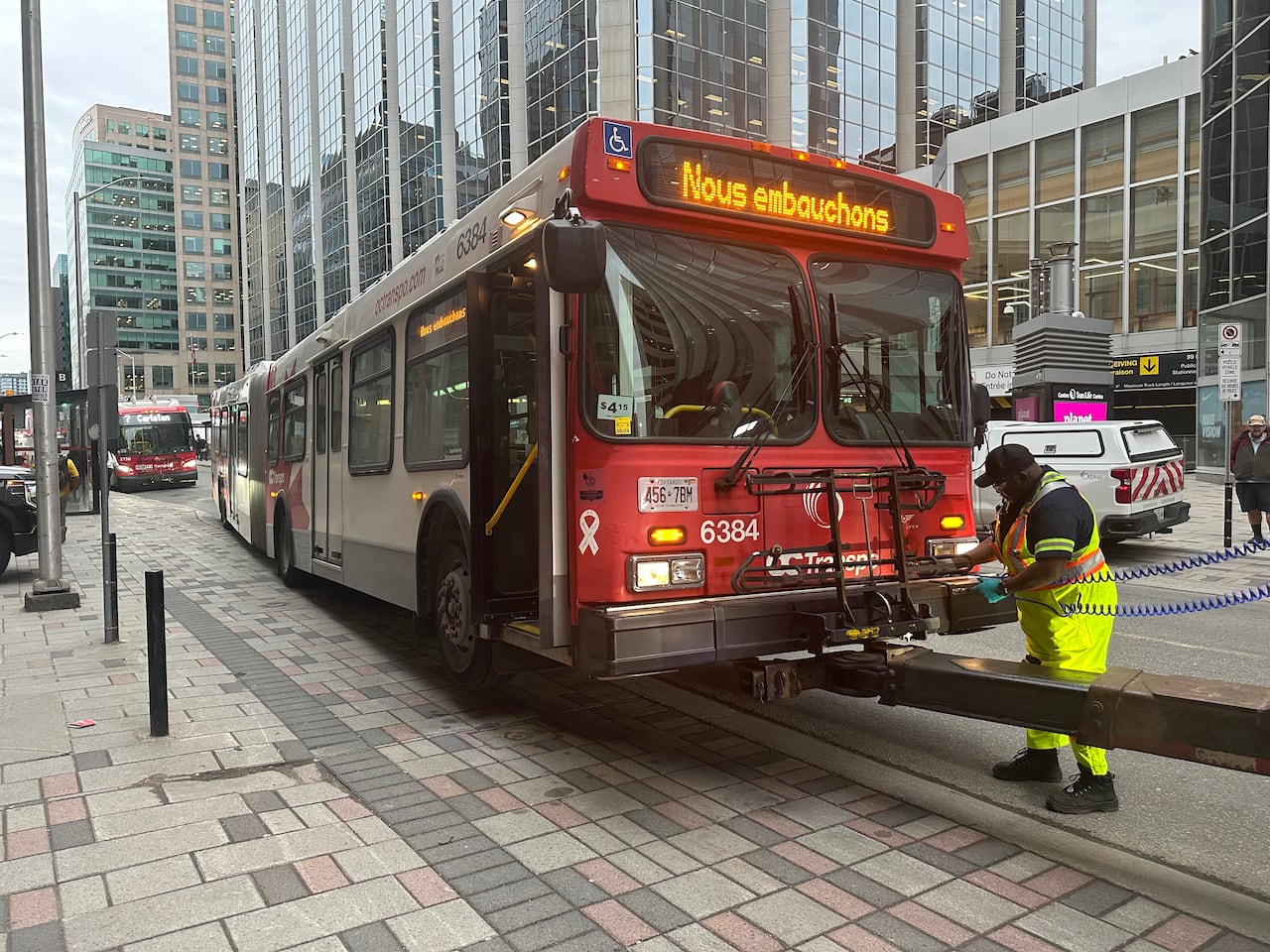 An OC Transpo bus gets a tow after breaking down on Queen Street earlier this month. Transit is already shaping up to be a big issue in this year’s mayoral campaign. (Arthur White-Crummey/CBC)Transit takes centre stage
The surge of early announcements have focused on a few key issues, including housing and transparency. But as OC Transpo continues to grapple with service disruptions, it’s hardly surprising to see transit vault to the top of the agenda.
Candidates didn’t even wait until the start of the official campaign period to get their views out.
Lawson was first. He sent an open letter to new OC Transpo chief Rick Leary last month. It was, in effect, an ultimatum, one where he demanded improvements to bus reliability numbers by November.
Should that not happen, Lawson threatened “leadership changes” at the top if he becomes mayor.
“That’s not personal, Rick,” he said. “That’s the job.”
His team described it as a “mandate letter,” a term common in federal and provincial politics.
Leiper was next, unveiling his transit plan the day before he filed to run. He announced what he called a “transit service guarantee,” promising to reverse service cuts and add more dedicated bus lanes to improve reliability.
Saravanamuttoo waited until his May 4 launch event. He promised “buck a ride, citywide,” saying he would cut fares to $1 per trip for all riders, with a $40 monthly cap.
Meanwhile, the campaign teams have been filling out their rosters.
The Lawson campaign, which already included national figures like Fred Delorey, Quito Maggi and Jeff Balingall, now includes Kyle Harrietha, who has managed federal Liberal campaigns in Ottawa Centre; Laura Kurkimaki, a deputy campaign manager in the 2021 federal Conservative campaign; and Stephanie Delorme, an Ontario PC vice-president.
Leiper’s team is headed by another seasoned political operator: Stephen Yardy, who has managed more than 25 campaigns across Canada for the NDP. He ran Ottawa West-Nepean MPP Chandra Pasma’s 2022 campaign and was campaign director for the New Brunswick NDP in 2014.
Saravanamuttoo has a pair of co-campaign managers, Erin Maher and Aidan Anderson. He called Maher an “advocacy colleague” and policy advisor who has founded several community groups, while Anderson is “a communications professional and campaigner with experience at all three levels of government.”
Council races heating up too
The race for mayor has been dominating the headlines, but nominations in key council races are also piling up fast.
In Orléans East-Cumberland, Matt Luloff recently filed to run for re-election, making him one of the last incumbent councillors to reveal his intentions for the race.
That means 21 of 24 incumbents have either registered or signalled a clear intention to do so.
Luloff already has four candidates registered to run against him. And that isn’t even the busiest field to take shape so far. In Stittsville, where incumbent Glen Gower is stepping away from city politics, there are already six candidates.
Public school trustees are another storyline in the campaign. The Ottawa-Carleton District School Board remains under supervision, and so far, just three candidates have filed to run for any of its 12 trustee seats.
Instead, several incumbent trustees are looking to make the jump to council. Lyra Evans had already announced her intention to run in Rideau-Vanier, and she’s since she’s been joined by two others.
Donna Dickson has filed to run in Gloucester-Southgate against incumbent Jessica Bradley while Cathryne Milburn is a candidate in Beacon Hill-Cyrville against incumbent Tim Tierney.