
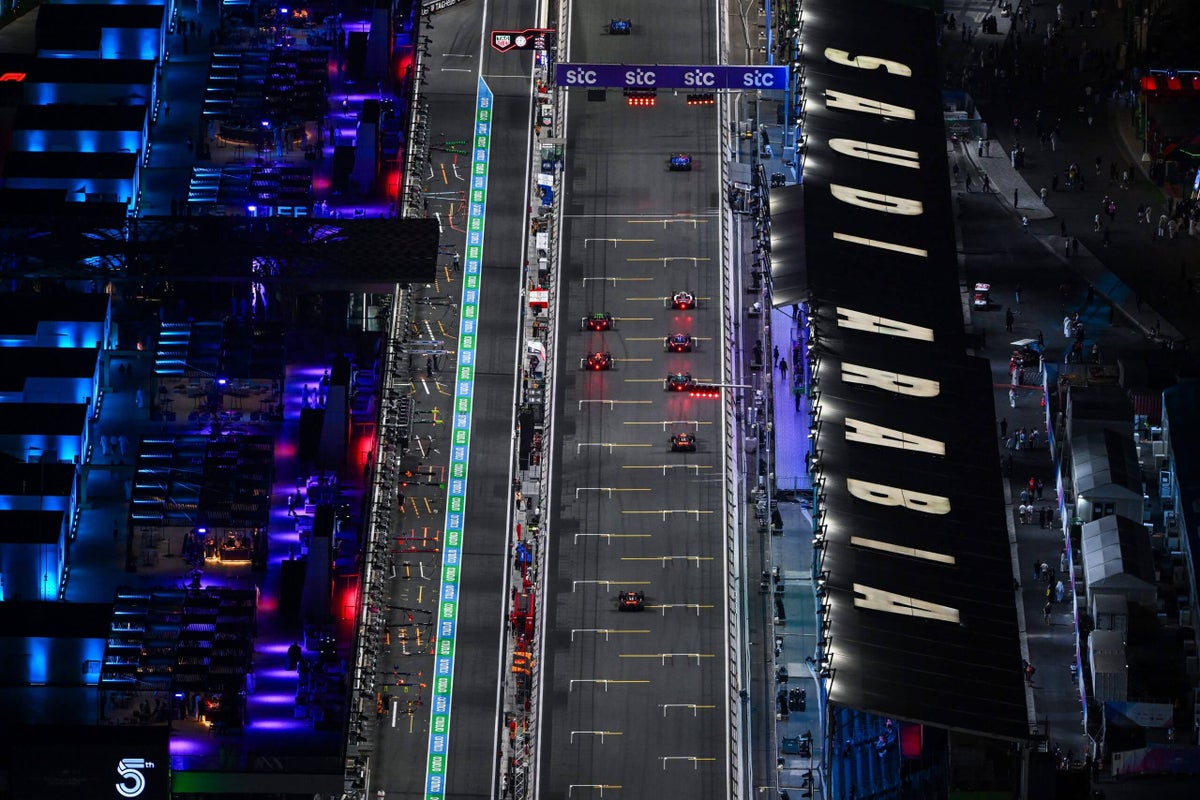
After the races in Bahrain and Saudi Arabia in April were cancelled due to the conflict in the Middle East, the entire Formula 1 paddock had been working on the expectation that the 2026 season would be shortened to 22 events. But that may no longer be the case.
Teams were already braced for a small financial dent from the cancelled races, given the pay lucrative hosting fees that go back to the 11 squads through prize money, as well as the potential impact on sponsorship deals.
But there has also been an understanding within the paddock that, depending on how the geopolitical situation in the region develops, F1 would evaluate rescheduling at least one event.
Liberty Media CEO Derek Chang and F1 CEO Stefano Domenicali both referenced options being explored in a call with investors last week, after Liberty (which owns the championship’s commercial rights) announced F1’s 2026 Q1 financial results. These included a 53 percent rise in revenue year-on-year.
“The well-being of everyone in F1 comes first,” Chang said. “We always manage the calendar with that principle in mind. While that creates a near-term financial impact, it does not change our confidence in the sport’s long-term trajectory.
“We will be thoughtful in our approach, we will continuously evaluate the calendar this year. As Stefano mentioned to Bloomberg News last week, it might be possible to reschedule one race toward the end of the season.”
Chang later added that Liberty was “evaluating all the various alternatives” and wanted to make any decision in “a timely fashion” to ensure all parties had enough lead time to prepare.
The future of the conflict remains unclear. On Sunday, United States President Donald Trump rejected the latest proposal from the Iranian government, with the ceasefire remaining fragile.
Until there is clarity on the situation, it remains difficult for F1 to make any concrete rescheduling plans.
The final two races of the season are also due to be held in the region, in Qatar on November 29 and in Abu Dhabi, part of the United Arab Emirates, on December 6. The UAE reported attacks from Iranian drones and missiles last week.
Domenicali said in the call he wanted to “avoid any speculation” about further schedule changes in the closing stages of the year.
“The only thing I can say is that we have plans, hopefully not to be applied because we really hope that the situation for the world, not only for the racing, will go back to (a) normal situation,” he said.
The world returning to a “normal situation” is the first contingent factor for F1 to seriously examine plans to get the cancelled races back on the calendar. The organization will have to bear in mind the optics of racing in the region around the uncertainty, regardless of the financial bounties on offer. Liberty’s forecasts for F1 are already based on a 22-race season without Bahrain and Saudi Arabia.
But were it possible to squeeze the races back onto the schedule, a headache of F1’s own making — and a consequence of its own success — seriously complicate matters: there are very few viable dates due to the stacked late-season schedule.
F1 is already slated to finish the year with three races on consecutive weekends — in Las Vegas, Qatar and Abu Dhabi.
This triple-header has long been regarded by drivers and teams as a grueling stint of travel and timezone switches, but the scheduling wraps up the season before getting too deep into December or eating into the winter break.
Assuming Chang’s “toward the end of the season” reference is about this period, adding a race could lead to a fourth successive race weekend — unprecedented in F1 history — and a later finish to the year.
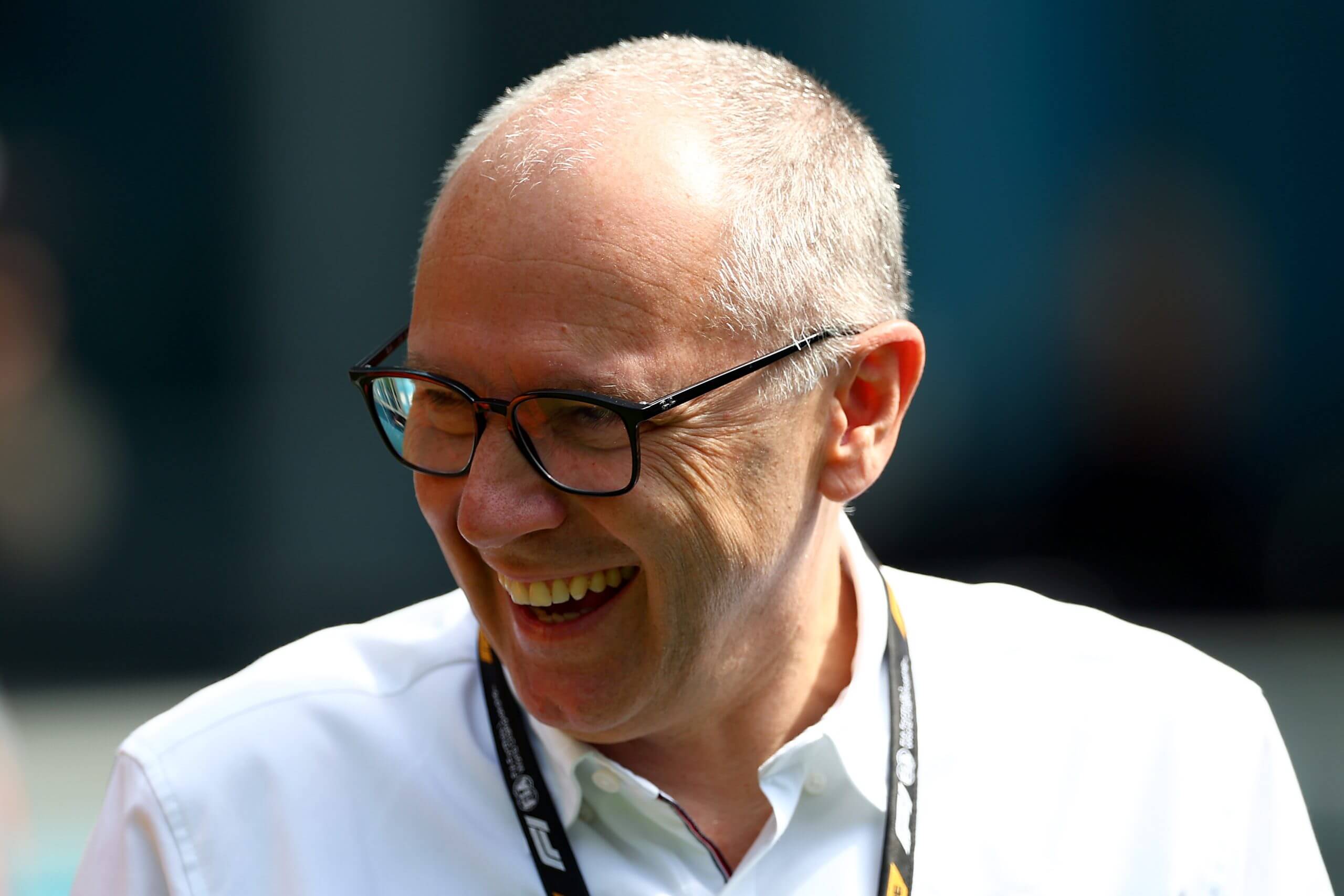
F1 CEO Stefano Domenicali at the 2026 Miami Grand Prix. (Clive Mason / Getty Images)
Abu Dhabi has an exclusivity deal to hold the final race of the season, meaning its organizers would also have to be open to a date change.
Getting even a single race back in this period would also form a streak of seven races in eight weeks to close out the year, starting with the United States Grand Prix in Austin on October 25 and with only the November 14-15 weekend left free.
After a short winter going into 2026, many team personnel already feel stretched by the demands of the calendar. Any extra races in November or December would compound that problem.
Pushing the season one week further into December was a solution floated by FIA president Mohammed Ben Sulayem to reporters in Miami this month.
He also suggested that Turkey, which will return to the F1 calendar in 2027, could be a possible replacement round this year. But no firm plans are in place for that scenario, given the distance to the end of the current calendar.
The only other option to get a race back on the calendar would be the October 3-4 weekend, currently free between the races in Azerbaijan and Singapore. Geographically, a race in the Middle East would be en route from Baku to Singapore, yet it would form a third triple-header in the season’s second half, within a run of nine races in 11 weeks.
Out of Bahrain and Saudi Arabia, the latter seems to be the more likely to return to the 2026 calendar.
The race takes place in Jeddah, which is on Saudi Arabia’s western coast and has not been targeted by Iranian strikes.
There was a hint in the statement following the decision in March to call off the two rounds that Saudi Arabia may have been able to host the race in Jeddah on its originally scheduled date.
Prince Khalid bin Sultan Al-Abdullah Al-Faisal, the chairman of the Saudi motorsport federation, said then it would “respect the decision taken by Formula 1 regarding the 2026 race calendar” and “understands the considerations behind this decision”.
But as eager as parties may be to get even one race back onto the 2026 calendar, the fluidity of the conflict means F1 can’t go much further than having plans to cover all scenarios.
“The lead time or the cutoff is different between the fact that we can eventually recover what has not been run in April versus what could eventually happen or not happen in (the) end of November or beginning of December,” said Domenicali.
“We are aligning with the teams, with the promoters, because that’s something that has a big chain of reaction. In due time, we will keep everyone informed.”