
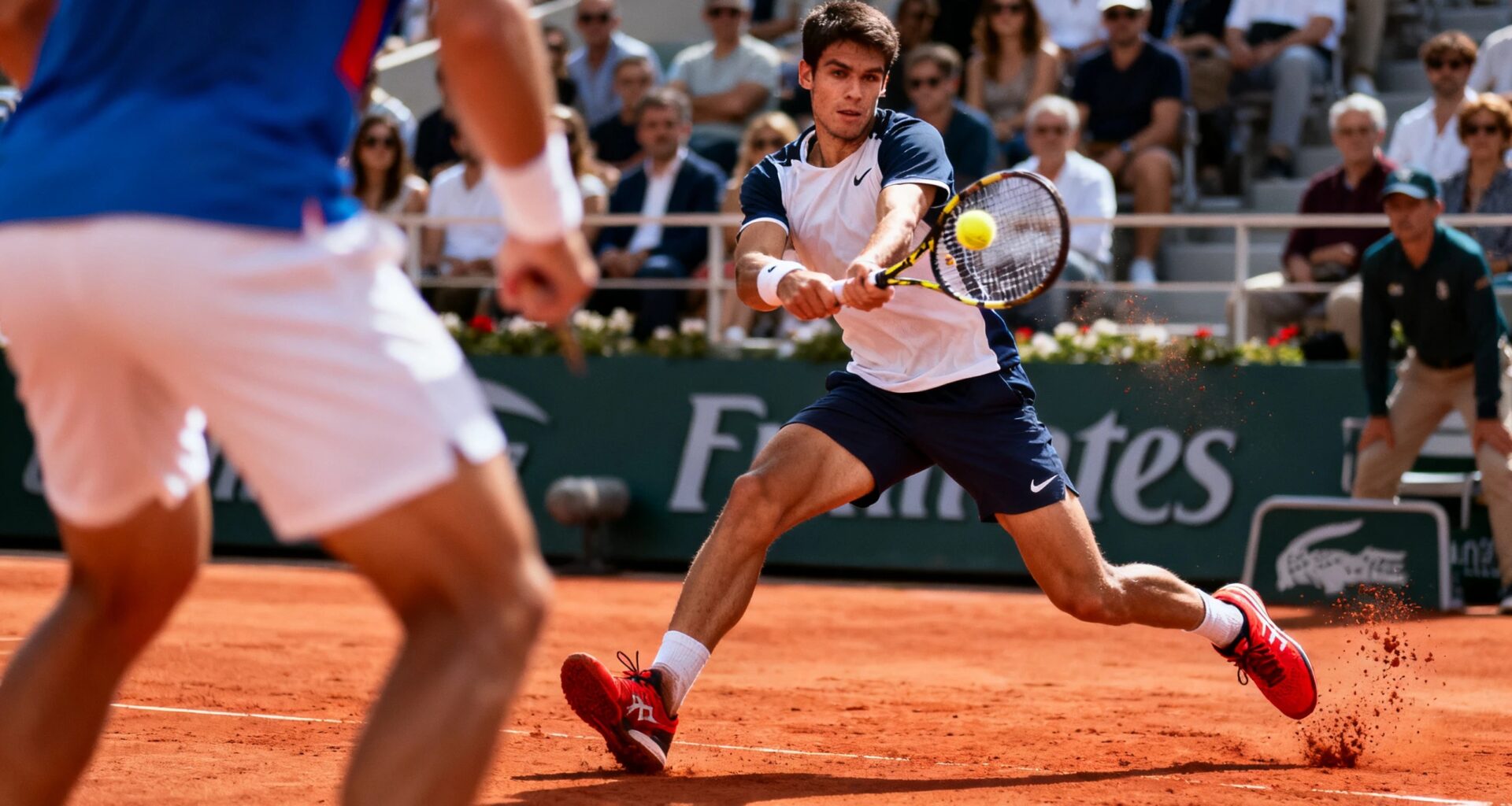
In Rome, Spanish tennis player Martín Landaluce unexpectedly emerged among the strongest competitors at the Masters 1000, taking advantage of a rare lucky loser opportunity. After losing in the qualifying final to Andrea Pellegrino, Landaluce earned a spot in the main draw due to the withdrawal of fourteenth seed Valentin Vacherot. In the second round, he confidently defeated Italian Mattia Bellucci 6-4, 6-3, which allowed him to enter the ATP top 80 for the first time.
Landaluce’s tournament journey began with a victory over Marin Čilić, followed by his win against Bellucci. These two wins were his first at ATP level on clay courts, not counting Challenger series tournaments. As a result, the Spaniard surpassed even Stefanos Tsitsipas in the rankings, having started the tournament ranked 94th—a career best.
Spaniards versus Italians
The current Masters 1000 in Rome is proving successful for Spanish players: recently, Rafa Jodar knocked out Matteo Arnaldi, and now Landaluce has matched that success against another Italian. Both tennis players are from Madrid and belong to the same generation, which adds interest to their performances and highlights the prospects of the Spanish tennis school.
Next opponent and historical context
Landaluce now faces a match for a place in the quarterfinals—his opponent will be the winner of the match between Mariano Navone and Hamad Medjedovic. In March, Landaluce already reached the quarterfinals at the Masters 1000 in Miami, and now he has a chance to repeat that achievement. Interestingly, he became the sixth lucky loser to reach this stage at the Foro Italico courts: before him, Franco Squillari (1999), Alberto Martin (2005), Jarkko Nieminen (2011), Lucas Pouille (2016), and Marcos Giron (2022) achieved the same feat.
Context and comparison
Spanish tennis achievements this season are not limited to Landaluce. In other sports, Spanish athletes are also achieving notable results: for example, Jorge Martín recently brought Aprilia a historic victory at the MotoGP round in France, which was analyzed in detail in the article about the rare triumph of a Spaniard on the international stage.