
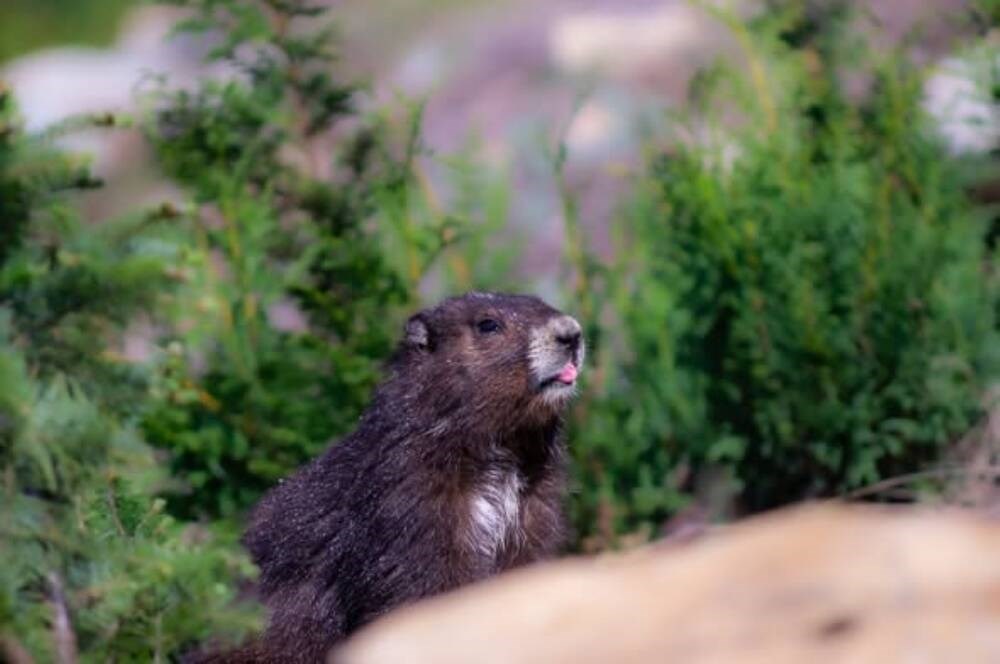
Vancouver Island marmots now number 427 in 35 colonies — up from just 22 marmots in 2003 — in Vancouver Island’s alpine meadows, ranging from Nanaimo Lakes and the Comox Valley to Strathcona Park and Mount Cain.
Researchers laid eyes on their first wild Vancouver Island marmots of the season as the critically endangered species started emerging from hibernation.
Some marmots had been photographed emerging from dens via remote telemetry over the past two weeks, but Joey and Mayzie decided to show themselves to researchers on Friday, scampering and foraging along a tree line outside the Tony Barrett Mount Washington Research Centre.
“They looked like they were having some fun,” said Adam Taylor of the Marmot Recovery Foundation.
Both are wild-born marmots and have been hibernating together for two years.
Taylor said it’s unknown if Mayzie will get pregnant. She’s had two litters of pups, including one last year. Marmots typically give birth every two years in early or mid-June, and the pups stay underground until at least July.
However, it isn’t unusual to see litters in successive years, he said.
Marmots are breed immediately following hibernation, when their body condition is at its lowest, Taylor said.
“They will gestate for one month, and then breastfeed a litter of two to six pups for another month. During that time, they will not be able to gain body weight, leaving them just three months to get ready for their next hibernation,” he said.
“It’s a remarkable feat.”
Vancouver Island marmots now number 427 in 35 colonies in Vancouver Island’s alpine meadows, ranging from Nanaimo Lakes and the Comox Valley to Strathcona Park and Mount Cain.
That’s up from just 22 marmots in 2003. The Marmot Recovery Foundation credits robust captive breeding programs for the increase.
The number of marmots living in the wild increased by 70 in 2024 and 40 in 2025. Survival rates are about 50 per cent due to several factors, including predation.
Taylor said early indications are that many of the colonies saw strong winter survival rates.
Concerns this year include low snowpack in many of the areas where the marmots live, he said. More detailed, in-person census counts will take place over the summer.
“When it gets drier and warmer during the summer, there is a worry there won’t be enough plants and food for them,” Taylor said. “So we’re really crossing our fingers for some moisture.”