
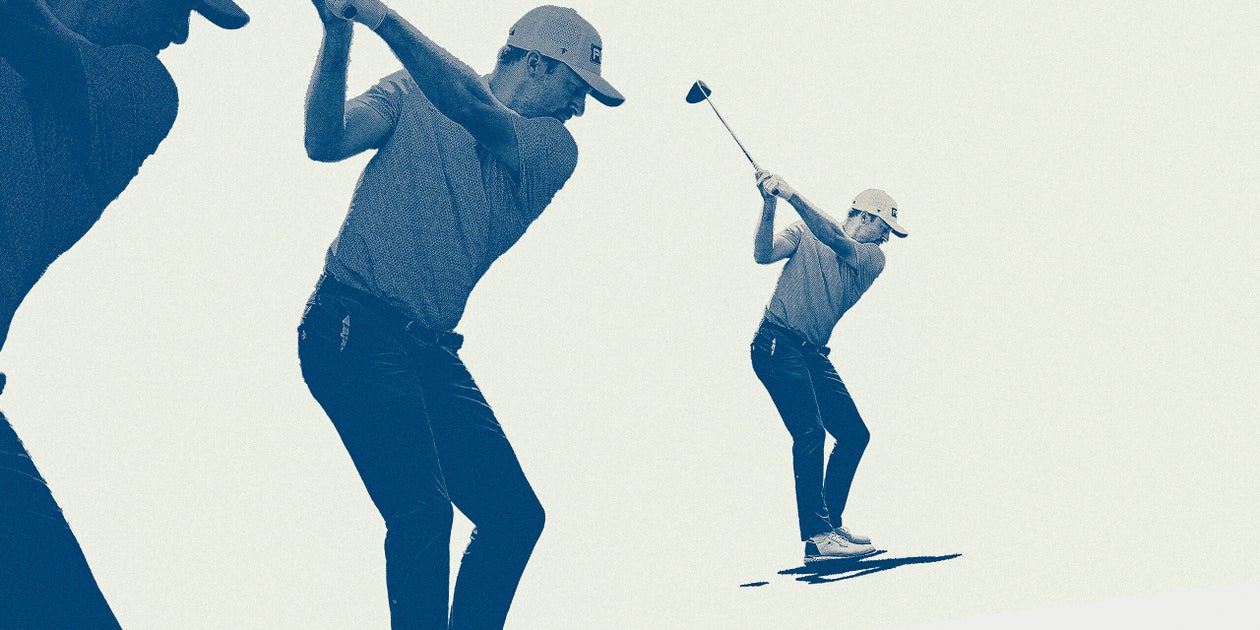
Brian Campbell isn’t offended by the question, but he knows it’s coming: What’s it like to compete as the shortest hitter on the PGA Tour?
“It does get kind of comical,” Campbell says, “hearing some of the clubs that guys have in. I’m just over here like, well, I just hit a 7-wood. And they hit a 7-iron.”
Campbell, 33, is one of the 156 players teeing it up at Aronimink Golf Club for this week’s PGA Championship. And at the majors — the longest and most grueling tests in golf — it is a statistical truth that Campbell will have a harder time competing for the title than the rest. Aronimink will play at 7,394 yards and a par 70, which puts it slightly above the average length for a PGA Championship, with all but one par-3 playing over 200 yards and 171 bunkers defending the course.
“We try to encourage these players to play aggressively and to take on risks and challenges,” says Kerry Haigh, the PGA of America’s chief championship officer.
But for Campbell, those risks and challenges come in a different form. Campbell is 164 of 164 in driving distance on the PGA Tour — last in arguably the most important skill in the modern game. Campbell averages 279.9 yards off the tee and says his ball speed floats around 165 miles per hour. Rory McIlroy isn’t even the longest hitter on tour, and he carries the ball a good 40 yards past Campbell, with ball speeds resting comfortably in the high 180s. Though courses around the country have been known to move bunkers specifically so McIlroy and the other bombers can’t make them obsolete, Campbell experiences the opposite. He doesn’t even bat an eye at fairway bunkers because he can’t reach them from the championship tees.
“They love to put those fairway bunkers at 280, 290 or 300 carry, and I’m just not there yet,” he says. “In a way, it kind of limits the choices that need to be made. I’ll take any advantage I can get.”
It is no fluke or act of generosity that Campbell has a tee time at this week’s PGA Championship. Last year, Campbell returned to the tour after seven years of trying to earn his card back via the Korn Ferry Tour, only to win twice in six months while dealing with injury. And that first victory was coincidentally emblematic: Campbell, the shortest hitter on tour, beat Aldrich Potegeiter, the longest hitter on tour, in a sudden-death playoff at the Mexico Open. Against the odds of pro golf’s AI-powered distance-maxxing revolution, Campbell has found a way to compete. Because he had to.
“I’m not used to hitting this short, but it’s what I had to go through,” he says. “I’ve never viewed the game in terms of distance, really. It’s Point A to Point B. And if I’m only hitting it 260-270 off the tee, my strategy just has to change.”
It all started when Campbell tweaked his lower back and hamstring in the gym before the 2019 BMW Championship. The injury started a chain reaction: With limited lower-body mobility, Campbell started naturally overexerting his shoulders and his neck. Then that compensation spread to his hand and eventually affected his grip pressure. Suddenly, Campbell realized he’d lost his full range of motion. He couldn’t properly connect with the club, so he couldn’t swing at the speeds he wanted. His length off the tee started on a rapid decline. For someone hoping to make a living in this sport, the downturn was an immediate nuisance.
“It feels like I’m wearing a really tight Under Armour shirt,” Campbell says of his ongoing immobility issues.
But Campbell found a way. He put a 7-wood and a 9-wood in his bag, knowing the clubs would help him add some height to longer approach shots and attack pins from the sky. He started placing a premium on hitting it in the short grass off the tee, visualizing fairways when he practices his driver on the range, using Trackman to test his accuracy. And Campbell learned to trust his short game more than ever, a philosophy he first learned at Illinois under coach Mike Small, with whom he is still close to this day.
“I know that it’s not the end of the world if I miss a green. That’s a big vote of confidence if you can think like that,” Campbell says. “Because if you start worrying about missing greens, then you start not grinding every time to save par. That’s something that I’ve always loved to do. Put me in a tough spot and let’s see if I can get up and down.”
According to Data Golf, Campbell ranks No. 428 out of 435 eligible players worldwide in driving distance, but he’s No. 45 in driving accuracy. In 2025, he hit 633 out of the 948 possible fairways he encountered on tour, No. 21 in driving accuracy percentage on the PGA Tour. Though the longest hitters in the game are finding ways to pick up more speed every year — either through equipment changes or exercise regimens geared toward explosiveness — those same players are trending in the opposite direction in accuracy. Of the top 10 players on Data Golf in strokes gained off the tee, only one player also ranks inside the top 100 in driving accuracy.
That’s the kind of golf that led to a bulked-up Bryson DeChambeau’s winning the 2020 U.S. Open at Winged Foot by bombing and gauging — not caring where his drive ended up, as long as he had the shortest club possible into the green. Players such as Phil Mickelson had been attempting the strategy for years, but DeChambeau proved that overpowering the test could lead to more trophies. McIlroy says DeChambeau’s gains pushed him to chase distance with a new fervor. McIlroy says the move temporarily hurt his swing, but perhaps he wouldn’t be a six-time major champion without the push.
The game Campbell is forced to play represents a lost art in the men’s professional game. Campbell physically cannot chase distance until he’s healthier — something he’s working toward every day — so he has to adjust by playing off his strengths. He’s learned to accept what his game gives him and maximize what he has, rather than pretending to be anyone else.
Luke Donald chased distance off the tee starting in 2007 but ended up needing wrist surgery the next year. The injury provided him with a natural reset period to take a step back and consider how to approach the game, and it paid off. Donald consulted with Mark Broadie, the Columbia Business School professor who developed the strokes gained statistic. He was told he’d need to gain at least 2 strokes on the field per round to become the best player in the world, and he found them — not by bombing it off the tee, but among his irons, short game and putting.
When Donald reached No. 1 in the world in 2011, he was ranked 147th in driving distance on the PGA Tour, but No. 1 in strokes gained approach and strokes gained putting.
“I totally retooled how I practiced, and that obviously led me to get to world No. 1. It was a blessing, in a way. It’s important to not chase what everyone else is doing and do what you feel like is your DNA,” Donald said.
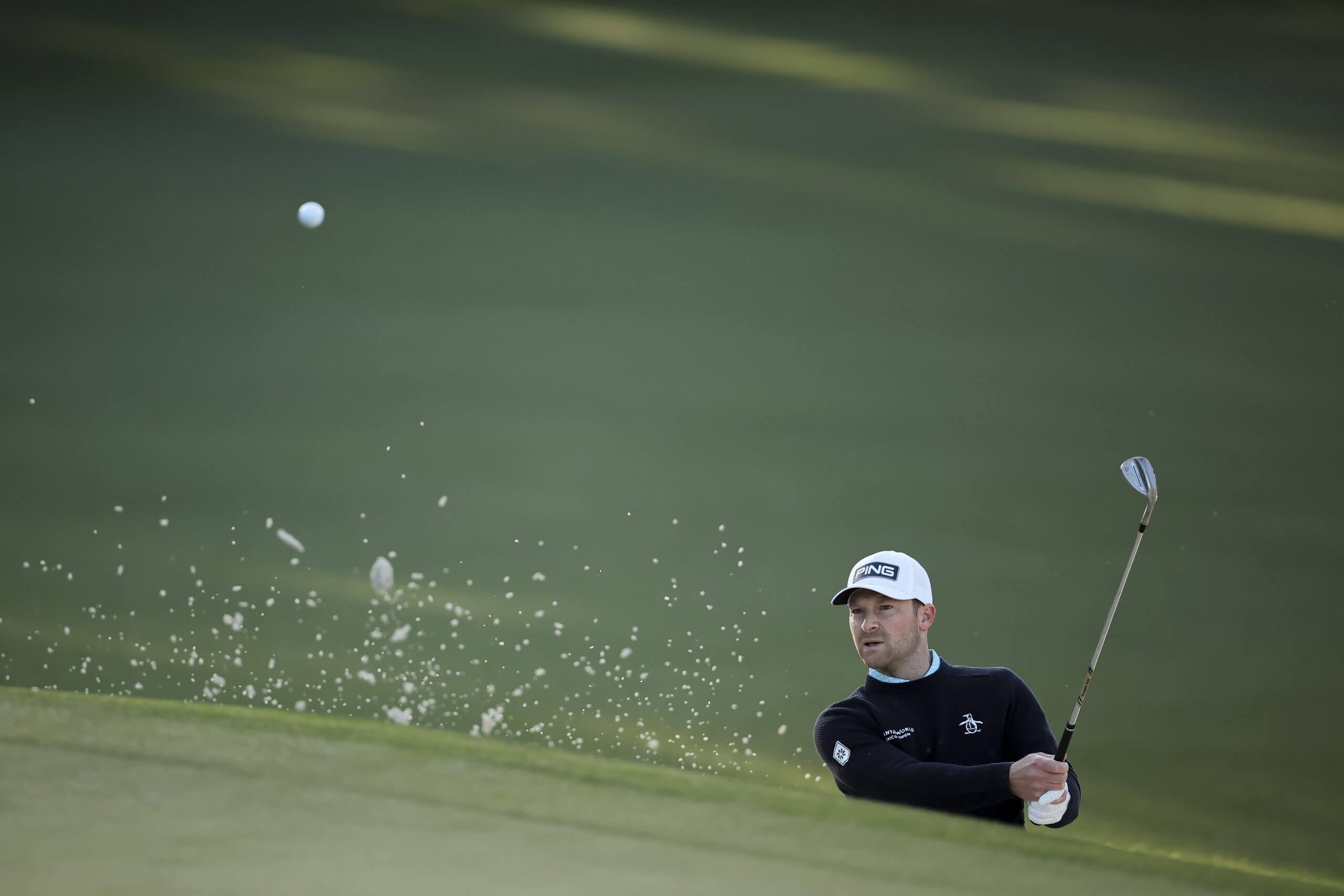
Brian Campbell is coming off a top 25 finish at last month’s Masters. (Hector Vivas / Getty Images)
Campbell knows to work within his own game. If he has to aim away from a flagstick because he can’t attack certain hole locations with a long-iron in hand, then so be it. He’ll play for the two-putt par. When Campbell repeatedly finds himself as the farthest man out in the fairway, always hitting first, he views it as an opportunity, not a disadvantage.
“It’s a chance for me to put the pressure on first, kind of similar to match play. At the end of the day, I’m just very real about it. I’ll tell my caddie when we’re going out, ‘Well, we’re playing with Aldrich today. I’m going to be 50 yards behind him every hole.’ That’s just what it is,” Campbell says. “It’s easy to say, ‘Oh, man, if I could be hitting shots from here, that would be awesome.’ But that just doesn’t help you to think like that.”
Yes, Campbell has missed six cuts already this year and still hasn’t made a breakthrough with his grip pressure, but he made $3.3 million last year and posted a tied-for-24th finish at the Masters last month. Campbell’s two wins on tour, at the Mexico Open and the John Deere Classic, gave him automatic berths into the PGA Tour’s signature event schedule for 2026, as well as the four majors. Not a bad situation for a guy who is essentially starting the sprint with his shoelaces tied together.
“All I know is that PGA Championships lengthen the heck out of the golf course, so I’m really just expecting it to be long and brutal,” Campbell says.
At Aronimink, he might have to purposely hit some draws with his driver, a shot shape that naturally helps get as much distance out of tee shots as possible. He’ll probably be playing first every time he arrives at his second shot. And he’ll likely have a few more up-and-down looks than his counterparts. But those are the cards Campbell knows he’s been dealt. So that’s what he’ll play.